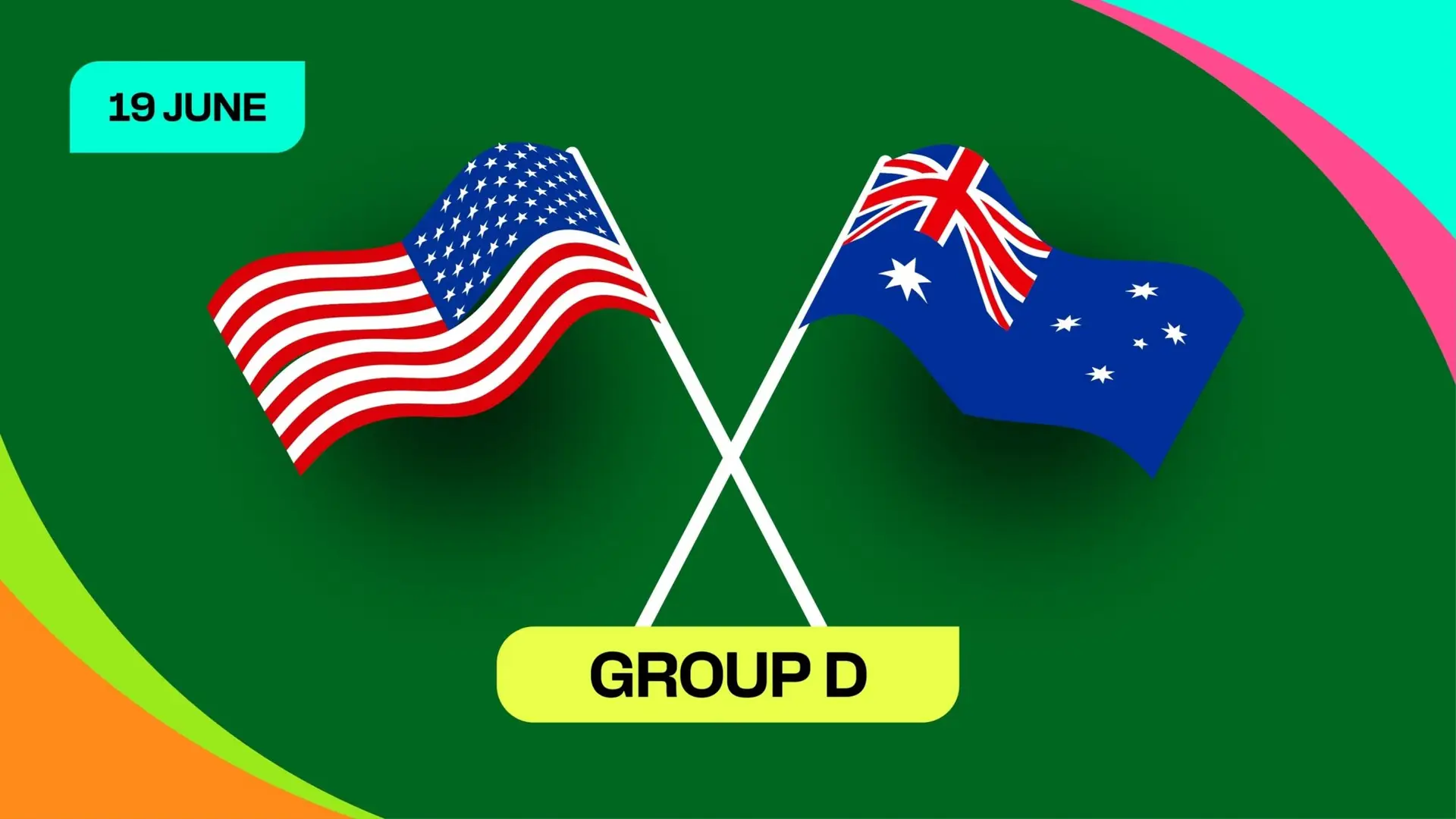
The United States had a clean arithmetic problem in Seattle. Beat Australia without Christian Pulisic, and the knockouts were no longer an abstraction. Do it while changing the front line, and the result would say something more useful than the table alone.
By the end of a 2-0 win at Seattle Stadium, both parts were settled. The U.S. moved to six points from two Group D matches, advanced to the knockout round, and did so with its most important attacker unavailable because of a calf injury. Australia had arrived with three points of its own after beating Türkiye, but spent much of the decisive first half chasing the ball and the runs around it.
The first goal came in the 11th minute, and the box score will treat it as a Cameron Burgess own goal. The play belonged to Folarin Balogun. Starting from the left, Balogun pushed into space and drove a ball toward Ricardo Pepi at the front of the six-yard box. Burgess reached it first and turned it past Patrick Beach. No World Cup side had previously been awarded own goals in back-to-back games.
The second arrived shortly before halftime. Sergiño Dest’s deflected shot spun toward the back post, where Alex Freeman held his line and headed in from close range. The assistant referee raised a flag, but VAR confirmed Freeman was onside. At 21, the youngest player on Pochettino’s roster had his first World Cup goal, and the U.S. had the margin it needed.
A win built from control
Freeman’s goal also gave the match a piece of program history. Not since John Brooks scored against Ghana in 2014 had a U.S. defender found the net in a World Cup match. That detail fit the broader shape of the afternoon. The U.S. did not win because one absence was neatly replaced. It won because contributions came from areas Australia could not fully plan against.
In the first half, the U.S. led Australia 9-2 in shots, 14-6 in touches in the opposition box, 38-19 in final-third entries, 70%-30% in possession, and 259-78 in accurate passes. Those numbers did not make the second half simple, but they defined the game before it could become unstable.
Australia tried to alter the match at halftime, bringing on Jason Geria, Nestory Irankunda and Connor Metcalfe. The changes gave Tony Popovic’s side more speed and forward intent, especially through Irankunda, but the game never fully shifted. Pochettino responded later by moving Sebastian Berhalter in for Pepi in the 74th minute, then sending on Auston Trusty and Joe Scally for Antonee Robinson and Dest in the 80th. The substitutions changed the U.S. from expansion to protection.
The win also sharpened how Pochettino’s setup should be judged. A 4-1 win over Paraguay showed the U.S. could punish space with Balogun and Pulisic involved. This one showed it could manage a different set of demands. Pepi gave Balogun another forward to work against the center backs, Weston McKennie and Tyler Adams handled long stretches of midfield control, and Dest’s presence on the right still found its way into the scoring move.
The match should not be inflated into a finished argument about how far the U.S. can go. Australia had late set-piece and transition moments, and the final stages included enough pressure to make game management more important than style. But tournament growth is often visible in what a team refuses to give away. The U.S. had the lead before halftime, protected it, and left Seattle with its first clean sheet of the tournament.
For a program often measured against the limits of past World Cup runs, there was value in the plainness of the result. No rescue act was required. It’s the first time the U.S. has advanced after only two group-stage matches. With Freeman scoring, Balogun forcing the opener and the midfield holding the match together, the roster looked less dependent on one route and more comfortable finding another.