Friendship has a shelf life. In football, even in the expanded 48-team format, it expires at kickoff.
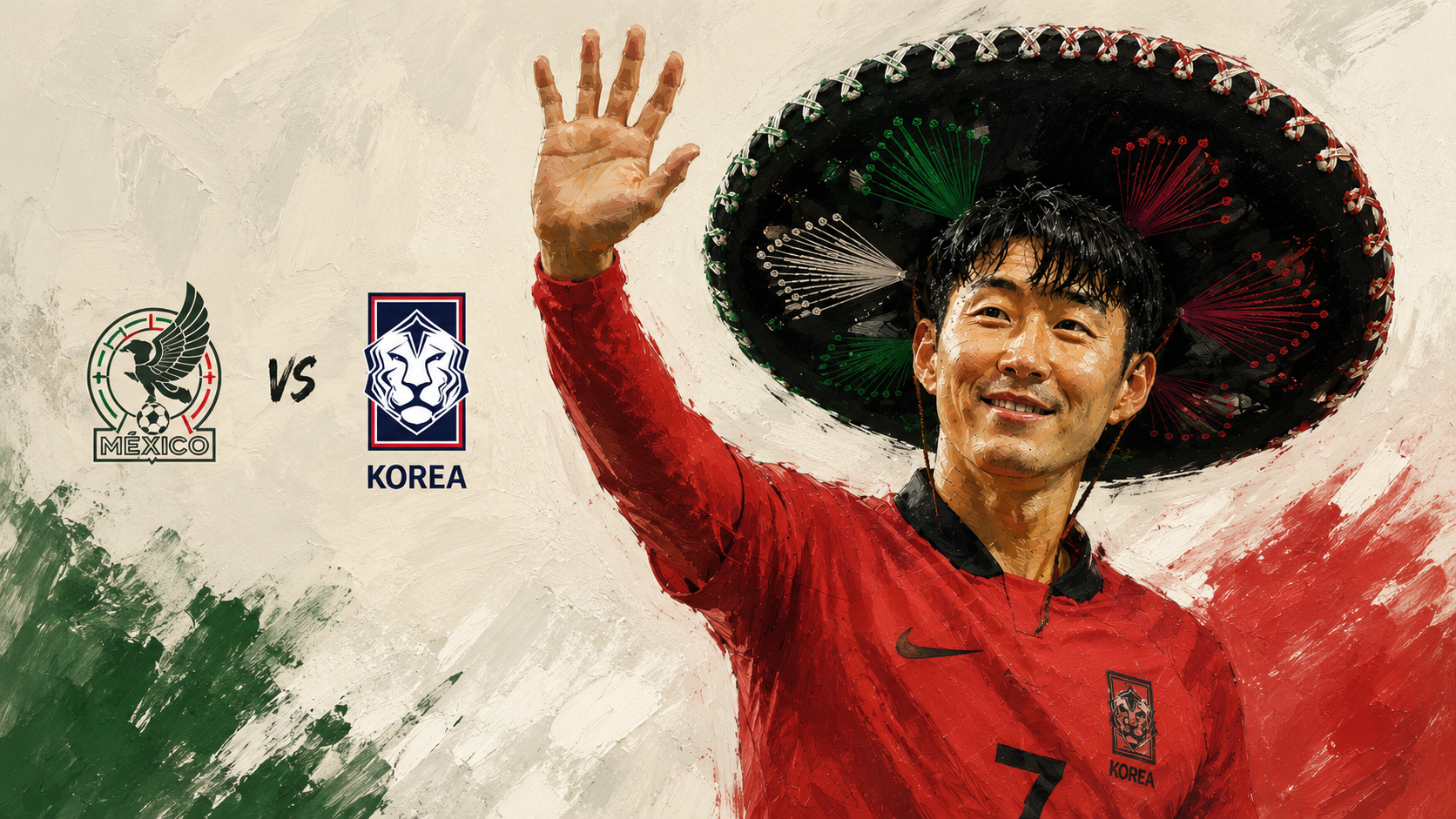
When South Korea beat Germany 2-0 in Kazan eight years ago, Mexico not only celebrated, but canonized them. The embassy in Mexico City turned into a shrine. A counselor was hoisted on shoulders. “Korean, brother, now you’re Mexican,” the crowd chanted, as though one act of opportune football could dissolve two distinct civilizations into one. The sombrero handed to the South Korean delegation this week was that same impulse, formalized. Generous. Sincere. Beside the point.
The ledger reads clearly enough. Two World Cup meetings, two Mexican wins. Mexico has beaten Asian opposition in all five of its World Cup matches, scoring at least twice in each of the last four. Mexico’s World Cup record against Korea Republic specifically, a 3-1 win in 1998 and a 2-1 win in 2018, points in one direction.
History, in this fixture, isn’t even close. It also isn’t the thing that scores goals on a Thursday night in Guadalajara. What’s on the table tonight is something history can’t hand Mexico anyway: group control. A win puts El Tri on six points, with room to manage its last match. A draw keeps the anxiety alive. A defeat, to this opponent in this city, would be its own category of humiliation, one no sombrero ceremony could soften.
South Korea offers structure in return. Hwang In-beom and substitute Oh Hyeon-gyu turned Czechia’s tired shape into a 2-1 comeback, not through chaos but through the precise exploitation of defensive fatigue. They don’t need the game to be open. They need it to become open, briefly, once. That’s a different proposition entirely.
Son Heung-min, the engine and the symbol, has spent this tournament waiting for exactly that kind of aperture. Against a disorganized back line, he doesn’t need long. And Mexico, missing César Montes after his red card against South Africa, will be more vulnerable to it than usual. Aguirre must now organize a defense against the team most precisely calibrated to find its disorganization. That’s not a crisis. It is, however, a problem that sentiment won’t solve.
If Edson Álvarez stays in midfield rather than dropping into the back line, Mexico needs him controlling the tempo and Julián Quiñones stretching Korea’s defensive line before it can compact. The Koreans defend deep and fast. The way to beat that is not to admire it but to get in behind it early, before the shape sets. A slow, patient buildup against this Korea invites the counter it so expertly produces.
Mexico’s best hope is to make the first forty-five minutes ugly for the visitors. Quiñones and Roberto Alvarado need to force the issue in wide areas, where Korea’s defensive block is least comfortable and most exposed to combination play. The central lane will be crowded and contested; the flanks are where this game gets opened, if it gets opened at all. Aguirre knows this. Whether his squad, depleted and reconfigured, can execute it before Son finds his aperture is the actual question.
A sombrero with memory
The sombrero carries real history. Before Mexico’s opener at Azteca, thousands of cardboard sombreros filled the air, turning a stadium giveaway into the tournament’s first image of Mexican authorship.
Pelé wore one at Azteca after Brazil won the 1970 World Cup. Maradona posed in one before lifting the trophy in 1986. Carlos Calderon, Mexico’s preeminent football historian, explains the protocol directly: “You give one to the king.” South Korea accepted the hat.
Accepting a gift is not the same as conceding one. The ceremony said something true about Mexico’s relationship with this country, this crowd, this competition. It also said nothing at all about what happens when the referee blows the whistle tonight. South Korea accepted the hat. Tonight it plays for the crown.