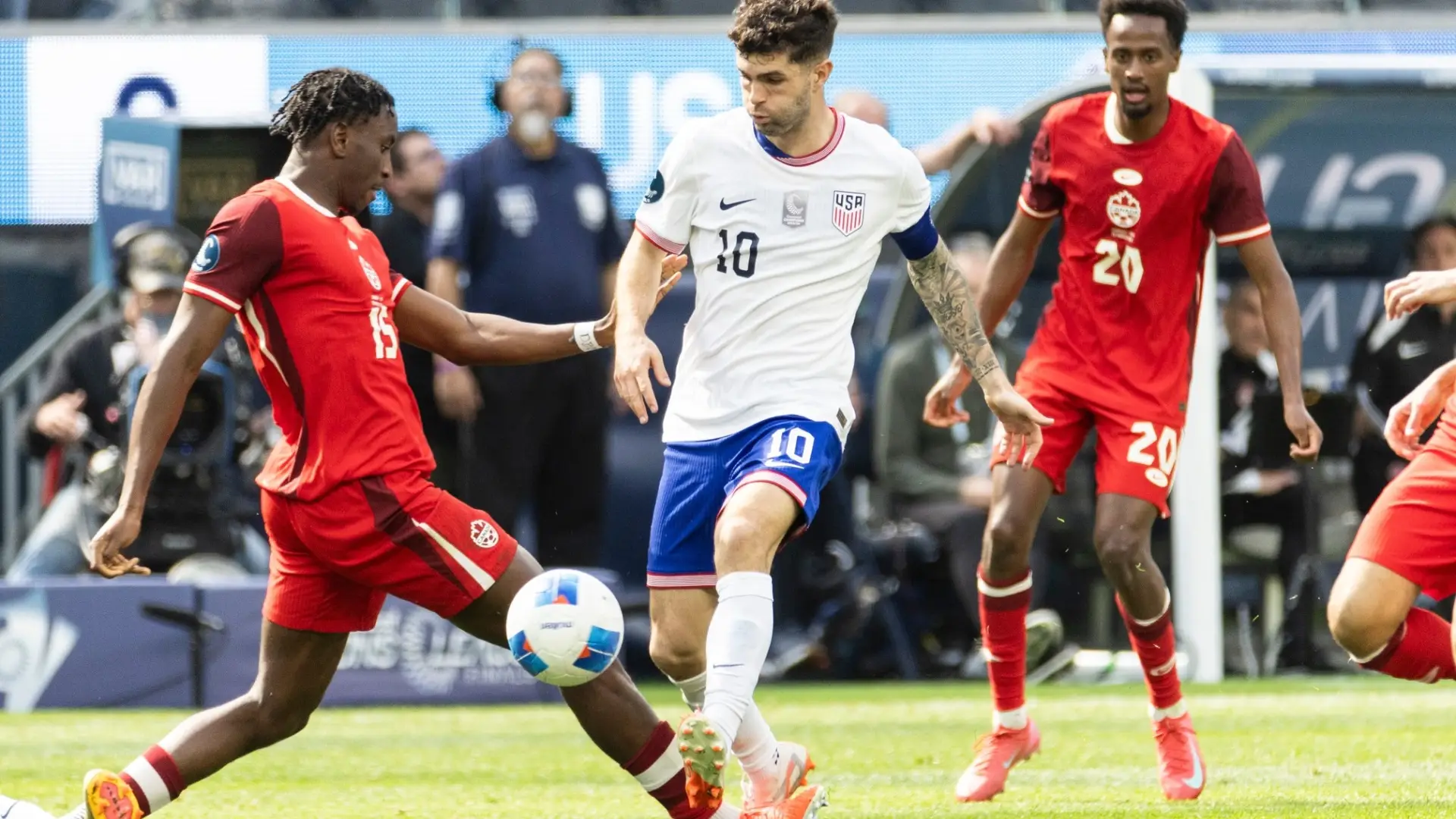
Christian Pulisic needed 20 minutes to change the surface reading of the USMNT’s win over Senegal. The goal was clean, controlled and badly needed. The assist before it mattered almost as much. Together, they closed Pulisic’s cold streak in a 3-2 result that gave the United States something useful to carry into the last days before the World Cup.
The relief is the least interesting part. The more revealing detail is how quickly one productive half from Pulisic can make an entire American attack look more stable. Pochettino’s USMNT roster was built with forwards, runners and defensive cover. Against Senegal, it still needed Pulisic to turn possession into danger, and that should keep the celebration from becoming too tidy.
Senegal gave the night real weight. This was a 14th-ranked opponent with Sadio Mané in the front line, not a soft sendoff arranged for a confidence clip. The U.S. started sharply, connected passes early, and scored through a move that looked like a team rather than a rescue mission: Ricardo Pepi escaped pressure, Pulisic drove into space, Sergiño Dest arrived in the box and finished.
Thirteen minutes later, the second goal added the detail that had been missing for months. Alex Freeman found Pepi behind Senegal’s line. Pepi found Pulisic’s run. Pulisic rounded Mory Diaw with his first touch and finished low. It was his 33rd U.S. goal and the kind of moment that turns a drought from a daily question into a completed chapter.
The burden still has a shape
Still, the scoreline refused to let the U.S. hide behind one half of attacking fluency. Mané scored before halftime, then scored again after a second-half U.S. giveaway. Pochettino had changed almost the entire team at the break, with Pulisic among the 10 players removed, and the rhythm shifted. The match became less about whether the U.S. could dazzle and more about whether it could stay intact after its best player left the field.
The useful lesson arrived with the winner. Weston McKennie pushed the ball to Tim Weah, Weah delivered from the right, and Folarin Balogun finished in the 63rd minute. Pulisic was no longer on the pitch. The winning goal came from the depth pieces the United States will need if this team is going to be more than a vehicle for one star’s form.
The tournament question should move from whether Pulisic can carry the U.S. attack to whether the U.S. can make carrying unnecessary. Pulisic’s best version is not a winger asked to solve every slow possession. It is a winger who can choose his timing, arrive after the first defensive shift, and punish a back line already occupied by someone else.
Pepi’s fingerprints across both first-half goals were almost as important as Pulisic’s final touch. He gave the first move an outlet under pressure and gave the second one its last pass. Dest’s run gave the first goal its aggression. Freeman’s pass started the second. Those names matter because opponents at the World Cup will not build their first plan around stopping Pepi’s connective touches or Freeman’s vertical pass. They will build around Pulisic. The U.S. needs the supporting actions to become the surprise.
Pulisic’s numbers already place him near the top of the program’s modern history. After Senegal, he had 33 goals and 20 assists, with only Landon Donovan, Clint Dempsey and Jozy Altidore above him in total goal contributions. The achievement is real. It also sharpens the danger of confusing career stature with tactical structure. A star can be historic and still need a better environment.
The 3-2 win did not erase the defensive turnovers, the goalkeeper uncertainty or the midfield questions that remain in a tournament setting. It did give Pochettino a clearer picture of what the U.S. can look like when Pulisic is not isolated from the rest of the team. The drought ended. The standard should rise with it. If the United States is serious about going deeper than familiar limits, its best player cannot be the whole plan. He has to be the clearest part of one.