America has money, stadiums, corporate backing and a national men’s team good enough to qualify comfortably for its own World Cup. 2018 was the devastating exception. It also has, still, no male player who has made the rest of the world rethink what the country is capable of producing. The women’s game solved this long ago. The USWNT has won four World Cups; the men reached the quarterinals in 2002 with a 1-nil loss against Germany.
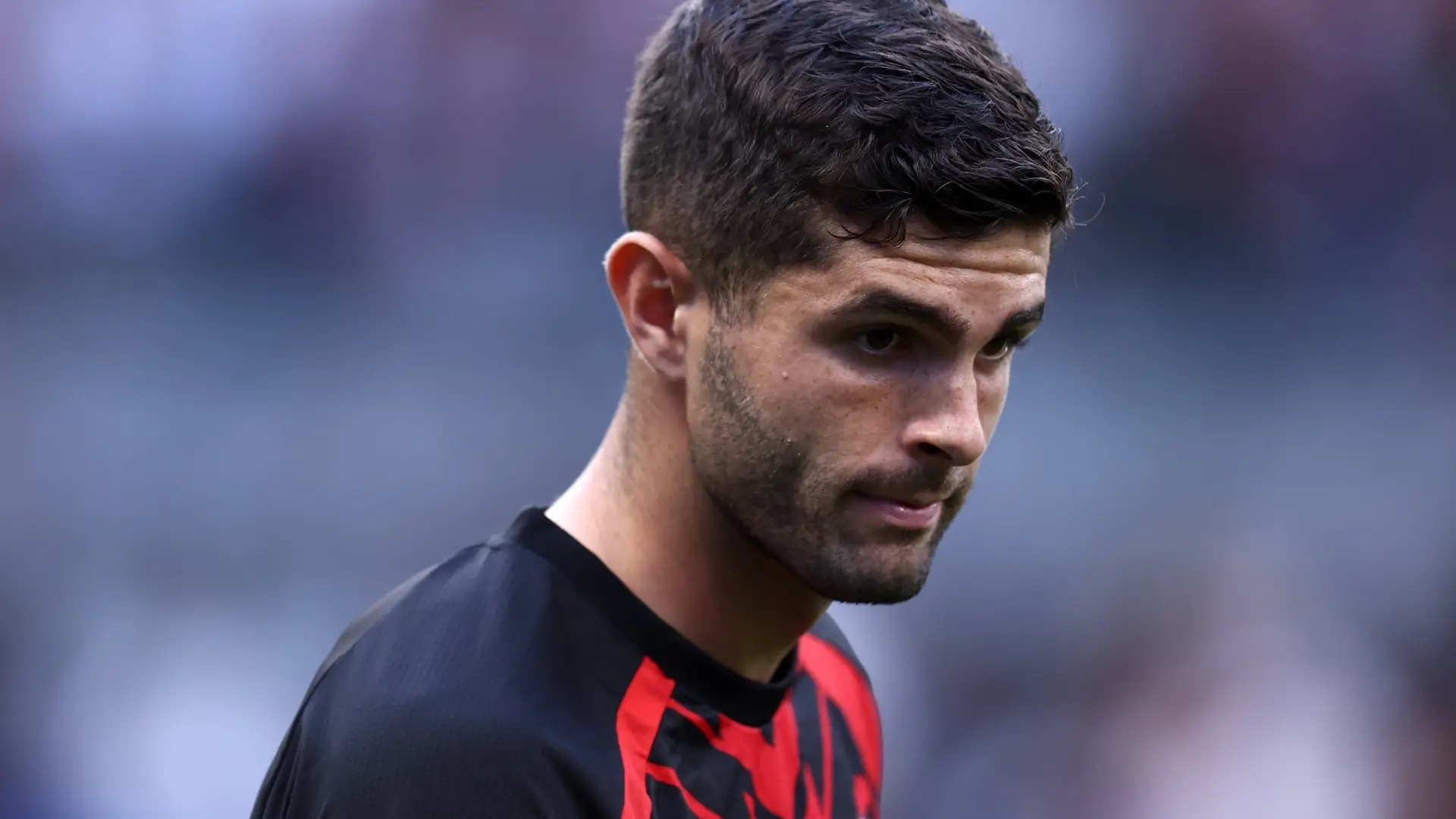
Before the question around American football sprawls into uselessness, it needs narrowing. The U.S. has produced solid internationals. Christian Pulisic is a Champions League winner and a four-time U.S. Soccer Male Player of the Year. Weston McKennie, Tyler Adams, Gio Reyna, Antonee Robinson – all legitimate professionals, respected in Europe.
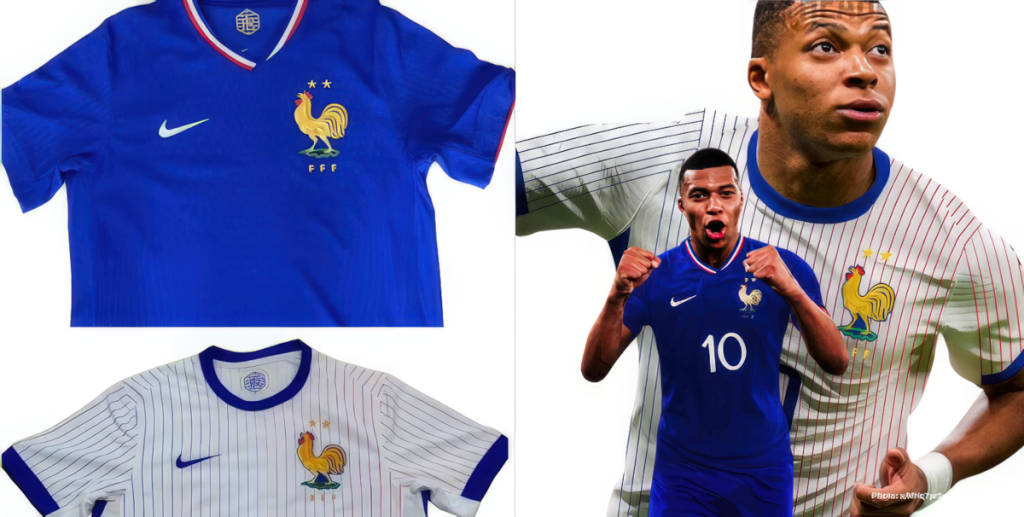
The issue isn’t whether America can produce professionals. It can. The issue is whether it’s capable of producing the kind of player who becomes a global reference point. Ronaldo, Messi, Mbappe — these are players that trascend the game like Jordan was to Barcelona at the 1992 Olympics. An American version of Messi can’t be forced, no matter how strong American soft power.
While we await that player to arrive on American soil, the World Cup presents the sharpest possible moment to feel the gap.
The error wasn’t neglect
The American mistake wasn’t ignoring soccer. It was building a market before building a habitat. American capitalism begets purpose, not the other way around.
This is how a country ends up with 24.9 million soccer players – the SFIA estimate as of May 2026 – and still no Messi. Mass participation gives a program depth. It doesn’t create the ceiling. A habitat gives a sport cultural density: the ball as unavoidable, cheap, constant and socially central. America built the market. The tournaments, the uniforms, the private coaches, the rankings, the showcase events. It did not, at scale, build the habitat.
Soccer’s governing bodies do not lack data on what elite development actually requires. Research on youth players has found that future professionals built their edge between ages 6 and 12 – not through formal coaching but through accumulated play. Brazilian pelada matters for this reason. It gives children problems to solve without waiting for an adult to design them. The street cures what the clinic cannot.
America largely skipped that stage. A boy can enter the current system and become excellent. Pulisic did. His path, though, included soccer-playing parents, a year in England as a child, and a move into Borussia Dortmund’s orbit as a teenager. That’s not a pathway. It’s a rare itinerary written for a specific child born into specific circumstances.
The cost filter
Cost narrows the search before talent is fully visible.
Project Play found that U.S. sports families spent an average of $1,016 on a child’s primary sport in 2024; its youth sports data put soccer’s average annual cost at $1,188. U.S. Soccer’s own Pathways Strategy acknowledges the experience can feel confusing, expensive and hard to navigate. A pay-to-play system is, structurally, a filter. It’s attentive to the people paying – to travel, status, selection, and exposure. That is a rational response to incentives. It’s also not a system designed to find a genius in an inconvenient postcode.
The next superstar may need something less polished and more available.
The fragmentation problem
America doesn’t lack soccer culture. It has several, operating in parallel and largely disconnected from one another.
Latino leagues, immigrant communities, Sunday pickup games, futsal courts, suburban clubs, high school programs, MLS academies – all inside the same country, rarely in proper dialogue. The most authentic soccer environments aren’t always connected to the best scouting or professional routes. The best-funded environments aren’t always the most creatively demanding. The country has the ingredients. It hasn’t figured out how to make them talk to one another.
Cavan Sullivan’s record MLS debut in 2024 was a different thing from Freddy Adu’s moment a generation ago. Adu was treated as American soccer’s first wonderkid, a projection more than a pathway. Sullivan emerged from a more mature academy structure, with actual reserve-team football behind him. The professional layer has improved. MLS NEXT now includes more than 43,000 players across the U.S. and Canada. Those changes are real and not trivial.
Whie there are changes at the top of a funnel, the funnel still needs widening at the bottom.
What the serious projects understand
The most promising initiatives seem to grasp where the real problem lives. U.S. Soccer’s Soccer at Schools push targets access directly. San Diego FC’s Right to Dream Academy is tuition-free, residential, and designed as a deliberate challenge to the pay-to-play model. These are not small tweaks to a tournament calendar. They’re attempts to change who gets found.
The first American male superstar is unlikely to come from scale alone. Scale has already arrived and hasn’t done it. He’ll come when the game becomes easier to enter, harder to avoid and dense enough that gifted children spend years sharpening one another long before any scout arrives. It has to be the equivalent of American basketball culture. That is how Brazil found what it found. That is how the outskirts of Paris, for a generation, kept producing attacking players faster than the rest of Europe could explain.
America, at the moment, is still mostly producing the rigid system. The system hasn’t yet produced the player.