Arsenal spent years entering decisive stretches with a visible fault line: one injury could force Mikel Arteta to change the team rather than merely change the player. The squad that delivered Arsenal’s first Premier League title in 22 years has reversed that problem. Even with William Saliba and Jurrien Timber unavailable at the start of 2026/27, Arsenal can still construct an experienced back line and leave senior options across midfield and attack.
Stadio’s opening-week ranking uses a 100-point editorial scale. First-replacement quality carries 30 points, coverage of scarce roles 25, tactical versatility and current availability 15 each, senior readiness 10 and positional balance five. It doesn’t reward a club simply for carrying more contracted players. The useful question is whether a substitute preserves the function of the starter or forces the manager to redraw the team.
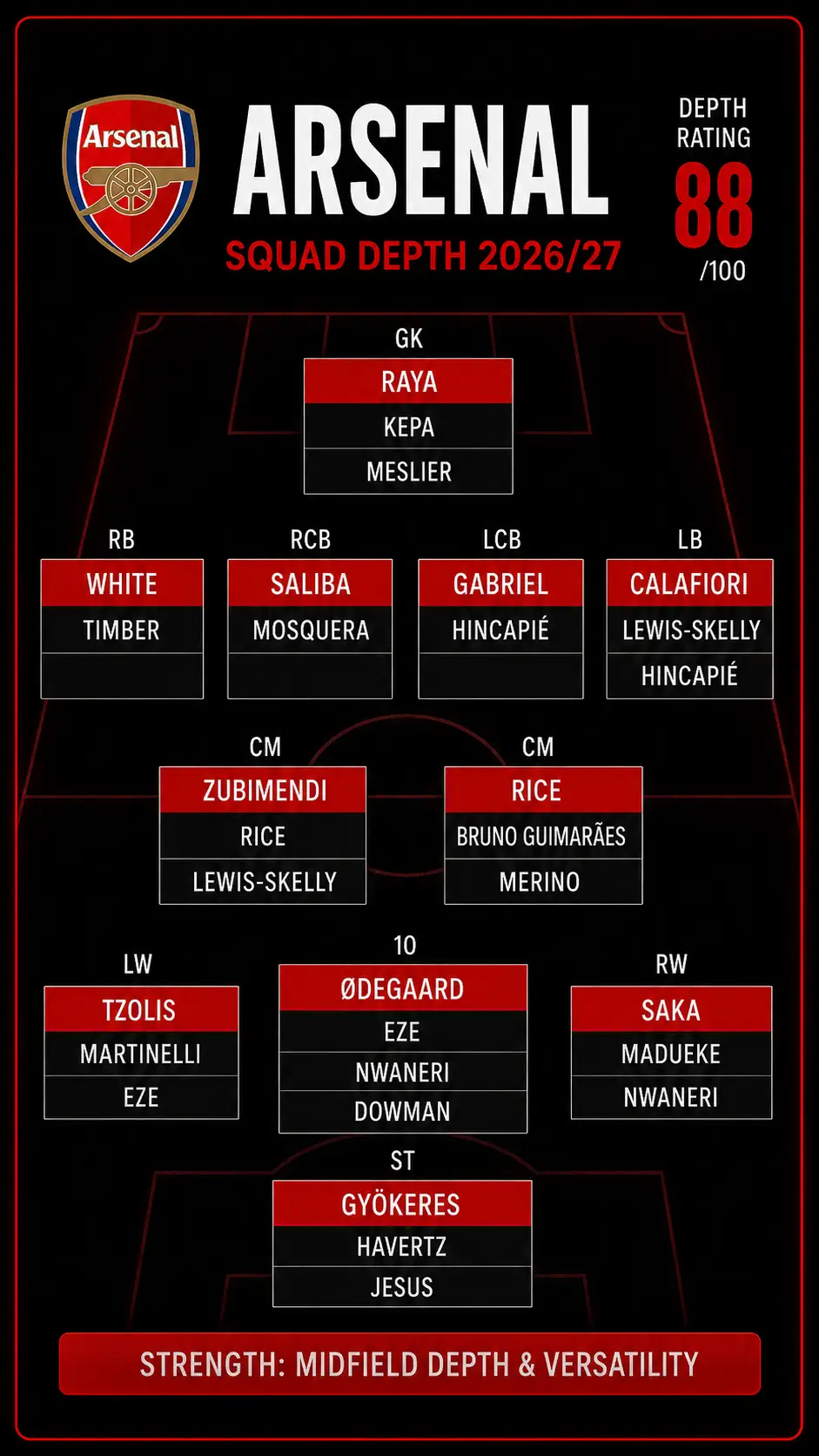
Arsenal’s midfield supplies the clearest answer. Martin Zubimendi can organize at the base, Declan Rice can anchor or surge forward, and Bruno Guimarães can receive under pressure before carrying play into higher zones. Martin Ødegaard, Eberechi Eze, Mikel Merino, Ethan Nwaneri, Myles Lewis-Skelly and Max Dowman add different kinds of creation, physicality and ball progression. Myles Lewis-Skelly’s increasingly crowded route to minutes illustrates the abundance: a player trusted at left back and in central midfield can now sit outside Arsenal’s strongest three without becoming surplus to the squad.
The attack has similar flexibility. Bukayo Saka can be covered by Noni Madueke or Nwaneri, Christos Tzolis competes with Gabriel Martinelli on the left, and Viktor Gyökeres, Kai Havertz, Gabriel Jesus and Merino give Arteta four distinct center-forward solutions. Arsenal’s 3-0 Community Shield win over Manchester City offered an early demonstration, but the score is less revealing than the number of credible combinations Arteta can build.
The remaining fault line is Saliba. Cristhian Mosquera, Ben White and Piero Hincapié can cover central defense, yet none reproduces Saliba’s exact mix of recovery speed, dueling and comfort in open space. That keeps Arsenal’s Stadio score at 88 rather than making the roster look flawless. Their advantage is balance: very few other absences require a clear downgrade and a tactical compromise at the same time.
Where Arsenal’s rivals still have gaps
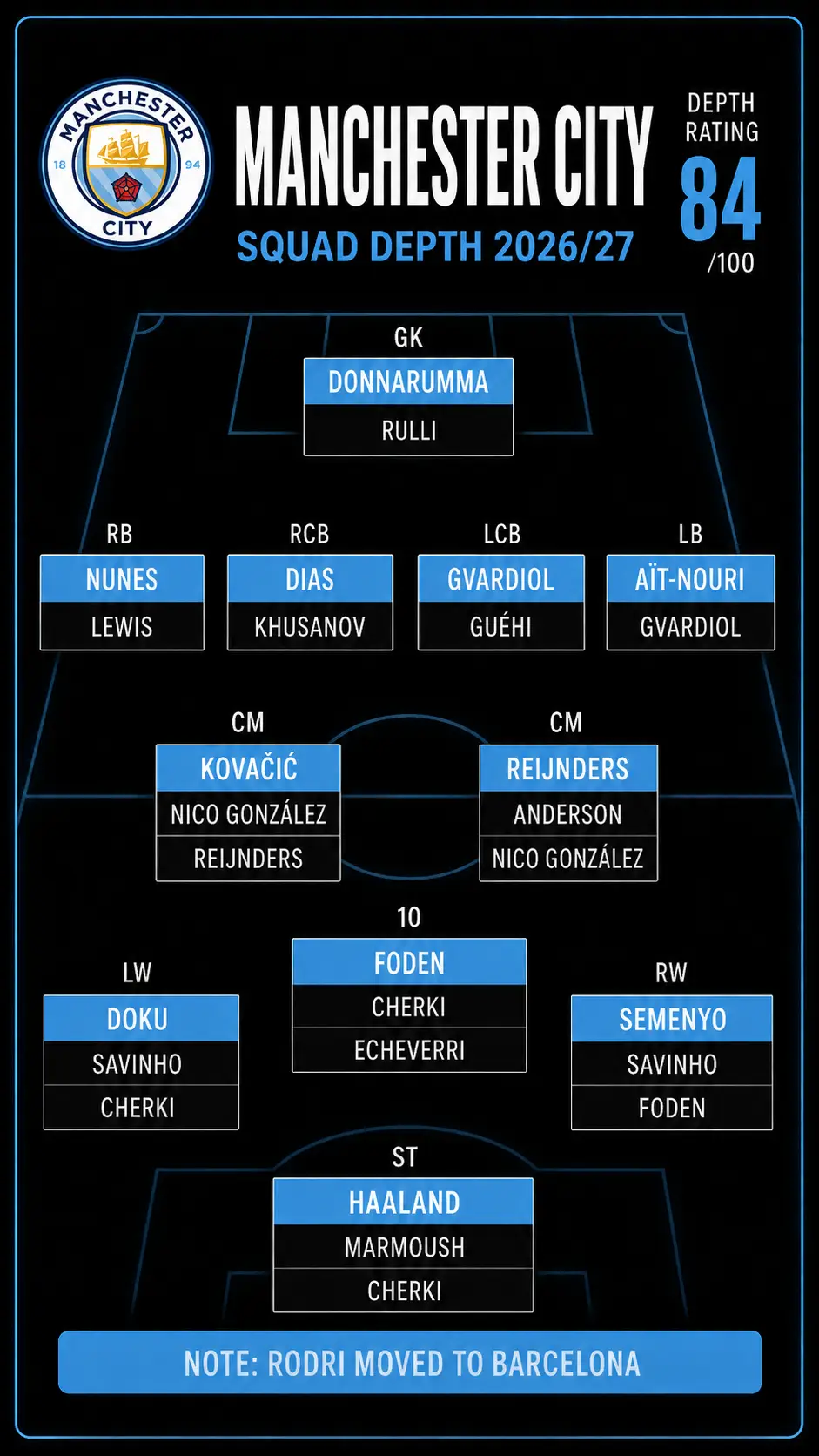
Manchester City rank second at 84. Gianluigi Donnarumma and Gerónimo Rulli form elite goalkeeper depth, Rúben Dias, Marc Guéhi, Joško Gvardiol and Abdukodir Khusanov provide several center-back pairings, and an attack containing Erling Haaland, Omar Marmoush, Antoine Semenyo, Jérémy Doku, Savinho, Phil Foden and Rayan Cherki can change shape without losing menace. Rodri’s move to Barcelona through 2030 is now official, leaving the largest specialist vacancy among the leading squads. Mateo Kovačić, Nico González, Elliot Anderson and Tijjani Reijnders can share the work, but City no longer have one obvious replacement for the player who organized their possession structure.
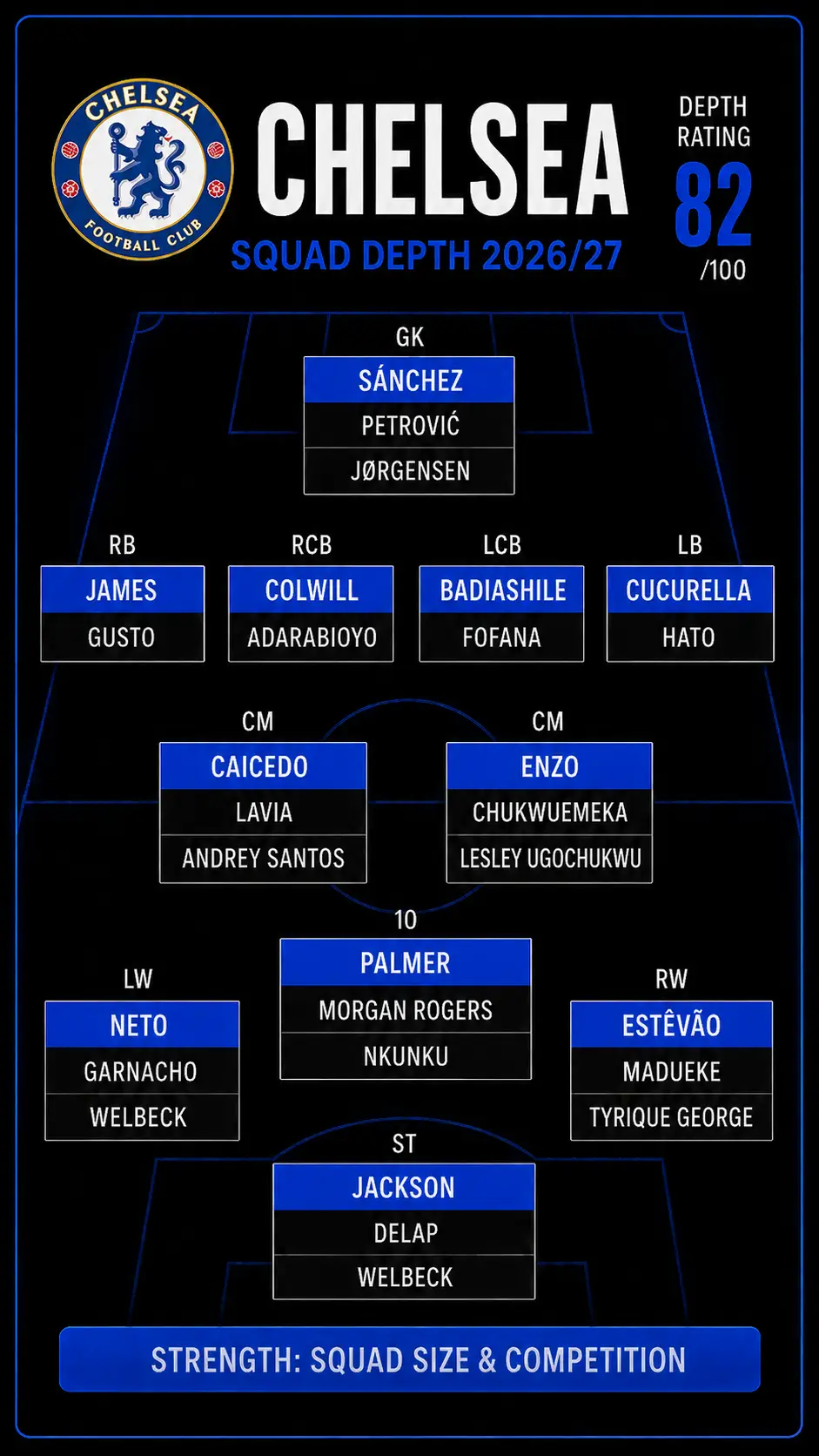
Chelsea are third at 82 and first in raw inventory. Xabi Alonso has 34 players in the Premier League’s preseason overview, including deep groups at center back, central midfield and across the front line, while no European schedule reduces the need for constant rotation. The summer has added Morgan Rogers, Maxence Lacroix and Danny Welbeck to that stockpile. The deductions come from goalkeeper quality, recent availability problems and the number of prospects still being converted into trusted senior options. A large squad can create competition; it doesn’t automatically create a dependable second team.
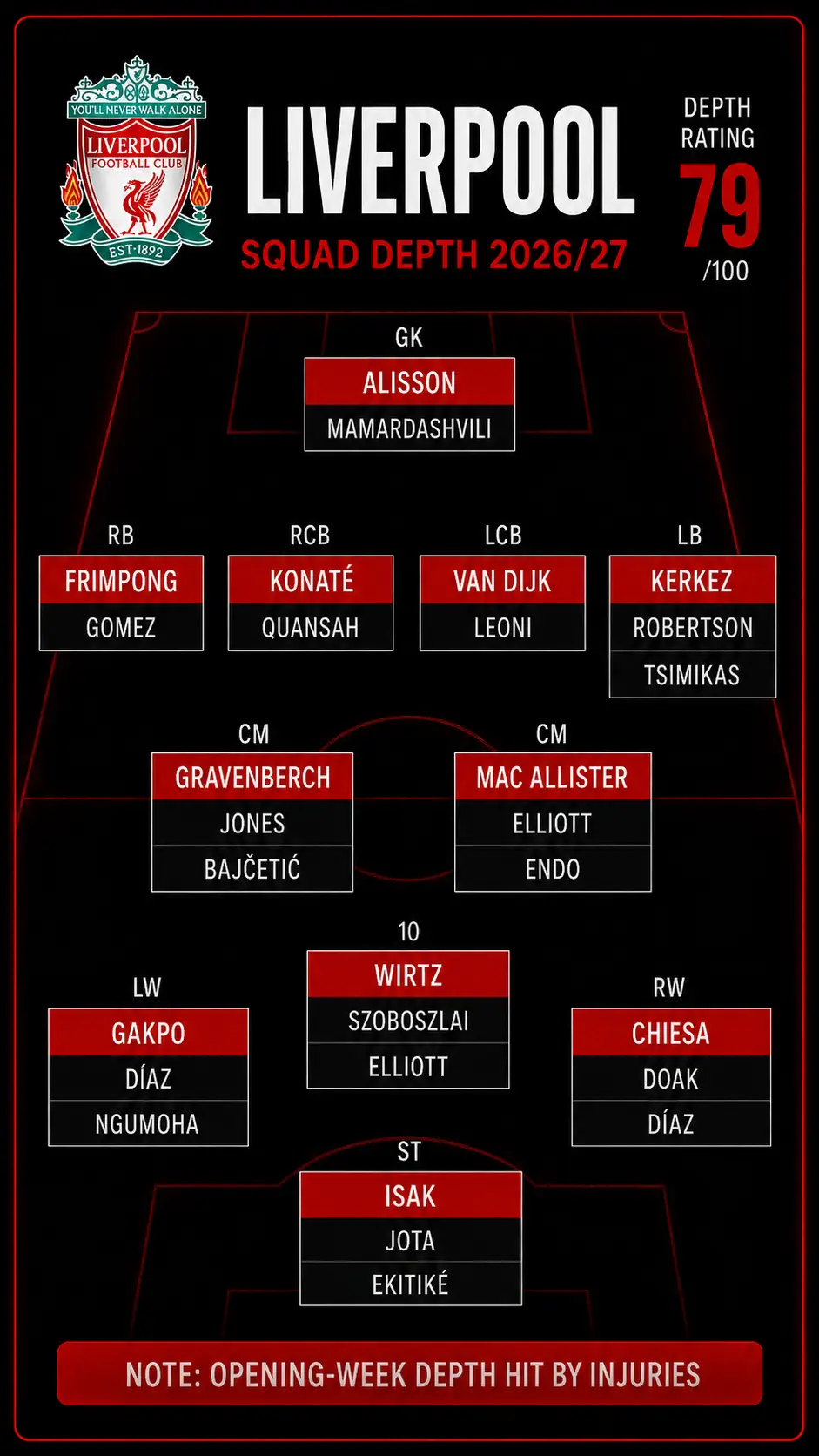
Liverpool are fourth at 79. Alisson and Giorgi Mamardashvili give them the league’s strongest goalkeeper pairing, while Ryan Gravenberch, Alexis Mac Allister, Dominik Szoboszlai, Florian Wirtz, Curtis Jones and Harvey Elliott provide considerable midfield variety. The current picture is weakened by long-term injuries to Conor Bradley, Hugo Ekitike and Giovanni Leoni, plus the loss of Mohamed Salah’s right-sided scoring and creation. Andoni Iraola has alternatives, but not a direct duplicate.
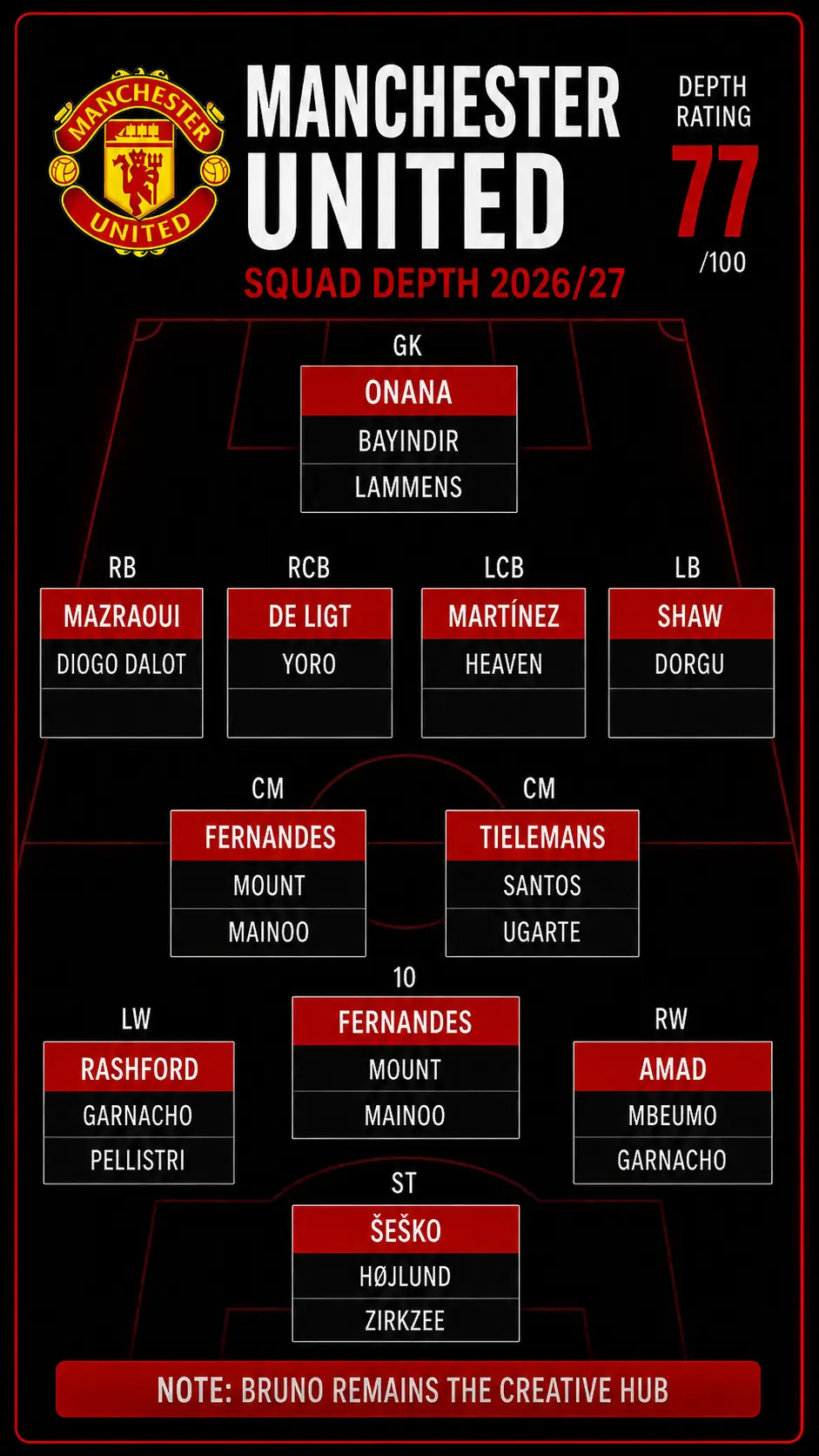
Manchester United sit fifth at 77. Youri Tielemans and Andrey Santos give Michael Carrick more legitimate rotations around Bruno Fernandes, while the center-back and forward groups are strong enough to survive normal absences. Goalkeeper and primary-creator depth still produce sharper drop-offs.
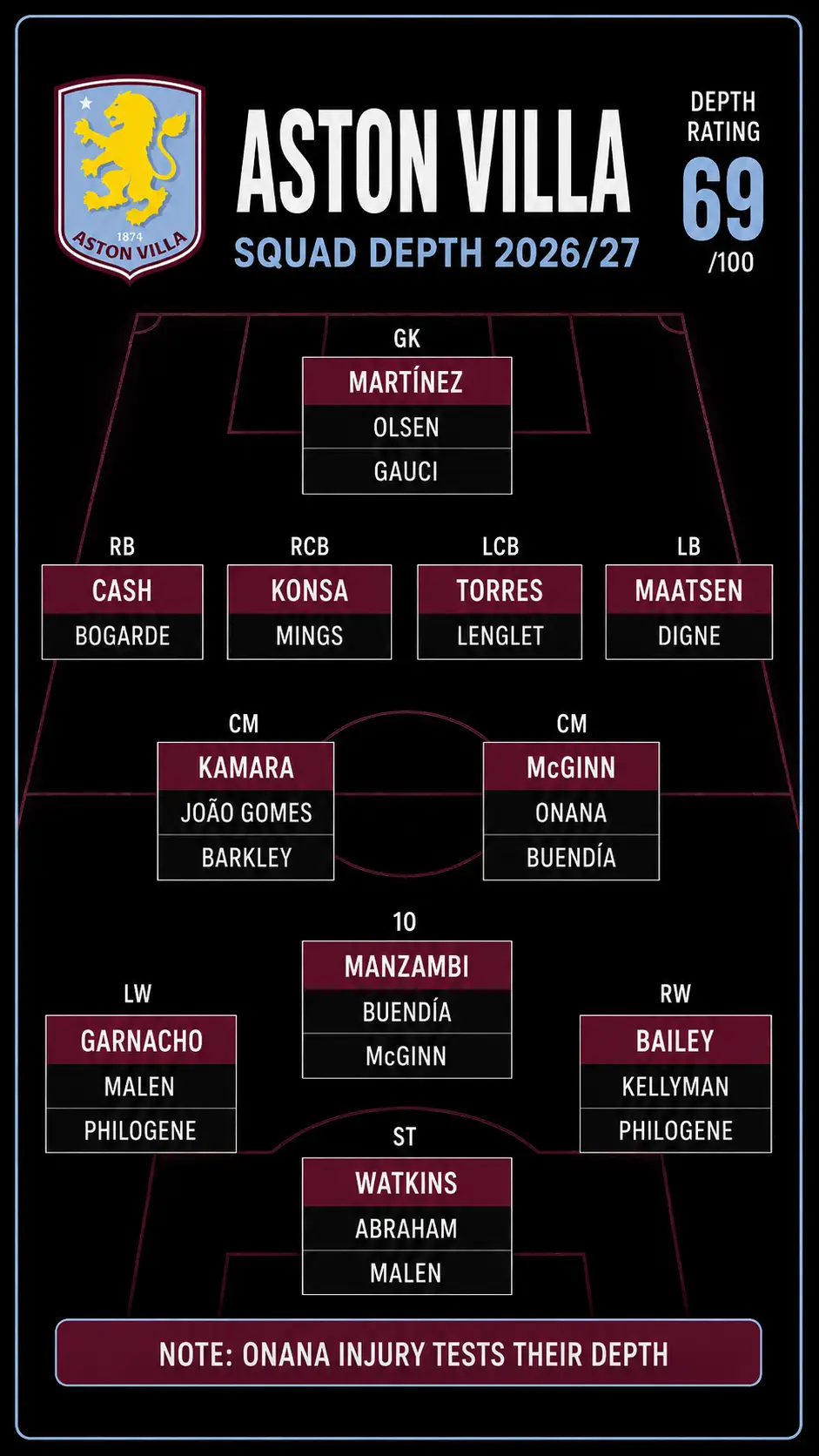
Aston Villa are sixth at 69. Their best team remains dangerous, but the departures of Rogers and Tielemans, Amadou Onana’s knee injury and a Champions League schedule leave less margin behind the first choices.
The resulting order is Arsenal, Manchester City, Chelsea, Liverpool, Manchester United and Aston Villa. It’s an opening-week snapshot because the transfer window remains open through September 1. Arsenal lead not because they carry the most players, but because they have the fewest roles where one absence changes both the quality and the identity of the team. Their old weakness has become the title defense’s most convincing insurance policy.