Arsenal are Premier League champions again, and the long wait under Mikel Arteta has finally turned from projection into proof. The 2025/26 title was confirmed not with Arsenal on the pitch, but with Manchester City unable to find the win they needed at Bournemouth.
The last time Arsenal won the league, Highbury was still home, Arsène Wenger was at the center of English football’s most elegant idea, and the Invincibles had just finished a 38-match league season without defeat. That team became a reference point the club carried for more than two decades. It was memory, standard and burden.
This title arrived differently. Arsenal had done their part with a 1-0 win over Burnley, then watched the race close on the south coast. Eli Junior Kroupi gave Bournemouth the lead against City. Erling Haaland equalized in stoppage time, but the final whistle left City four points back with one match to play. Arsenal could no longer be caught.
The clean arithmetic of the table only explains part of it. This was also the end of three straight seasons as runners-up, the end of a rebuild that had repeatedly moved close enough to touch the title without holding it, and the end of the longest gap between league championships in Arsenal’s modern life.
Arteta’s Arsenal changed the terms of the wait
Arteta’s achievement is not that he recreated Wenger’s Arsenal. He built a different one. The old ideal was movement, invention and technical fluency. This version has those qualities, but its identity sits just as clearly in pressure, rest defense, set pieces, narrowed spaces and control of small margins.
The numbers explain the shift. Arsenal scored 18 league goals from corners, a Premier League single-season record. They scored 28 of their 68 league goals from dead-ball situations. David Raya reached 19 clean sheets, level with the best Premier League total by an Arsenal goalkeeper. The team conceded only 26 league goals, fewer than any other side.
That profile matters because it separates this Arsenal from the old caricature of the club. They did not win by trying to out-romanticize their past. They won by becoming more exacting. A one-goal lead became something to protect, not a source of anxiety. A corner became a weapon, not a pause in open play. A low-scoring match became manageable, not a warning sign.
Arteta’s years at Manchester City make this title feel sharper. Arteta spent three years as Guardiola’s assistant, close to the methods that turned City into the Premier League’s dominant modern force. Now his Arsenal have interrupted the era that changed English football, not by copying City completely, but by building a colder and more compact version of control.
There is still Wenger in this story, because Arsenal can never fully separate this title from the last one. The 2003/04 side remains the club’s great unbeaten monument. But Arteta’s team belongs to another football age, one where title races are won through depth, rehearsed detail, defensive structure and the ability to keep moving after near misses.
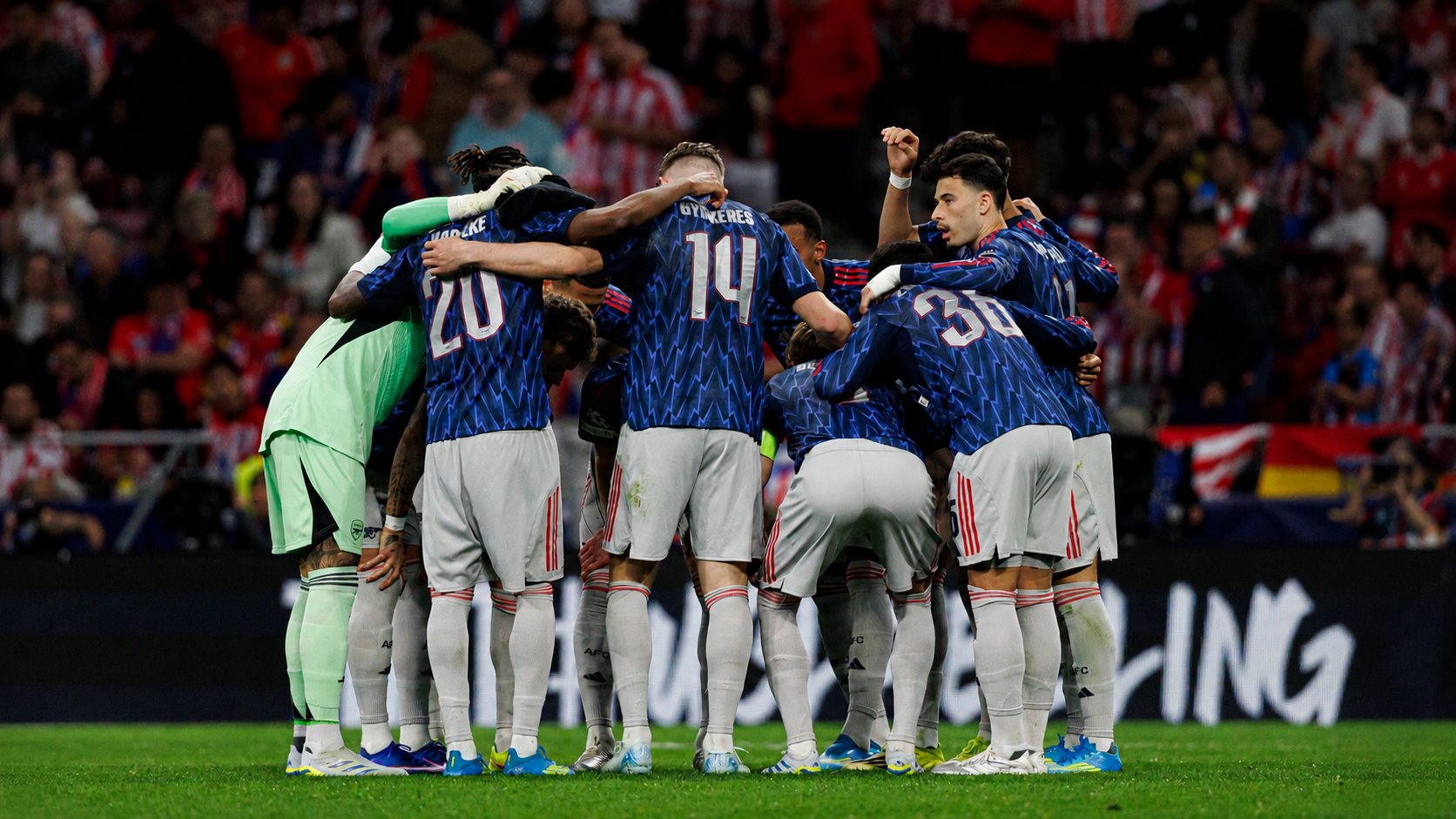
Arsenal will lift the trophy after their final league match against Crystal Palace, with a Champions League final against Paris Saint-Germain still ahead. That makes this season more than a release of old frustration. It is the point at which Arteta’s project stops being judged by what it might become and starts being measured by what it has already done.
Twenty-two years after the Invincibles, Arsenal are champions again. Not the same Arsenal, and not trying to be. This is the club’s next title team, shaped by the wait, hardened by the chase and finally strong enough to finish first.