Myles Lewis-Skelly could emerge as an option for Manchester United if Arsenal are prepared to listen. United and Chelsea have reportedly been alerted to the 19-year-old’s possible availability, creating the possibility of one of England’s brightest young players changing clubs. No bid or formal talks have been reported, and it remains unclear who initiated the approach.
The 19-year-old isn’t an expiring-contract gamble. Arsenal announced a fresh long-term deal for him in June 2025, reported to run through 2030, after he broke into the team at left back and earned Lewis-Skelly’s first England call-up. Arsenal didn’t publish an expiry date or release clause. He made 36 appearances last season, including five league starts, and remained in Mikel Arteta’s first-team plans through preseason.
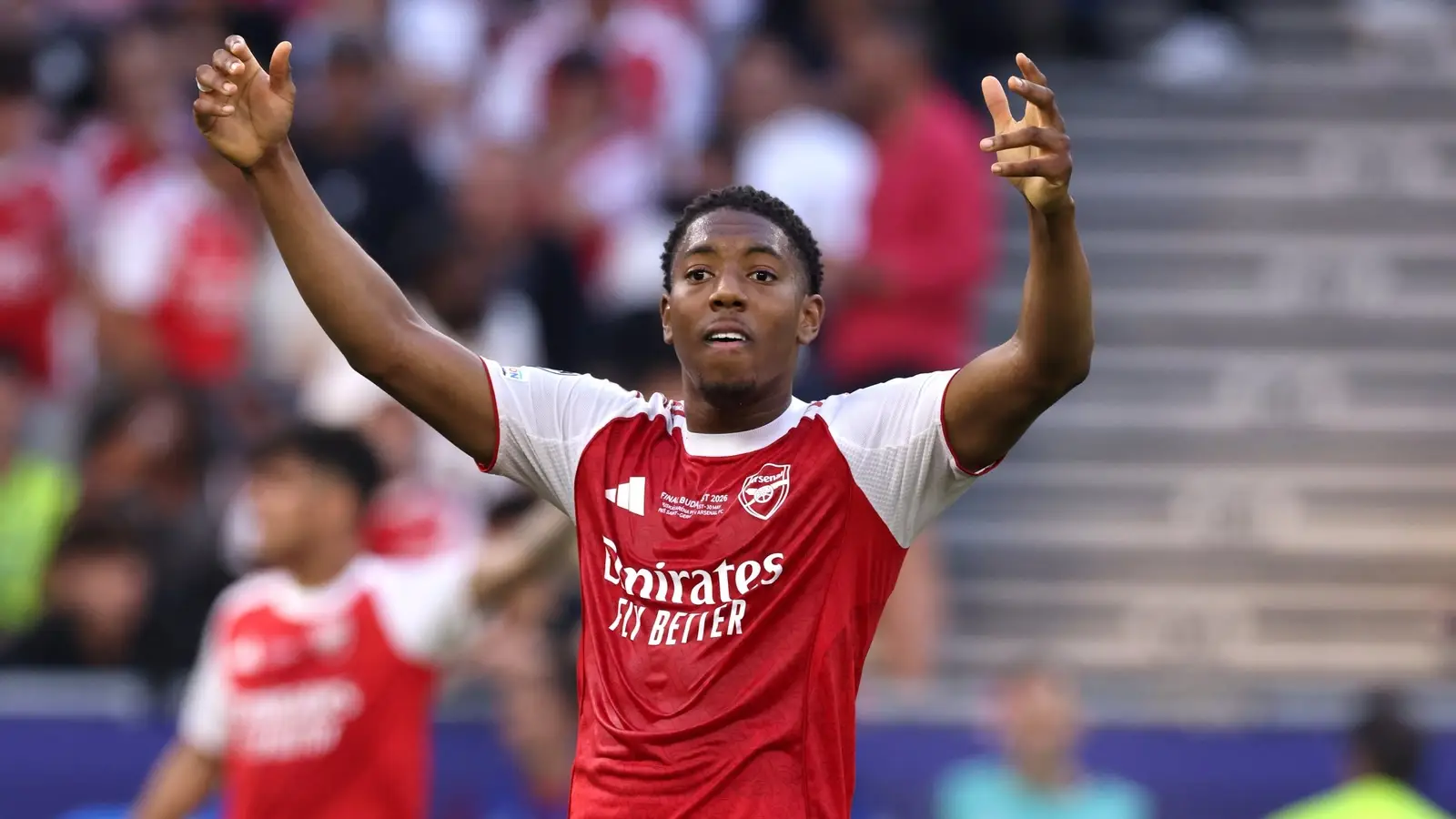
The positional label is already shifting. Lewis-Skelly trained in midfield from December through April before starting there during Arsenal’s return to the Champions League final and again in Arsenal’s August 9 preseason game. He can take the ball in crowded areas, carry it through the center and move inside from fullback, giving United a plausible use for him across two roles. It does not prove that United asked Arsenal to sell him.
United’s roster supplies the football logic. Luke Shaw, Patrick Dorgu and 19-year-old Harry Amass are the listed left-sided defenders, while Diogo Dalot and Noussair Mazraoui can provide broader fullback cover. Separate reporting says United asked Newcastle about Lewis Hall and were rebuffed, with Hall still described as their preferred target. Lewis-Skelly would offer a different profile, more comfortable stepping into midfield than holding the touchline.
Arsenal’s logic is less settled. Bruno Guimarães has joined a midfield that already includes Declan Rice, Martín Zubimendi, Mikel Merino, Martin Ødegaard and Eberechi Eze. Lewis-Skelly could face a narrower path to minutes, even after starting centrally during Arsenal’s 2025/26 Premier League title run-in. Competition can explain why other clubs received a call. It cannot establish that Arsenal authorized it or decided to sell.
What “offered” can mean here
The word “offered” can overstate what happened. An intermediary may simply have told United that a deal could be possible, rather than Arsenal making a formal proposal. One version says Arsenal circulated Lewis-Skelly’s name; another says an unnamed intermediary sounded out clubs and United declined. It remains unclear whom the intermediary represented or whether Arsenal authorized the approach.
The prices don’t resolve the conflict. One report put a prospective price at approximately $61 million; another described an earlier indicated price of approximately $81 million. Both are dated conversions using the August 10 exchange rate, and neither has been confirmed by Arsenal. Chelsea were reportedly made aware of the player, but no Chelsea offer or talks were verified.
Arsenal would have an accounting incentive to consider a large proposal because Lewis-Skelly is academy-developed, so most of a fee would ordinarily be recognized as a disposal gain before related costs. The club’s latest public accounts, however, cover only the year through May 2025. They cannot establish a present need to sell, and Bruno’s arrival does not by itself create one.
That leaves an unusual gap between football plausibility and transfer substance. Lewis-Skelly could suit United. Arsenal could decide its crowded midfield makes a sale attractive. Neither possibility is a transaction. As of August 11, the live facts are an unresolved approach, conflicting accounts of its origin and no verified step toward a deal.