Most World Cup history can be read through goals, finals and the few names that survive repeat tournaments. Dejan Stanković’s record asks for a map. He didn’t chase a different national shirt. The national shirt changed around him.
Guinness World Records credits Stankovic with appearing at the World Cup for three differently named teams: Yugoslavia in 1998, Serbia and Montenegro in 2006, and Serbia in 2010. It sounds like a loophole until the dates begin to matter. This was not a normal nationality switch. It was a career carried through the breakup and renaming of a state.
Stankovic was born in Belgrade in 1978, when the city still sat inside socialist Yugoslavia. By France 1998, he was a teenage midfielder in a Yugoslav side that still carried one of European football’s old names, even as the country behind that name had already been remade by war and secession. The record begins there, before Serie A made him more familiar to club audiences.
Germany 2006 gave the record its sharpest edge. Montenegro voted for independence on May 21, declared independence on June 3, and Serbia recognized the result two days later. On June 11, Serbia and Montenegro faced the Netherlands in Leipzig under a name football still had to use.
The record made by a moving map
Stankovic’s place in the record book is easy to flatten into trivia. It becomes more useful when read as continuity. The player did not become a serial international. He remained tied to a football structure that kept changing its legal wrapper.
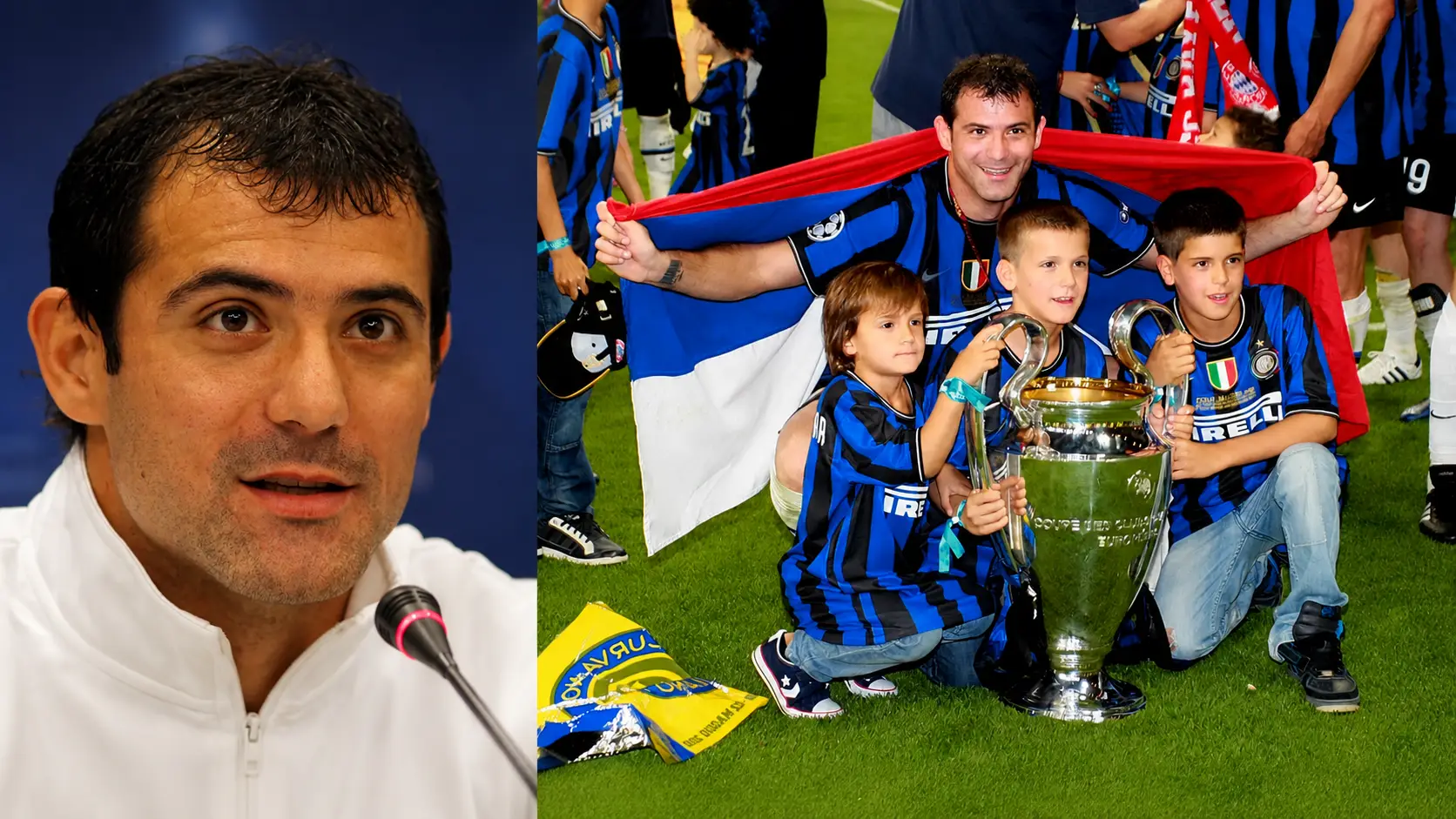
His club career prevents the story from feeling like a paperwork trick. Red Star Belgrade was the beginning, Lazio moved him into Serie A, and Inter made him part of an era that won at home and in Europe. At Inter, he made 326 appearances, 42 goals and 15 trophies, including the Champions League, the Club World Cup, five Serie A titles, four Coppa Italia titles and four Italian Super Cups.
He was a midfielder of clear utility, not a record shaped entirely by circumstance. Stankovic could play higher, deeper or wide, and his long-range shooting became part of his identity at Inter. The same versatility that made him valuable to clubs also made him a stable national-team figure through a messy international timeline.
South Africa 2010 supplied the final line. Serbia arrived under its own name, with Stankovic as captain, and beat Germany 1-0 in Port Elizabeth. The group did not open into a deeper run, but the match was hugely significant because it gave independent Serbia its first World Cup victory. For Stankovic, it also completed the sequence: Yugoslavia, Serbia and Montenegro, Serbia.
By the time he left international football, Stankovic had 103 caps and 15 goals. The number is impressive, but the World Cup distinction remains more unusual because it’s almost impossible to emulate. It required a career long enough to meet history at three separate administrative moments.
Stankovic isn’t best understood as a man who played for three countries. He is better understood as a player whose record shows how slowly sport updates after geo-politics moves. A line in a tournament database can hold a border change, a dissolved federation and a national team that finished one summer under a name the map had already begun to retire.