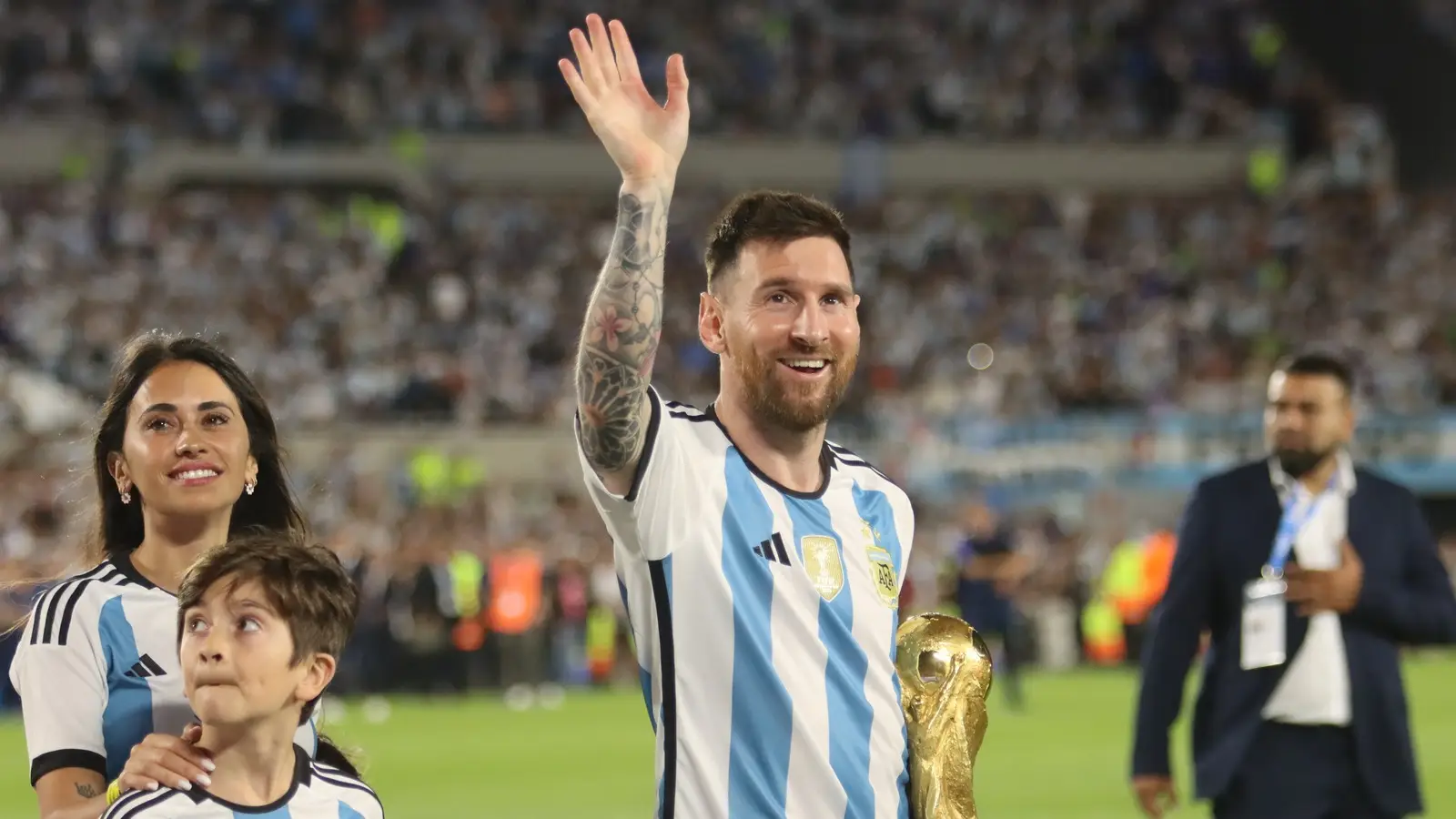
Lionel Messi has retired from international football, ending a 21-year Argentina career six weeks after Spain beat Argentina in the World Cup final. The decision closes the national-team chapter, not his playing career. The 39-year-old remains under contract with Inter Miami through the 2028 MLS season.
Messi leaves as Argentina’s record appearance maker and record scorer, with 207 matches and 125 goals. He also leaves while his cutting edge is still visible. Less than 48 hours before the announcement, he scored four goals and assisted another in Inter Miami’s 7-1 win over CF Montréal.
His final tournament didn’t resemble a ceremonial farewell. Argentina’s final World Cup run carried the defending champions back to the final, while Messi completed his sixth World Cup with a record 34 appearances and 21 goals across the competition. Spain’s extra-time victory on July 19 became his final game in the blue and white.
In his farewell message, Messi said the choice remained painful but that the time had arrived. He said he had given everything he could to the national team and pointed toward the younger players ready to take their places. He said he would continue supporting the side from outside it. Messi also explained that he had written the farewell on July 21, two days after the final. The death of his father, Jorge, in August made him more certain of a decision that was already on the page.
There’s an obvious echo of 2016, when Messi announced his retirement after another final defeat and returned later that summer. The career that followed changed Argentina’s relationship with him. The 2021 and 2024 Copa América titles, the 2022 Finalissima and the 2022 World Cup transformed a story once organized around near misses. Lionel Messi’s all-time best goals for Argentina now belong to a career measured by trophies as well as brilliance.
Argentina’s first post-Messi cycle begins
Replacing Messi has never been only a question of finding another left-footed creator. For more than a decade, Argentina’s attack and leadership hierarchy ran through the same player. Lionel Scaloni gradually added younger talent around him, but the basic order remained clear. Messi was the captain, the primary reference in tight matches and the player teammates searched for when a possession needed direction.
That responsibility will now spread across the squad. Julián Álvarez, Lautaro Martínez, Enzo Fernández, Alexis Mac Allister, Nico Paz and others can assume parts of the work, but no single successor has been established. Argentina’s challenge is to redistribute authority without forcing every future No. 10 into a comparison no player can reasonably satisfy.
The timing separates this retirement from a conventional farewell. Messi hasn’t stopped producing, and his Inter Miami contract runs through 2028. The decision removes him from international travel, compressed camps and tournament cycles while preserving a club role built around his passing, finishing and control of decisive moments.
His last Argentina appearance ended in defeat, but his international career didn’t end in failure. Messi leaves after reaching three World Cup finals, winning one, and completing the trophy sequence that once seemed determined to elude him. The player who briefly walked away before Argentina’s greatest victories now leaves after them.
Argentina’s post-Messi era will begin without a prepared substitute for everything he represented. The shirt will be filled, the team will continue and new leaders will emerge. The central figure of the last 21 years has chosen his ending while he was still capable of changing matches.