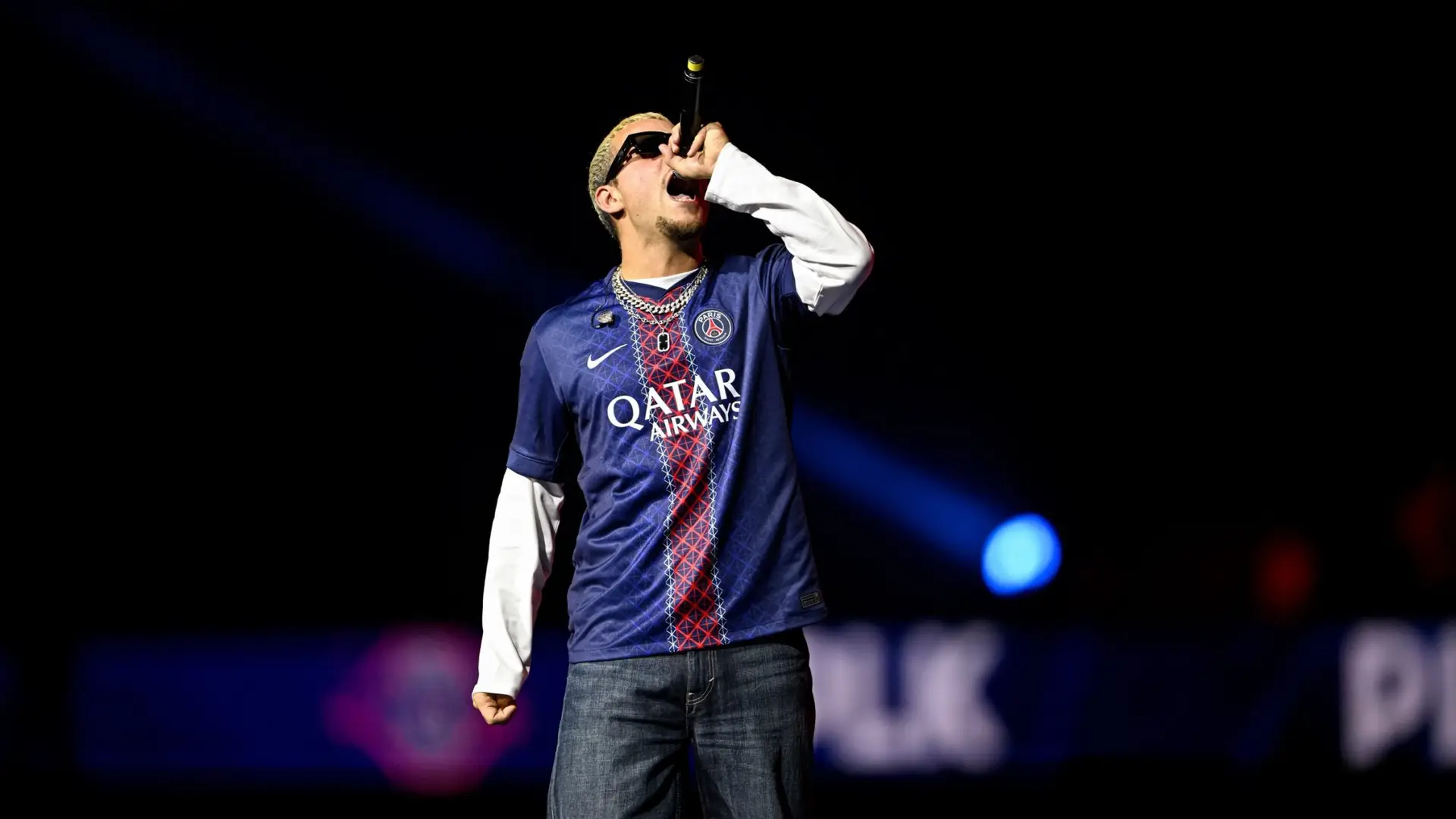
In a recent Ligue 1 interview, SDM described French rap and football as two routes that often begin in the same working-class neighborhoods. His words followed a performance at the Parc des Princes, where he joined the celebration of PSG’s second European star. The setting was grand, but his argument was local: before the stadium or arena, both cultures are shaped by city blocks, families, clothing, language and the need to be heard.
SDM’s relationship with PSG isn’t built around a single booking. He has spoken about inheriting his support from his older brother, while PSG has repeatedly placed him inside its matchday culture. The club documented an SDM show around Le Classique before inviting him back to help soundtrack the celebration of a second straight Champions League title.
That connection creates something deeper than a photograph of a rapper in a club shirt. It gives PSG a recognizable Parisian voice while giving SDM a stage tied to his own biography. The exchange works because neither side has to pretend the allegiance was invented for a campaign.
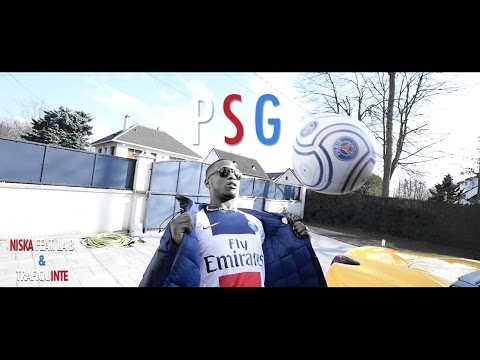
Niska and Blaise Matuidi show how influence can travel in the opposite direction. Niska’s “Matuidi Charo” attached the midfielder’s name to a rap identity, while Matuidi turned the phrase into a goal celebration. Juventus later described the movement as arms stretched to imitate a vulture’s wings. A song became body language, then a piece of football vocabulary understood without explanation.
Sefyu’s story places the two possible careers even closer together. At 17, he said Arsenal offered him a one-year professional contract. He declined and remained in France, partly because combining football with his education would have been difficult in England. Sefyu later stressed that music didn’t drive the decision. His path isn’t a simple story of football failing and rap taking over. It shows how the academy, school and studio can compete for the same young person’s future.
From club loyalties to a national soundtrack
In Marseille, Jul’s bond with Olympique de Marseille became institutional as well as emotional. His D’Or et de Platine brand entered an official partnership with the club, its D&P mark appeared on OM shirts and the collaboration extended into merchandise. Jul’s music and OM already carried Marseille beyond the city. Putting them together formalized a relationship supporters could recognize before any marketing copy explained it.
Vegedream carried the exchange from club identity to national memory. He wrote “Ramenez la coupe à la maison” during France’s 2018 World Cup semifinal against Belgium and released it after Les Bleus won the tournament. The French Football Federation later recorded his performance at the Stade de France during the trophy presentation. The song became attached to France’s football culture, giving the second star a chorus alongside its goals, shirts and images.
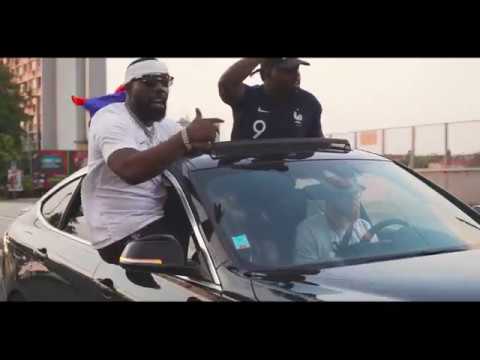
Jazzy Bazz represents a less polished version of the relationship. His “Ultra Parisien” drew from his years at the Parc des Princes and the conflict between Auteuil and Boulogne. He has also described supporting Paris FC as another club of his city. Here, rap doesn’t function as promotional music. It preserves terrace memory, internal divisions and the argument over who gets to speak for Parisian football.

Together, these examples show a culture moving in both directions. Rappers don’t simply borrow football’s audience, and clubs don’t simply borrow rap’s credibility. Songs produce celebrations. Labels appear on shirts. A World Cup victory acquires a soundtrack. Supporter history becomes a verse. The pitch and the microphone remain different stages, but in France they often draw from the same geography and return to the same loyalties.
SDM’s observation holds because the meeting doesn’t begin beneath stadium lights. It begins earlier, in the places where players first touch a ball and artists first test a line. By the time either reaches the Parc, Vélodrome or Stade de France, the neighborhood has already traveled with them.