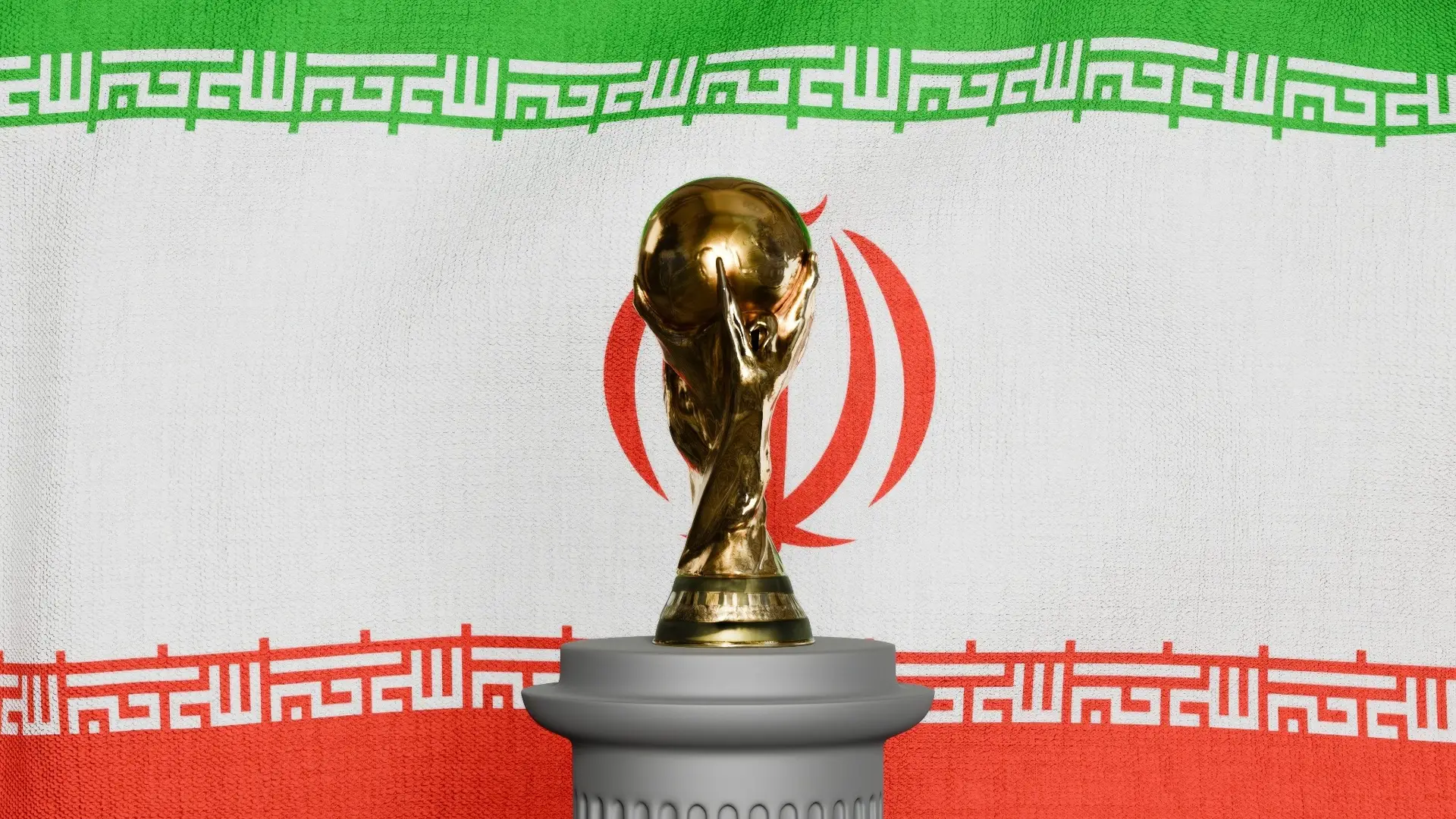
Iran’s team arrived in Tijuana on Sunday wearing #168 pins on their jackets, highlighting the ongoing war at home.
The number references the Minab school strike on February 28, early in the conflict involving Iran, the United States, and Israel. Iran reports 168 children died, and the United Nations human rights office has called for an investigation to confirm the exact figure.
This gesture follows a recent precedent in football. In March, before a friendly against Nigeria in Antalya, Iran’s players wore small school backpacks and black armbands to honor victims of the Minab strike. The pins now serve as a subtler tribute, carried from a preparatory match in Turkey to the World Cup stage.
Location is significant. Iran moved from Tucson, Arizona, to Tijuana, Mexico, due to visa and security concerns. However, all of the team’s group-stage matches take place in the United States. They will enter and leave the States on the same day.
The team’s first two group matches are in Inglewood, facing New Zealand on June 15 and Belgium on June 21 as part of the 2026 World Cup in Los Angeles. This is followed by a match against Egypt in Seattle on June 26. Although the team can remain outside the United States, it must still comply with FIFA regulations.
Why FIFA may have to decide
FIFA’s World Cup regulations broadly prohibit players and officials from displaying political, religious, or personal messages or slogans on any team attire or equipment during official tournament activities. While a lapel pin is not a banner or chant, its presence on formal team clothing in official settings may require FIFA’s approval or rejection.
No public FIFA ruling on #168 has been issued. The key question is whether FIFA views the number as a memorial or as a political message related to an ongoing conflict.
FIFA’s recent history points to caution. At the 2022 World Cup, the OneLove armband dispute showed that a symbol framed by teams as inclusion could still be restricted when FIFA viewed it through tournament equipment rules.
The itinerary adds pressure. Iran’s travel plan already depends on border crossings, visas, and a same-tournament geography that sends the squad from Mexico into U.S. stadiums and back. If #168 remains visible, it may become a test of whether football’s governing body separates remembrance from politics when the two occupy the same piece of cloth.
The pin’s effect comes from its restraint. It gives no speech. It names no country. It places a number where a badge or logo might usually sit. Its restraint makes it harder to categorize, not easier. For FIFA, the lack of words may not be enough. In a World Cup shaped by host borders, security questions and unresolved war, even a small mark on a blazer can ask the tournament to define what neutrality permits.