Uruguay never lose sight of who they are. The sky-blue kit, the growing excitement as matches heat up, and their determination in close games are all part of a football culture that has been strong since before the World Cup existed. These are the main reasons to follow this team in 2026.
Uruguay’s matches always feel meaningful, and their style stands out. Even if you’re new to watching, it’s easy to spot how they play and what helps them win.
Who Uruguay are, and why 2026 matters
You’ll see the name La Celeste everywhere. The sky-blue kit is more than just a uniform; it’s a symbol of belonging, showing up on shirts, scarves, and banners on match days. Uruguay is known for being hard to beat, quick to switch from defense to attack, and tough in physical games. Other teams know they’re a real challenge.
The four stars above Uruguay’s crest each have meaning: two for World Cup wins and two for early Olympic-era world championships. These stars aren’t just about the past; they show that Uruguay expects to compete at the highest level, and history supports that belief. Right now, Uruguay is in transition. The team is moving from the attacking style of the 2010s to a new approach with faster midfielders, a more athletic defense, and forwards who create chances on their own instead of depending on stars like Luis Suárez and Edinson Cavani. Marcelo Bielsa is leading this Bielsa’s teams are famous for pressing high, winning the ball back fast, and taking risks to attack directly. This is a big shift for Uruguay, who usually focus on staying calm, soaking up pressure, and making the most of opponents’ mistakes. Bielsa wants his team to force those mistakes instead. Whether the current squad can keep up this energy throughout the tournament is a big question for 2026. That’s why the group stage will be just as interesting as the knockout rounds. rounds.
Uruguay’s youth system is just as important as their tactics. Their younger teams regularly produce players who are ready for the pressure of senior football. Before big tournaments, the pattern is clear: if a young player gets minutes against strong teams during qualifying, they usually make the squad. In 2026, expect to see one or two new faces like this. The sign is simple: if they’re regularly in the match-day squad in the months before the tournament, they’re likely to go.
Key players and what to watch
You don’t need a detailed scouting report. A short list of key players tells you what to expect.
Federico Valverde is Uruguay’s key player when the team is at its best. He covers more ground than his position demands, turns defense into attack by carrying the ball instead of just passing, and gets into the penalty area from midfield more often than most players in his role. When Uruguay seem to have an extra man on the break, Valverde is usually why.
Darwin Núñez challenges opponents in a different way. His main value isn’t just scoring goals. It’s the pressure he puts on defenders: his runs force them to make quick choices, and his speed can turn a loose ball into a real threat. In close tournament games, this kind of play stretches defenses even if it doesn’t lead directly to goals.
Ronald Araújo is the leader of the defense. The key thing to watch isn’t just where he stands during normal play, but how he recovers. When Uruguay’s press doesn’t win the ball and the defense has to cover space behind them, Araújo’s speed and timing are what keep their defensive record strong.
In midfield, Rodrigo Bentancur and Manuel Ugarte have different roles. Bentancur keeps things organized under pressure, moves the ball when space is tight, and helps Uruguay stay in shape when opponents attack. Ugarte puts pressure on earlier, wins the ball in tough spots, and speeds up the team’s pressing. If the other team’s midfield starts making rushed decisions, it’s usually because of Ugarte’s positioning.
José María Giménez brings the same steady presence to defense that Bentancur brings to midfield. He’s a player you can count on, no matter his recent form. Giorgian De Arrascaeta gives Uruguay more technical skill when they need to control the ball. World Cup teams also need goalkeepers who can make the difference in a knockout match, and Uruguay has a strong history with keepers in big moments.
One watching cue that applies under Bielsa: Here’s one thing to watch for with Bielsa’s Uruguay: pay attention to when they start pressing. When Uruguay puts pressure on the other team’s goalkeeper or defenders, see if it leads to rushed clearances or broken passes. When the press is working, it looks chaotic for the team with the ball. If it’s not working, you’ll see Uruguay drop back into a more defensive shape. You don’t need to be a tactics expert to spot the difference. How they switch between these styles shows how the match is going.
The 2026 World Cup takes place from June 11 to July 19 in 16 cities across Canada, Mexico, and the United States. Uruguay’s group stage schedule will be set after the draw. Until then, your main choice is whether to watch in person or from home. The rest of your planning depends on that decision.
If you’re going to matches, focus your planning on location. If Uruguay’s group games are close together, staying in one place makes travel easier. If the games are far apart, it’s better to attend one match and watch the others remotely. Booking before the draw can make your travel plans too complicated.
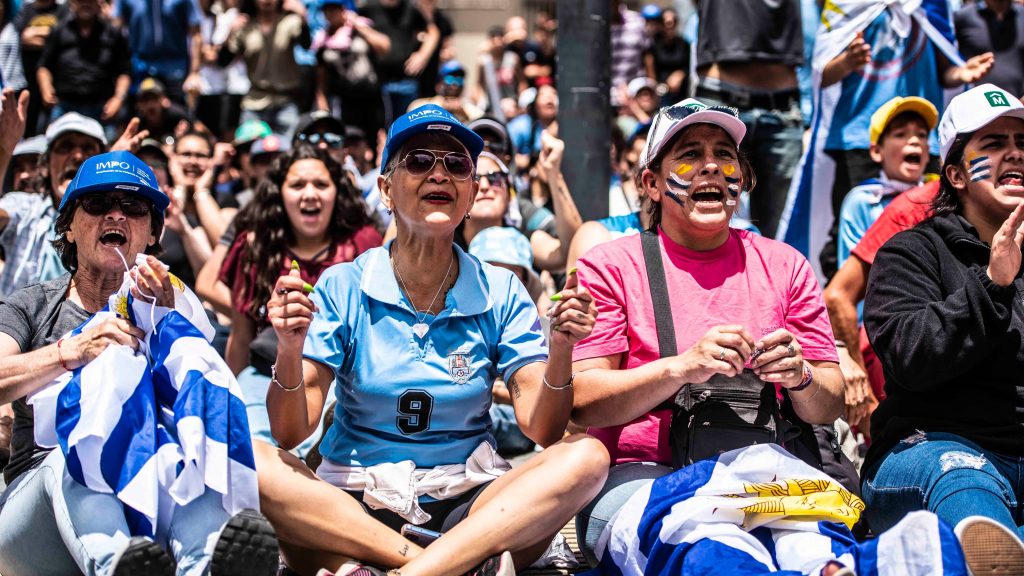
It’s worth learning about matchday culture because it shapes the whole experience. La Celeste fans stand out at every stadium: the sky-blue color is everywhere, and the noise grows as the match goes on. Two songs set the mood. “Cielo de un solo color” is the anthem sung before kickoff and at big moments. “Soy Celeste” is a shorter, louder chant that keeps the energy up. You don’t need to prepare—just join in for a chorus and you’ll fit right in.
The banderazo is a pre-match gathering, usually outside the stadium or in a nearby public square, where fans come together with flags and scarves before the game. In host cities, it’s the best way to experience Uruguay’s matchday atmosphere even if you don’t have a ticket. Everyone is welcome—the goal is to arrive at the stadium already full of energy.
If you’re watching from home, the match week routine is simple. Two days before the game, Uruguay’s official Instagram shares training clips and fitness updates. The day before, press conferences give hints about the lineup and travel plans. On matchday, the starting eleven is announced about 75 to 90 minutes before kickoff, which is when fans start talking about the lineup. After the match, official channels are the best place to get a first look at coverage before checking out highlights or deeper analysis.
The rivalries give individual matches additional context. Argentina is the neighbor fixture: two deeply familiar football cultures with no tolerance for neutral outcomes. Brazil carries the weight of the Maracanazo, the 1950 World Cup final in which Uruguay beat Brazil at the Maracanã in front of a crowd that expected the opposite result. That match still sits in the institutional memory of both programs. Ghana is different in character. The 2010 World Cup quarterfinal, decided by a Luis Suárez handball and a missed Asamoah Gyan penalty, produced a result that neither set of supporters has treated as settled history. If you know about these three rivalries, you’ll understand that whenever the tournament bracket brings them together, the stakes are high even before the match begins.
Uruguay’s success in tournaments always depends on a few key things: winning the ball in tough areas, staying focused in defense for the whole match (and extra time), and having players who can step up when the pressure is on. With Bielsa in charge, there’s also the question of whether the team’s pressing style can last through several matches in a short time. That’s the big test for this squad, and only the matches will show if they’re up to it.