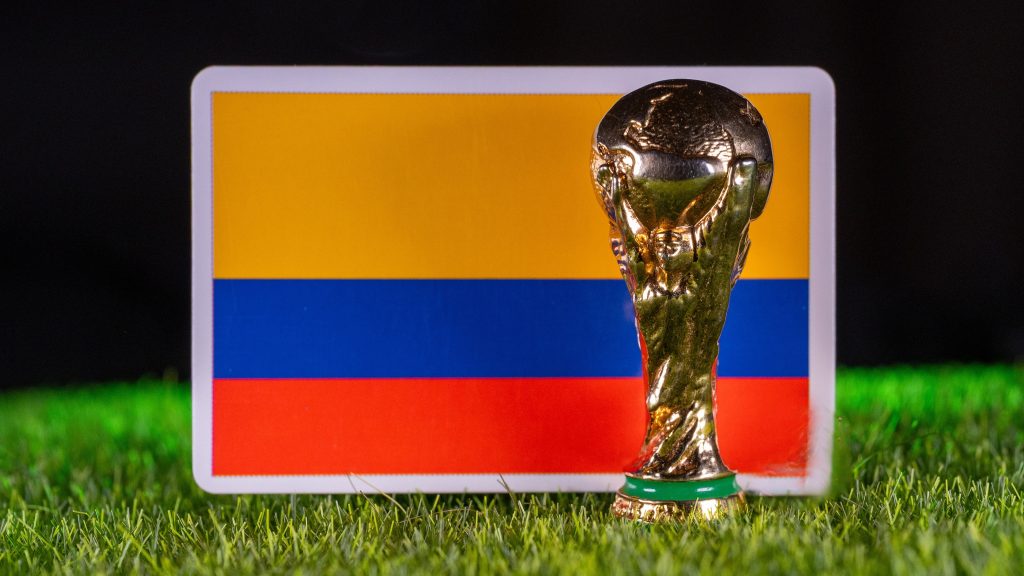
Eight years is a long time to miss out on a tournament. Colombia did not qualify for 2022 and had to watch from the sidelines. Now, they are back for 2026, but the story behind their return is just as important as qualifying itself. Knowing what Colombia has experienced since 2014 helps make sense of their group stage in June.
The 2014 baseline and what followed
Colombia’s quarter-final run in 2014 showed what the team was capable of at a World Cup. The squad was organized, had clear roles, and James Rodríguez stood out as a player who matched the tournament’s level. Although they lost to Brazil in the quarter-finals, their performance showed a team on the rise.
After 2014, Colombia could not keep up that momentum. In 2018, they went out in the Round of 16 on penalties to England, showing the squad was not as strong as before. Failing to qualify for 2022 made it clear the team needed a fresh start. Now, the squad reflects that change: Rodríguez is still there, playing a different role at this stage of his career, and Luis Díaz has become the main attacking threat after proving himself in Europe.
Why the format matters this time
The 2026 tournament will have 48 teams. More teams will move on, but the group stage still creates a clear divide: teams that earn points in their first two games have choices going into the third match. Those who do not are just trying to qualify. Colombia’s group includes Uzbekistan, a playoff qualifier, and Portugal.
The order of the matches matters. Colombia starts against Uzbekistan on June 17 at Estadio Azteca in Mexico City, which looks like their easiest game. The second match is on June 23 in Guadalajara, and the opponent’s path to qualification will shape how they play. The last group game is June 27 in Miami against Portugal, a team known for strong defense and talented forwards who will challenge Colombia’s ability to handle pressure.
If Colombia take points from the first two matches, the Portugal game becomes a statement fixture rather than a survival one. That distinction changes how the team can set up and what they are willing to risk.
Reading the squad
The main question for Colombia’s squad is how Rodríguez’s role has changed since 2014. Now, he focuses more on making decisions and taking set pieces. He does not offer the same safety net in fast-paced moments as he did twelve years ago. However, he can still control the game’s tempo and find spaces to start attacks when the team is organized around him.
Díaz is built on a different logic. He attacks space, applies pressure in transition, and creates problems through the directness and pace of his runs. The combination works when Colombia’s midfield is controlling second balls and the team can move quickly through phases. It breaks down when the defensive block loses its compactness and the distance between the two attacking profiles becomes unmanageable.
The Colombia worth watching is the one where those two profiles are coordinating rather than compensating for each other. The Colombia that is in trouble is the one defending deep, losing midfield structure, and requiring Díaz to press without support.
Following the tournament
Two sources cover Colombia’s institutional output reliably: the FCF account and CONMEBOL. Both publish the information that matters before and after each match, without the noise of broadcast speculation. A single additional source, a journalist or analyst covering the squad closely, adds the context that official channels do not provide.
For public viewing in the host cities, the FIFA Fan Festival sites are the most stable option. Mexico City’s hub is the Zócalo. Guadalajara’s is Plaza Liberación. Miami’s is Bayfront Park. These locations are organized for the scale of the event and do not depend on local bar programming or unofficial gatherings.
The rivalries Colombia carry into the knockout rounds
The group stage does not include Argentina, Brazil, Uruguay, or England, but the historical weight of those fixtures remains part of how Colombia measure progress. The 5-0 result against Argentina is a reference point that neither side treats lightly. The England penalty defeat in 2018 has not been resolved; Colombia have not had another opportunity at that stage of a World Cup to change the record. The Brazil comparison runs deeper, less a rivalry than a standard: the question of whether Colombia can perform with Brazil’s consistency at a tournament is one the program has not definitively answered.
Whether 2026 produces an answer depends on what happens in the group stage, how the squad holds together under pressure, and whether the two profiles at the center of the attack can function as a coherent unit rather than two separate threats that the team cycles between.
The first match against Uzbekistan tells you more than the result. Watch how Colombia’s midfield sets up in the opening fifteen minutes. The early structure is usually the honest one.