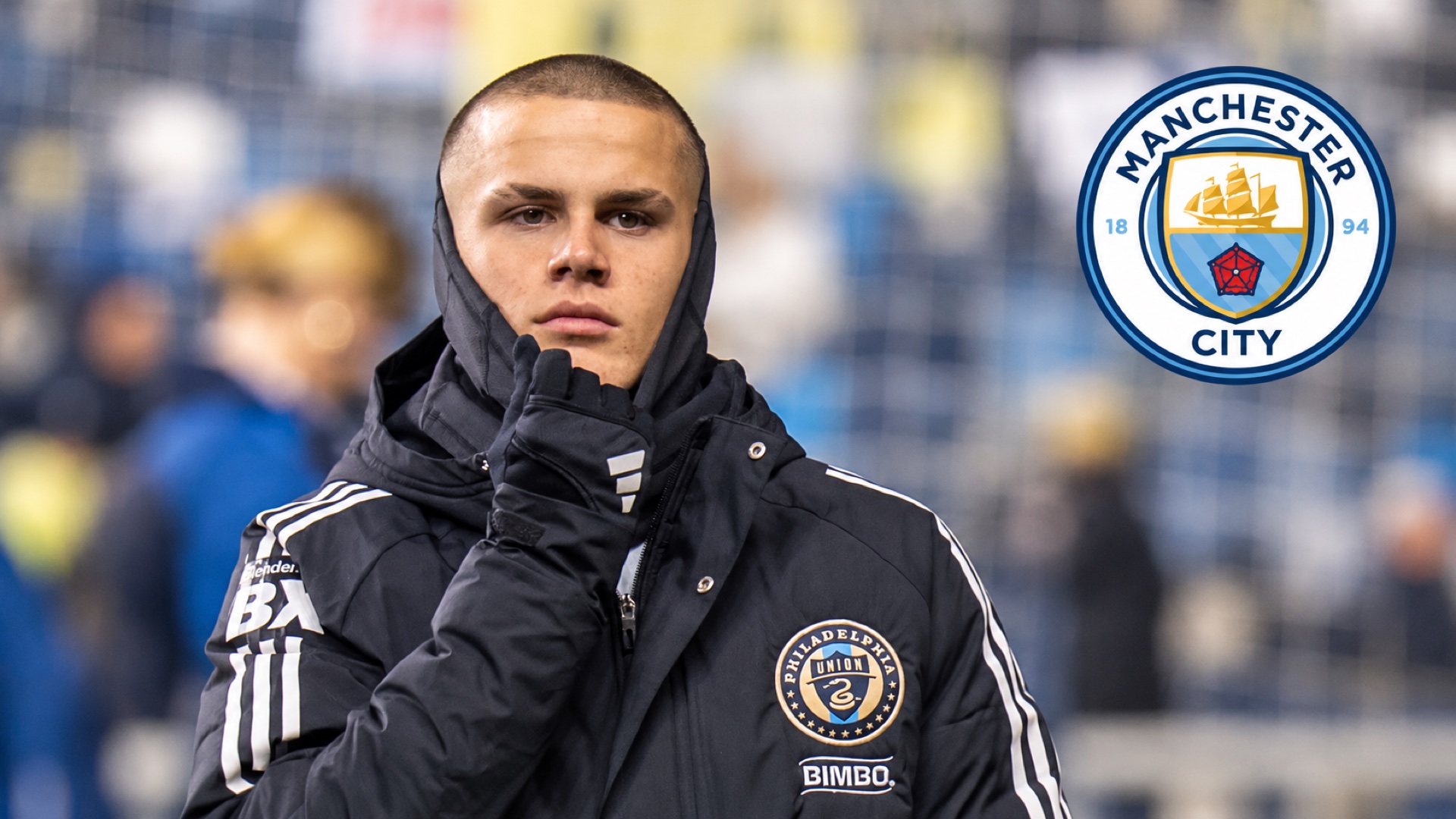
Cavan Sullivan’s move to Manchester City is still expected to happen. The latest reporting has the 17-year-old joining City in January 2028, the first registration window after his 18th birthday, even as Manchester City appeals the Premier League commission’s findings against the club.
That sounds like continuity, but Sullivan’s situation looks very different from when the agreement was struck in 2024. As we noted in our September profile of Cavan Sullivan, the Philadelphia Union teenager was already moving beyond the language of potential. He has since become the youngest MLS Player of the Month, producing four goals and five assists in September, and the youngest goalscorer in USMNT history after scoring against Mexico at 17 years and five days.
City’s situation has changed, too. An independent Premier League commission found the club guilty of serious financial-rule breaches over a nine-season period and of most of the cooperation charges brought against it. City has appealed and continues to reject the findings. The sanction has not yet been decided, and there is no announced transfer ban or other ruling that currently prevents Sullivan from joining.
The City relationship is also more substantial than a distant promise. Philadelphia officials have spoken publicly about working with City on Sullivan’s development, and he has made training visits to Manchester. Sullivan has said he has built relationships with people at the club and remained in contact with them. His Union contract runs through 2028, while the planned City move has long been built into his pathway. The exact contractual protections around the future transfer have not been made public.
The football question has therefore shifted. Sullivan once hoped to be ready for City’s first team when he turned 18. He is now playing meaningful senior minutes, creating and scoring in MLS, and contributing for the United States. By January 2028, simply getting him inside the City system may not be enough. The next environment will need to keep giving him the responsibility that accelerated his development in Philadelphia.
View this post on Instagram
If City is no longer the best fit
Real Madrid, Barcelona and Paris Saint-Germain have all appeared in recent reporting around Sullivan, although none has publicly confirmed a move for him. Borussia Dortmund is the more convincing alternative because the connection is real, not invented for a transfer window. Sullivan and his brother Quinn previously trialed there, and Dortmund pursued Cavan before he chose the Philadelphia-to-City route. He also holds a German passport.
For an American teenager whose game still needs senior repetition, Dortmund’s history is relevant. Christian Pulisic and Gio Reyna both broke into senior football there, and 17-year-old Mathis Albert is the current example. Albert moved from the LA Galaxy system to Dortmund in 2024 and became the youngest American to play in the Bundesliga this year.
Dortmund would not guarantee success or minutes. No major European club can. But its appeal is easy to understand: Sullivan could enter a high-level league at a club structurally comfortable with developing young attackers without making immediate dominance the condition for seeing the field. If City’s circumstances or development plan no longer make sense, Dortmund would deserve another look.
Barcelona is perhaps the most intriguing stylistic fit. Sullivan is a left-footed creator who can start from the right, move inside, combine in tight spaces and find runners. Those qualities suit a possession-heavy club that asks attackers to interpret the half-spaces rather than remain fixed to the touchline.
The complication is Lamine Yamal. Barcelona’s current No. 10 can play as a right winger or attacking midfielder and would still be only 20 when Sullivan is due to move. Sullivan could eventually operate as an interior creator or from another attacking position, but Barcelona would need to offer something more convincing than stylistic compatibility.

Real Madrid presents another problem. Its level is unquestioned, but the competition for attacking and creative positions is severe. A teenager can improve inside an elite training environment and still lose an important year waiting for opportunities. Sullivan’s recent rise makes senior minutes more valuable, not less.
PSG offers a different version of the elite-club argument. Its current squad includes young technical players such as Désiré Doué, Senny Mayulu and Warren Zaïre-Emery alongside established stars. Sullivan’s ability to move between wide and central areas could translate there, but PSG would face the same test as every other superclub: showing exactly where the minutes are coming from.
City can still provide the best answer. Arrival in Manchester does not have to mean a choice between starting for City and disappearing into youth football. If Sullivan is not immediately ready for the first team, a carefully selected top-flight loan could preserve the senior minutes he has earned while allowing City to control the longer development plan.
There is also a warning in Freddy Adu’s career. Changing environments repeatedly can become its own obstacle. Sullivan’s rise in Philadelphia has been built on continuity, family support and increasingly difficult senior assignments. The next move should add difficulty without removing purpose.
The agreement with City may still unfold exactly as planned. But City secured Sullivan when it was buying a projection. By January 2028, it may be receiving an established USMNT attacker with years of professional football behind him.
At that point, the question will not be whether Manchester City is big enough for Cavan Sullivan. It will be whether the pathway is good enough for the player he has become.