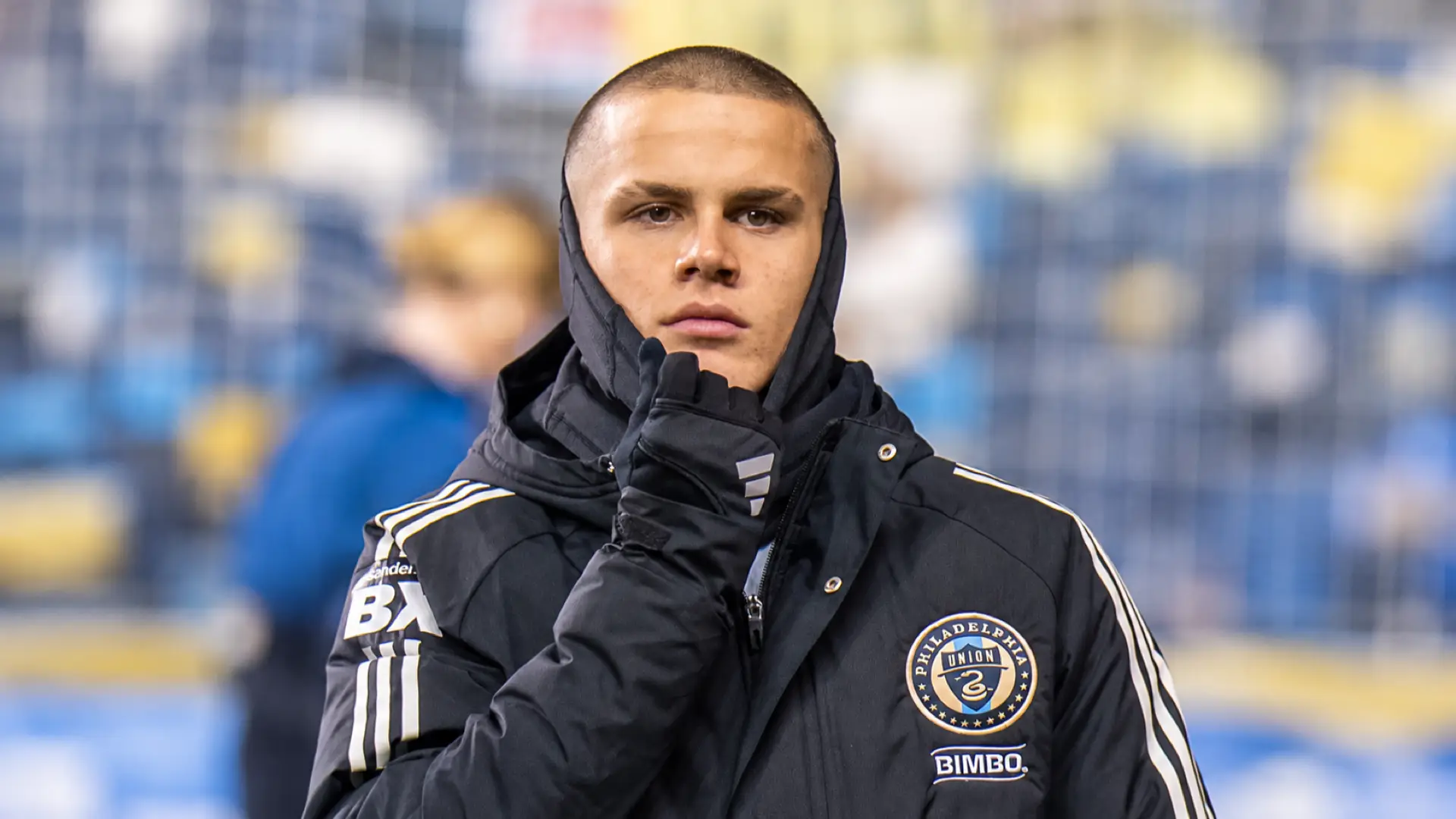
Philadelphia were three goals down in Kansas City when Cavan Sullivan helped pull the game back within reach. He set up Bruno Damiani, scored two minutes later, and left with a 4-3 win. At 16, he wasn’t there to collect a few encouraging minutes. He was quickly becoming Mr. Impact.
Now he’s taking that form into his first senior U.S. camp, part of Mauricio Pochettino’s next USMNT cycle. An appearance against Peru, Chile, Mexico or Canada would make Sullivan the youngest American men’s international since Freddy Adu.
The Peru friendly on September 26 offers his first chance, two days before his 17th birthday. Sullivan would be 16 years and 363 days old. Adu was 16 years and 234 days when he made his senior debut in 2006, so the all-time record would remain intact.
Sullivan arrives with seven goals and 12 assists in 24 MLS appearances this season, including a goal contribution in eight consecutive league matches. His assist total is a teenage single-season record. His combined 19 goals and assists match Alphonso Davies’s 2018 MLS season, one behind Diego Fagúndez’s teenage benchmark from 2013. That’s company earned through senior performances, not youth-tournament projections.
In 2025, Sullivan’s MLS season amounted to 214 minutes across 11 appearances, with one start. Under interim coach Ryan Richter, he’s since established himself in Philadelphia’s starting midfield. The age record announced his arrival. A regular role has given him something more useful: repeated chances to solve the problems of a senior match.
Against Red Bull New York in August, Sullivan controlled an aerial pass from Danley Jean Jacques on the right, shifted inside and shot across the goalkeeper. The sequence joined three different skills: receiving a difficult ball, beating an opponent and choosing the finish. The first touch had made the rest possible.
Richter also saw defensive lapses and missed attacking opportunities in Sullivan’s first half. He praised the adjustments after halftime as well as the goal. Sullivan hadn’t been excused from the ordinary demands of his position because he could produce something unusual with the ball.
After Sullivan scored against Montreal, Richter highlighted a less spectacular skill: getting into scoring positions without needing to manufacture an exceptional solo goal. “He is finishing plays off,” the coach said. Better movement gives Sullivan another way to contribute when the first defender won’t be beaten. An attacker who can find chances as well as create them asks more questions of an opponent.
Philadelphia has been central to that education. Sullivan joined its academy at 10 and progressed through youth football and Union II before reaching MLS. His first league appearance came alongside older brother Quinn. The club has provided successive levels of competition without requiring him to leave his hometown environment for each new challenge.
He isn’t arriving at national-team camp alone, either. Fellow Union homegrowns Neil Pierre and Frankie Westfield have also earned their first senior selections. Former Philadelphia academy players Matt Freese and Auston Trusty are in the squad, too. Sullivan is the youngest of that group, but the route to the national team is visibly wider than one exceptional teenager.
Sullivan’s MLS debut in July 2024 came at 14 years and 293 days, 13 days younger than Adu’s. The previous record-holder congratulated him publicly. Sullivan responded with respect: “He really paved the way for young guys like me.”
Their shared milestones don’t prescribe a shared career. Nor does a better-developed academy system guarantee that every subsequent decision will be right. Sullivan has benefited from a progression through different levels, but his next club and national-team opportunities will still need to suit the player he’s becoming. Adu’s name can’t answer those questions for him.
Manchester City is the most prominent part of that future. Sullivan’s reported arrangement would take him there at 18; Philadelphia’s announced contract runs through 2028. Neither detail guarantees a place in City’s first team. The useful questions concern who will coach him, where he’ll play and how consistently he’ll face opposition that stretches him.
The growing market for MLS talent can reward a club before anyone knows whether a move will work for its player. For Sullivan, a successful next step should preserve the combination now helping him in Philadelphia: responsibility, demanding matches and coaching that leaves room for invention without overlooking mistakes.
Pochettino’s camp will test how quickly those habits travel. Sullivan must keep finding space, recognize when a simple pass is the right one, and stay involved when an ambitious move breaks down. A few minutes can deliver the milestone; earning responsibility beyond them will require a fuller contribution.
Sullivan can be an exceptional prospect and an unfinished player at the same time. Philadelphia has allowed him to be both, trusting him to influence matches while expecting him to improve. His first USMNT opportunity should extend that work, not turn it into a demand for instant greatness.