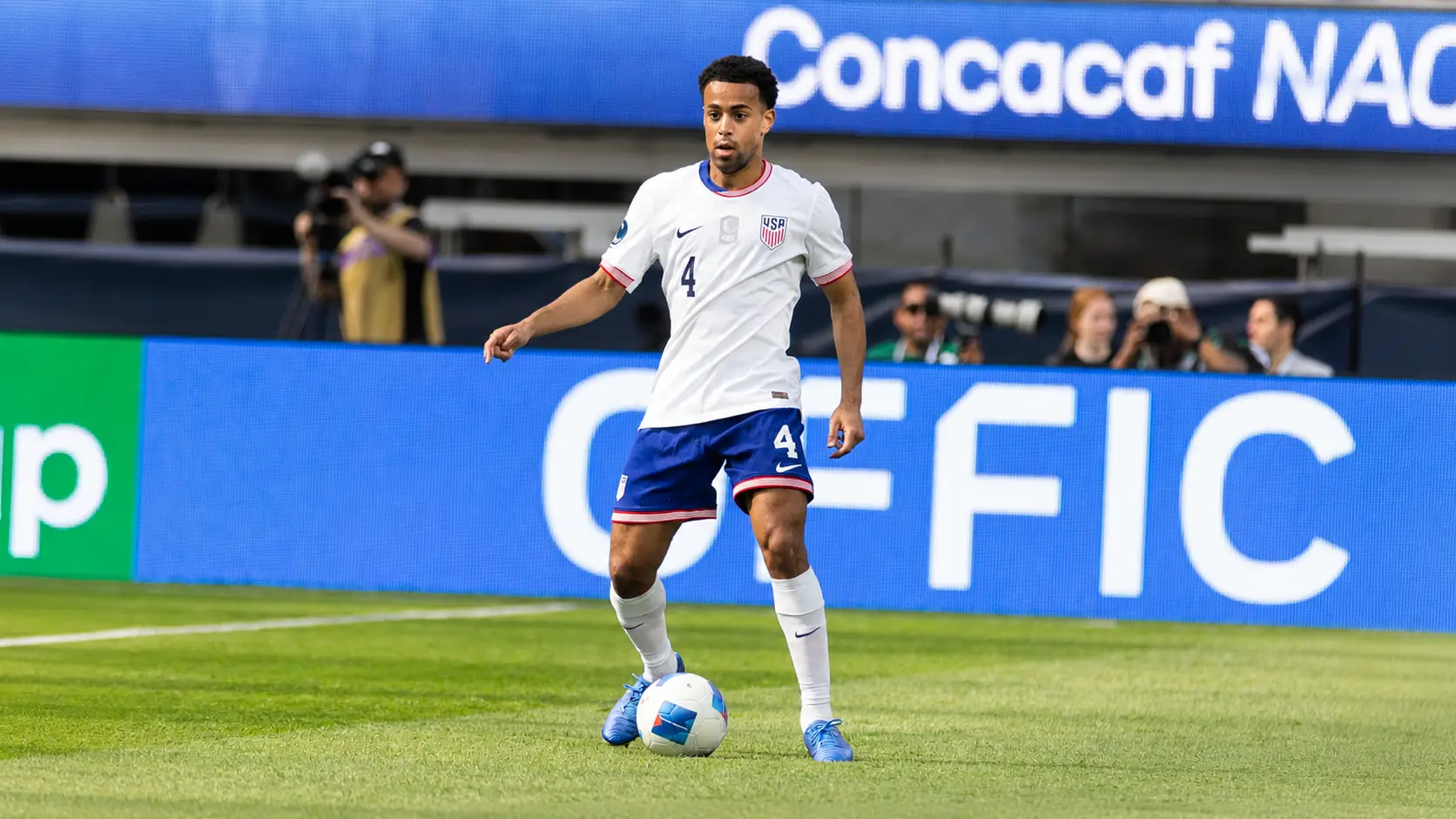
The last U.S. match before the 2026 World Cup did not end with the kind of score that tidies a send-off. Germany left Soldier Field with a 2-1 win, and the United States left with a more useful problem: the match gave Pochettino’s USMNT roster a clearer picture of what will and will not travel into June 12 against Paraguay.
Kai Havertz scored in the second minute, meeting Joshua Kimmich’s service from a free kick and punishing the U.S. before the afternoon had settled. For a team that has spent much of this cycle answering questions about control, the opening sequence was a reminder that tournament opponents do not need long stretches to change a game. They need one loose marking assignment, one dead ball, one lapse.
The response was the part worth carrying forward. Antonee Robinson’s 37th-minute golazo equalizer came after a German clearance dropped outside the area, where he drove a left-footed volley under the bar for his fifth international goal. It was the one U.S. moment that cut through the structure Germany kept around Christian Pulisic’s role and the limited service to Folarin Balogun.
The numbers made the loss harder to reduce to a simple warning. The U.S. finished with 16 shots to Germany’s 12, took 10 corners to Germany’s two, and matched Germany with four shots on target. None of that changes the score. It does show a team capable of creating pressure against a high-level opponent, even while failing to finish enough of it.
Germany supplied the standard
Leroy Sané restored Germany’s lead in the 57th minute, and the way the goal arrived mattered as much as the finish. Germany moved in tight spaces, used Kai Havertz to connect the final action, and found the shot before the U.S. could reset. It was the difference between promising spells and decisive play. The U.S. had stretches. Germany had the moments that settled the match.
Soldier Field drew 63,636, the highest attendance for a U.S. men’s national team match at the stadium. The figure matters without needing to overstate it. A home World Cup is not only a schedule advantage. It creates a different environment around every lineup choice, recovery day and mistake. The opener against Paraguay in Los Angeles will ask whether the U.S. can turn that scale into steadier decision-making.
Around the rest of the final warm-up slate, the contrast was sharp. England beat New Zealand 1-0 in Tampa, where Harry Kane scored and Thomas Tuchel rotated heavily in conditions that looked more like a tournament preparation exercise than a search for rhythm. Brazil beat Egypt 2-1 in Cleveland, with Endrick scoring after coming on at halftime. Argentina beat Honduras 2-0 without Lionel Messi playing, another reminder that Argentina’s title defense has a squad beyond its defining player.
The results say less than the pattern. The best teams spent the weekend working through specific tournament questions. Germany sharpened the habits of a side that already knows its shape. England tested bodies and heat. Brazil measured its depth. Argentina managed a superstar’s condition while still winning. The U.S. tested its own gap between competitive energy and game-winning precision.
That gap is where Pochettino’s work now sits. Matt Freese played the full match, which gives the goalkeeper conversation a firmer direction. Robinson’s goal gave the U.S. a high-value contribution from outside its usual attacking chain. Sebastian Berhalter’s late minutes added one more midfield option, but the central issue remains service, timing and how quickly the team can recover when its first plan is blocked.
Germany won the match and probably learned less from it. The U.S. learned more because it had to. A narrow loss can be useful only if it points directly to the work that remains. This one did. Pochettino does not have a finished team. He does have a team that looked more coherent against Germany than the score alone suggests, and a deadline close enough to remove any illusion that there is time to rebuild.
The World Cup begins for the United States against Paraguay on June 12. After Germany, the frame is cleaner. This team does not need a new identity in the final days before kickoff. It needs the version from Chicago, with fewer early errors, sharper final passes and enough calm to make its best stretches count before a better opponent punishes the next one.