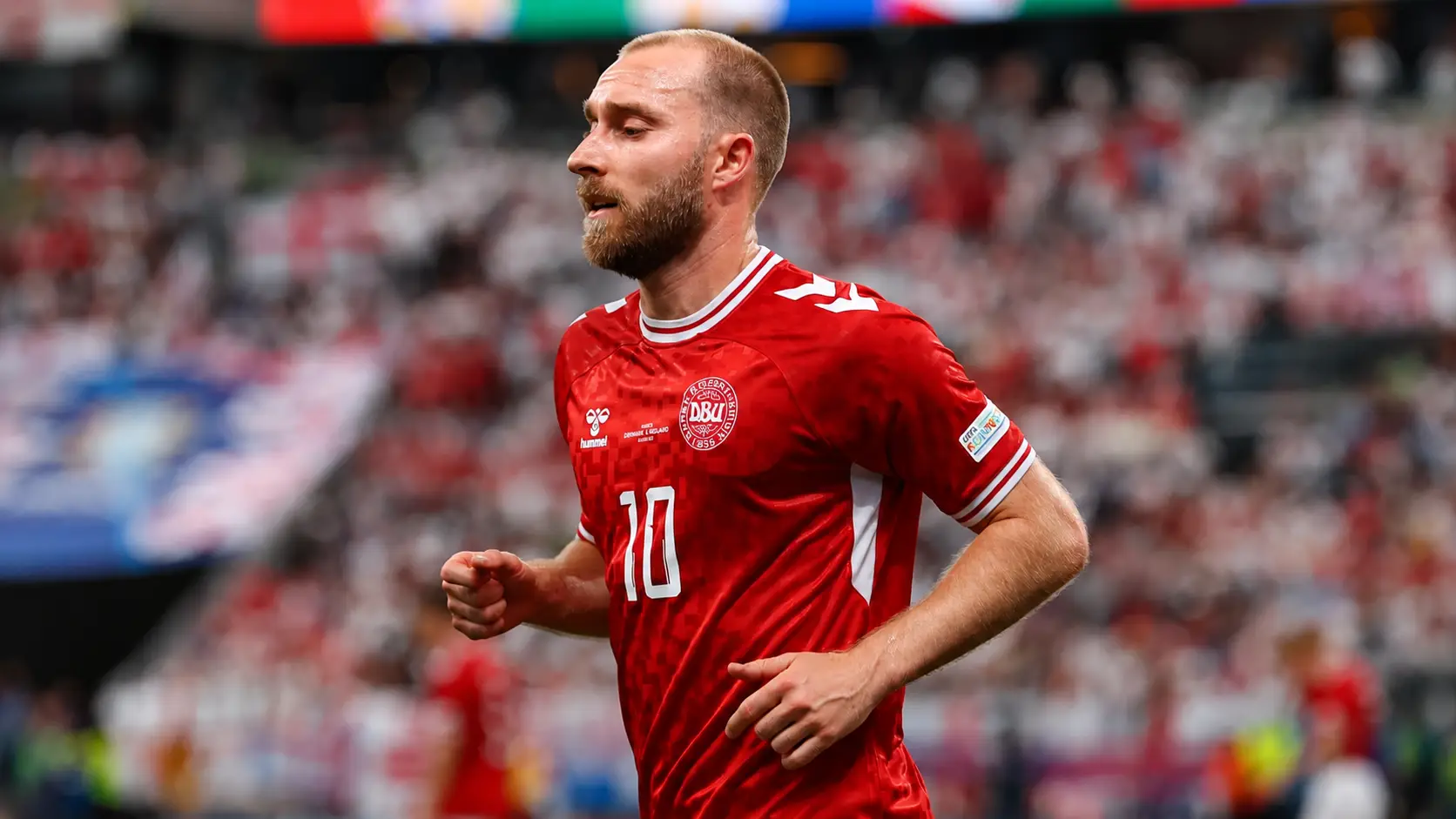
Christian Eriksen was conscious and undergoing hospital tests Sunday after collapsing during Denmark’s friendly against Ukraine in Odense, another medical incident for a player whose international career has already been shaped by emergency care, cardiac technology and a return to elite football.
The 34-year-old midfielder, now with Wolfsburg, went down in the 65th minute at Nature Energy Park after appearing to clutch his chest. Denmark led 2-1 when the match was abandoned, in a game with no direct World Cup 2026 stakes after both nations failed to qualify.
The Danish federation said, “Christian Eriksen is conscious and is doing well under the circumstances.” Players from both teams closed around him while medics worked. In an update released Sunday, team doctor Morten Boesen said, “Christian is doing well and walked off the pitch by himself.” He added, “As I see it, the pacemaker responded as it should.”
Boesen also said, “He was briefly unconscious, but regained consciousness very quickly and we were quickly in contact with him.” He said Eriksen would undergo further examinations at the hospital to determine what caused the incident.
The cause has not been confirmed. At this point, the accurate word is collapse, not cardiac arrest. In 2021, during Denmark’s Euro 2020 opener against Finland in Copenhagen, Eriksen suffered a cardiac arrest, received CPR on the field and later had an implantable cardioverter-defibrillator fitted.
The device, the tests and the unknowns
That device shaped the next phase of his career. Inter Milan and Eriksen ended their contract after Italian rules barred him from playing with the device. He returned with Brentford, moved to Manchester United that summer and later continued his career in Germany. The sequence made him a case study in the physical demands of modern football, but also in how return-to-play decisions sit between medicine, regulation and a player’s own career.
Boesen used the word pacemaker in the immediate update. Eriksen’s device has generally been described since 2021 as an ICD, short for implantable cardioverter-defibrillator. The distinction is more than technical. A pacemaker usually helps correct a heartbeat that is too slow. An ICD monitors for dangerous rhythms and can deliver a shock when needed. Many ICDs also include pacing functions, which is why the terms can blur in urgent public updates.
If the device responded correctly, as Boesen said, that would be an encouraging sign about the technology. It would not answer the larger question. Doctors still need to determine why Eriksen lost consciousness, whether the device delivered therapy and whether the underlying issue was related to rhythm, blood pressure, another medical trigger or something else.
The incident also returns attention to the choreography of emergency care in football. In Odense, play stopped, medical staff entered quickly and players created privacy. Those details may look procedural, but they are part of the system that separates a field incident from a preventable delay.
Eriksen’s career has long been understood through touch and timing, the role of the modern midfielder reduced to decisions made before pressure arrives. Since 2021, another kind of timing has followed him, seconds measured not by passes but by medical response. Sunday’s update offered relief without closure. He walked away from the pitch. The hospital tests will decide what the next facts are.