A national shirt looks like it should be a flag in motion. Often, it isn’t. Italy steps out in blue (well, not this year’s World Cup), the Netherlands in orange, Australia in green and gold, and Japan in blue. Around World Cup home kits, the mismatch can look like a design quirk. It usually isn’t.
A flag is the state’s official symbol. A football shirt has more room to move. It can carry monarchy, geography, flowers, old kingdoms, independence symbols, animals, sporting nicknames, or a single emblem lifted from the flag and enlarged until it becomes the whole identity.
Italy is the classic case. The flag is green, white, and red, but the national team became Azzurri because blue was tied to the House of Savoy, the monarchy ruling Italy when the football team first wore the color in 1911. The monarchy went. The shirt stayed. The Netherlands follows a similar route through the House of Orange-Nassau. Orange is not on the Dutch flag, but it sits deeper in the country’s royal and national story.
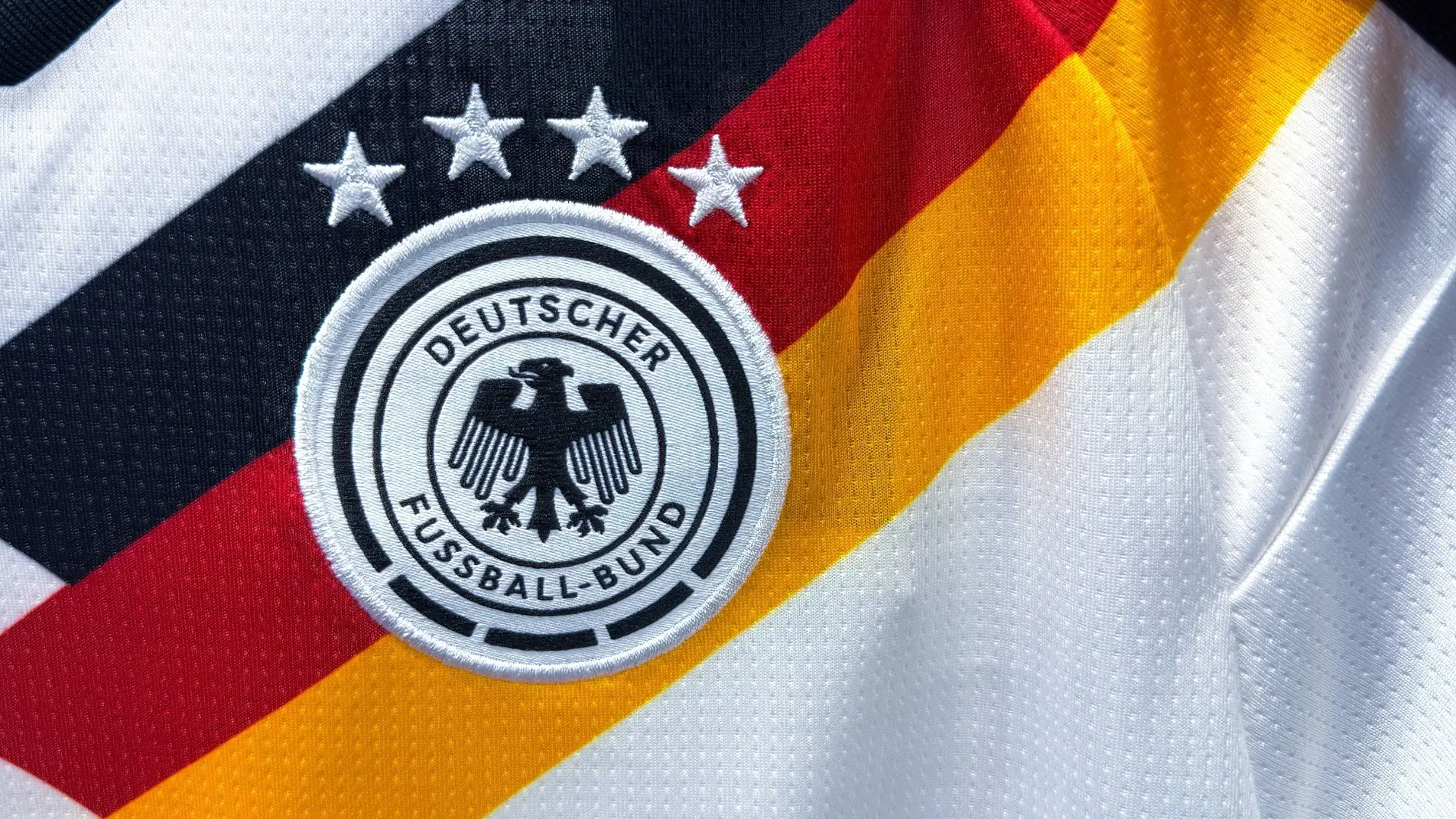
Germany is harder to file neatly. In current design terms, Germany’s 2026 World Cup kit clearly uses black, red, and gold, so it does not fully escape the flag. The older white-and-black language points somewhere else, toward Prussian colors and the pre-modern state history that shaped German identity before the current flag became the dominant visual shorthand.
Australia is cleaner. The national flag is red, white, and blue, but the sporting identity is green and gold. Those colors were formally recognized as Australia’s national colors in 1984 and are tied to the golden wattle, the country’s floral emblem. On the football shirt, the wattle matters more than the flag palette.
When symbols outrank palettes
Japan’s blue shirt is one of the most interesting cases because its meaning has been layered over time. The Japan Football Association uses Samurai Blue as the team identity and has linked dark indigo, kachi-iro, to victory and samurai clothing in kit material. The exact origin is less settled. A separate historical line points to 1930, when Japan wore blue at the Far Eastern Championship, possibly through the influence of Tokyo Imperial University. Either way, blue became the football color.
Ghana and India show how one symbol can overpower the rest of the flag. Ghana’s white shirt often centers the Black Star, a symbol connected to Pan-Africanism, Marcus Garvey’s Black Star Line, and Ghana’s independence identity. India’s blue works differently. The flag’s three bands are saffron, white, and green, but the navy Ashoka Chakra sits at the center. The national team’s Blue Tigers identity turns that smaller flag element into the shirt’s main language.
Malaysia and Senegal are partial mismatches, not pure ones. Malaysia’s yellow appears on the flag, where it is tied to the Malay rulers, but the football shirt leans into yellow and black through Harimau Malaya, the Malayan Tigers. Senegal’s white home shirt does not simply copy the green, yellow, and red flag. Puma has framed recent Senegal designs through Teranga, the cultural value of hospitality, while still using national-color accents.
New Zealand is another correction to the premise. White is on the flag, so the All Whites do not completely avoid national colors. The name grew from the team’s all-white strip during the road to the 1982 World Cup, and it also fits a wider New Zealand sporting vocabulary built around stark, recognizable team colors.
Kuwait’s blue identity is easier to verify than its original reason. Kuwait FA lists the national team as blue, and FIFA has used Al-Azraq, The Blue Wave, for the side. Blue is not in the Kuwaiti flag, but it has become the football shorthand. South Africa is the clearest warning against overstating the claim. Green and gold are already in the South African flag, and they are widely used as national sporting colors.
The better question is not why these teams ignore their flags. Most do not. They edit them. A football shirt chooses what to amplify. Sometimes that is a royal house. Sometimes it is a flower, a university strip, an old kingdom, a shipping line, a tiger, or a wheel. The result can be less literal than a flag and more revealing than one.
The modern kit cycle, shaped in part by the Adidas vs Puma rivalry, has made those choices more explicit. Patterns, collars, cuffs, and product copy now carry the work that plain fabric once left unstated. The shirt has become a short history lesson, worn for 90 minutes at a time.