One of football’s most consequential commercial rivalries doesn’t involve clubs, managers, or players. It involves two brothers who stopped speaking in 1948 and never started again.
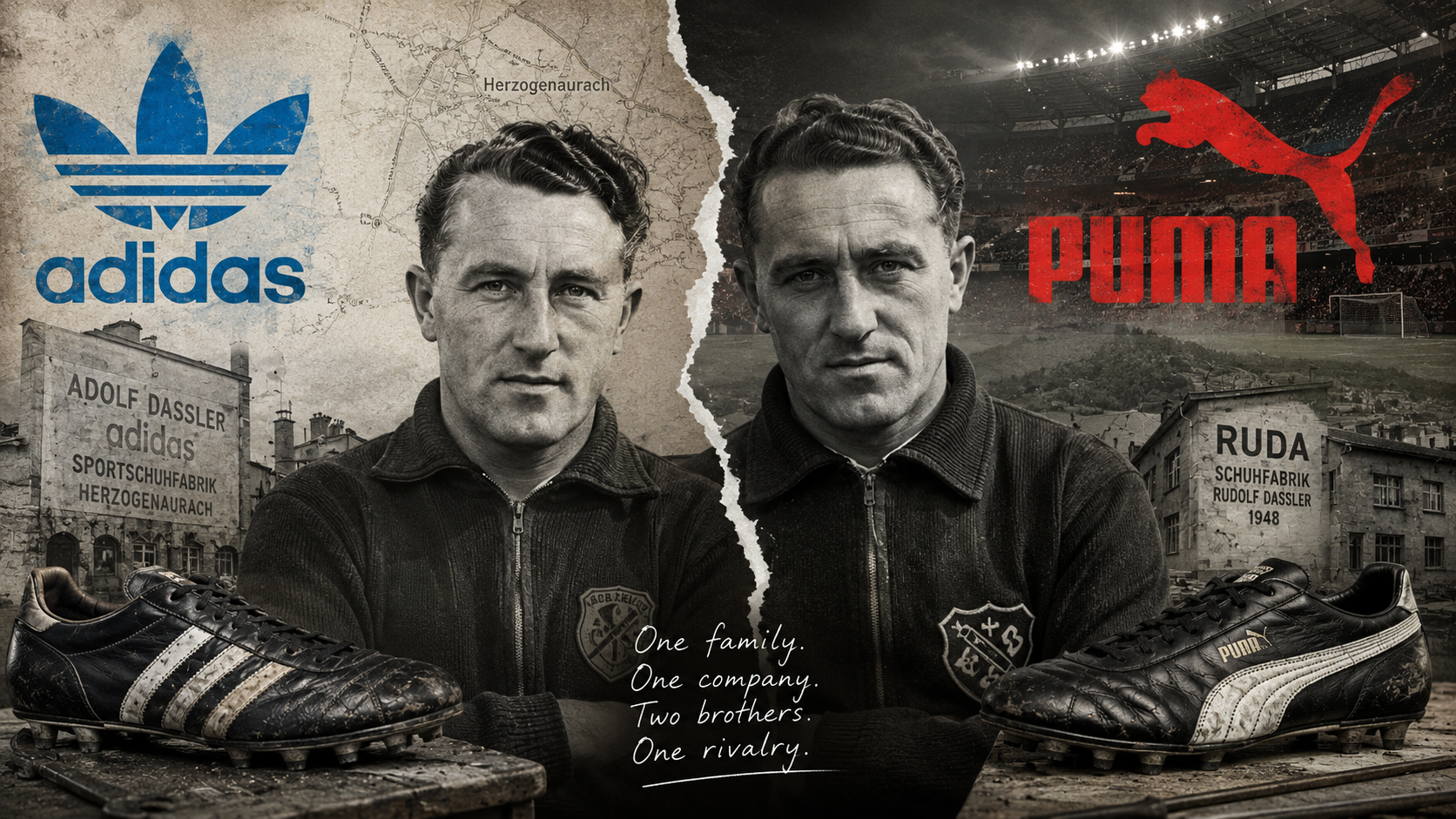
At the 2026 World Cup, Adidas is outfitting 14 national teams. Puma has 11. The logos on those shirts trace back to Herzogenaurach, a Bavarian town where Adolf and Rudolf Dassler ran a family shoe factory called Gebrüder Dassler Schuhfabrik. Adi was the craftsman. Rudi was the salesman. Between them, they built serious athletic footwear at a moment when modern sports equipment was still invented in workshops rather than marketing departments.
Jesse Owens wore their shoes in Berlin in 1936. The company’s international credibility grew from those Games.
The war did what wars tend to do to families. It surfaced every existing fault line. Business disputes, wartime strain and postwar suspicion all fed the split. The exact emotional center of the feud is still contested. What isn’t contested is that in 1948, Rudolf accused Adi of contributing to his internment and the company split.
Rudolf founded what became Puma. Adi registered Adolf Dassler adidas Sportschuhfabrik in August 1949, with 47 employees and the Three Stripes. One family had become two neighbors, two companies and one of the more bitter commercial arrangements in modern sports history.
Football gave the feud its global stage. Adidas built its defining legend around West Germany’s 1954 World Cup win, the Miracle of Bern, the wet pitch and the changeable studs. Puma’s early football heritage coalesced around its boot line. Both companies had understood the same lesson: in football, equipment becomes identity.
From boot rooms to World Cup broadcasts
By 1970, the contest had moved from workshops to players. There was a reported Pelé Pact, an agreement between the two companies not to bid against each other for the Brazilian star, which collapsed when Puma signed him. The famous boot-tying moment at the 1970 World Cup has remained part of the rivalry’s commercial history. The logic that crystallized is undeniable: a boot was no longer just a boot. It was a marketing object.
That logic has compounded every decade since. Adidas holds the 2026 tournament’s official match ball, Trionda. Its World Cup 2026 shirts connect the Three Stripes to Argentina, Germany, Mexico, Spain and Japan.
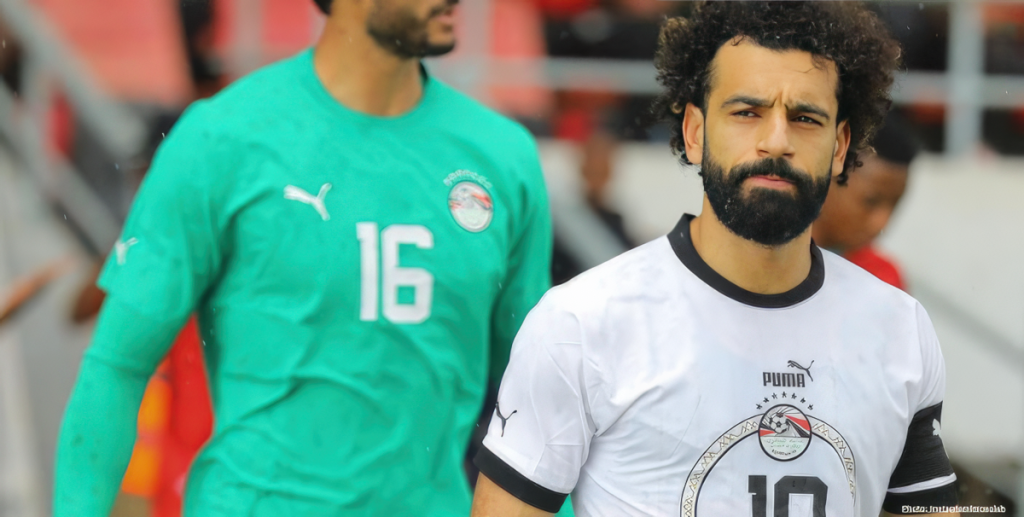
Puma runs through Portugal, Morocco, Ghana, Senegal and Switzerland. These aren’t supplier deals in the ordinary sense. They are national images stitched in fabric, and every photograph taken this tournament will, in some small way, serve one of two brothers who fell out in a Bavarian town three-quarters of a century ago.
The feud doesn’t belong to the brothers anymore, obviously. Adidas and Puma are global corporations now, shaped by executives, shareholders, retailers and governing bodies. And yet the geography hasn’t moved. Their headquarters are still in Herzogenaurach. The story remains unusually personal for companies of this size.
Germany’s decision to move to Nike from 2027 adds a particular irony. Adidas will dress its home country at this World Cup, then lose one of its most symbolic football relationships after more than seven decades. A company bound to German football for decades will watch a U.S. brand take over the kit from 2027. That makes this tournament as much a closing chapter as a continuation.
The original story has never fully dissolved. Every Adidas and Puma shirt at the 2026 World Cup, the official match ball and the commercial arrangements running through federations and athletes all trace back to the same split, in the same town, inside the same family.
The feud is no longer the business. But the business still carries the feud’s outline. It probably always will.