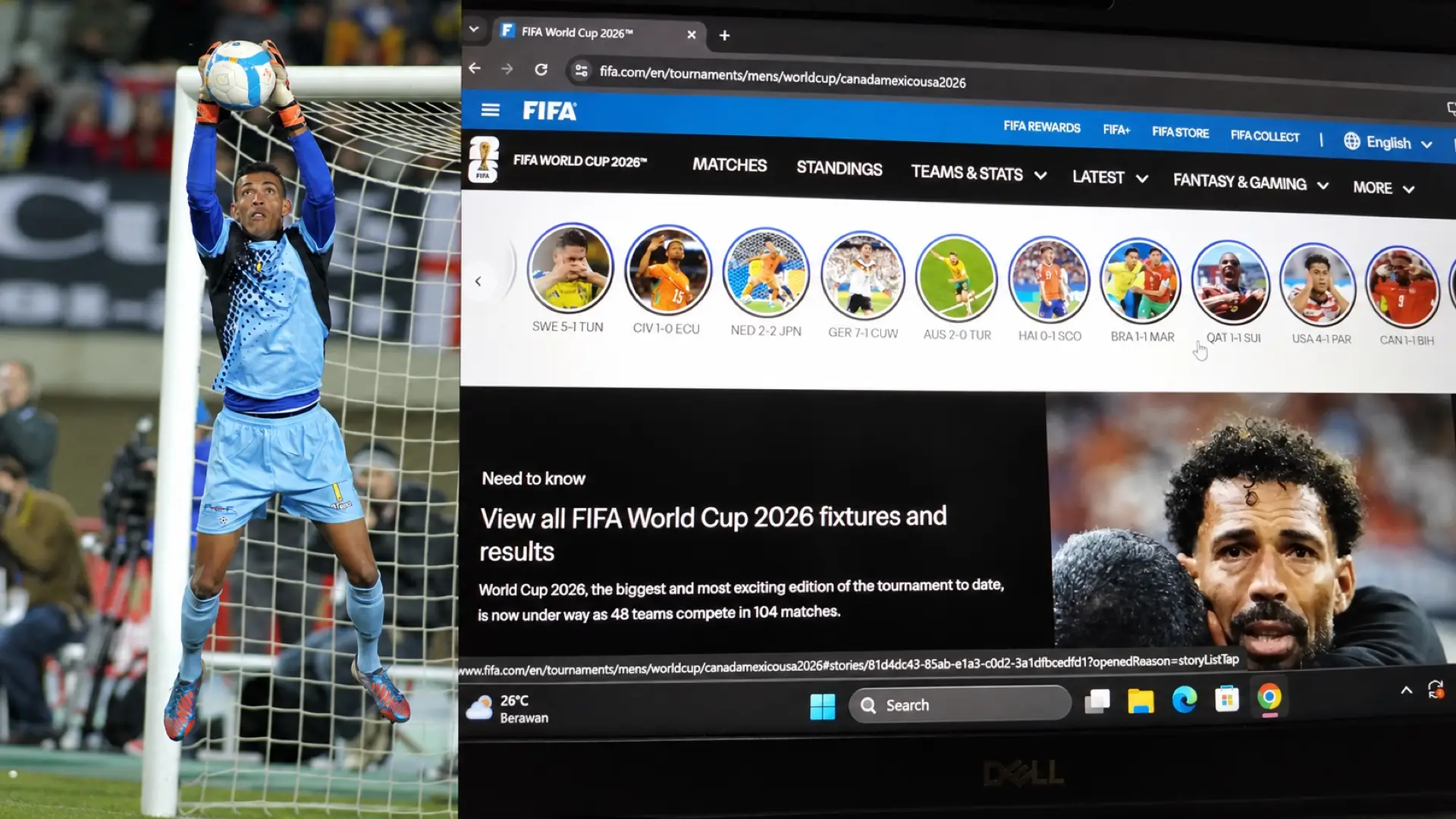
Vozinha could turn off his Instagram notifications. He couldn’t switch off the attention waiting outside his phone. The Cape Verde goalkeeper says he’d choose his life before the World Cup over the one that followed it.
His rise showed the reach of creator-led World Cup coverage. During Cape Verde’s opening game, Brazilian broadcaster CazéTV encouraged viewers to follow him. His Instagram audience climbed from roughly 50,000 before kickoff to nearly 10 million in less than 24 hours.
The football justified the interest. At 40, Vozinha made seven saves to help Cape Verde hold Spain to a 0–0 draw in its first World Cup match. He tipped over Mikel Oyarzabal’s header after Ferran Torres hit the crossbar. Alongside a defense that repeatedly frustrated Spain, he gave his country a point on its tournament debut.
He now has tens of millions of followers, but describes an everyday life increasingly interrupted by requests for photographs and autographs, or people filming him. “I’ve lost my peace and tranquillity,” he told The Observer.
A follower count measures how many people have subscribed to an account. It doesn’t measure how much access its owner wants to give them. The leap from celebrating a performance to expecting a piece of someone’s afternoon is much larger than a tap on a screen makes it feel.
A following isn’t an invitation
Vozinha has since joined Colo-Colo in Chile, where the club organized a stadium presentation for supporters. That’s a different kind of encounter: a player appearing at an event specifically arranged for fans to see him. The celebration has a place in his working life. It doesn’t need to become the model for the rest of it.
Vozinha has already agreed to a partnership with UFL’s mobile football game. In the interview, he also said that, for now, he doesn’t want to promote tobacco, alcohol or betting brands. He’s making choices about how to use his new visibility, rather than rejecting every opportunity it brings.
Those choices aren’t a contradiction. A sponsorship can be discussed, accepted or declined. The player has some say in what he’s being asked to do. A stranger filming him over dinner hasn’t made that arrangement. Earning money from a public profile doesn’t turn every hour of the day into an appearance.
Nor should refusing particular sponsors become the reason he’s allowed to want privacy. His position on betting or alcohol doesn’t have to serve as a character reference. A footballer shouldn’t need to demonstrate that he’s unusually virtuous before a quiet meal becomes a reasonable preference.
Footballers don’t present the same version of themselves in every setting. Michael Olise’s brief and detailed postmatch interviews can coexist after the same game. A player can take part in publicity without committing to perform a particular personality whenever someone recognizes him.
The attention has reached people who didn’t play in the tournament. Vozinha says supporters visit his mother’s home in Cape Verde, and that his parents have had to establish boundaries while he’s away. For a family, pride in a son’s achievement and discomfort with strangers arriving at the door can exist together.
For a visitor, an encounter might last a few minutes. For the family, it can be one interruption among many. The visit isn’t automatically welcome because the feeling behind it is admiration.
Vozinha still speaks warmly about representing Cape Verde and credits the World Cup achievement to the team. Missing his former privacy doesn’t cancel that pride. Treating the two as incompatible would leave him with an absurd choice: reject the best moments of his career or accept every intrusion that follows them.
He gave the audience a World Cup performance. He didn’t offer it the rest of his day.