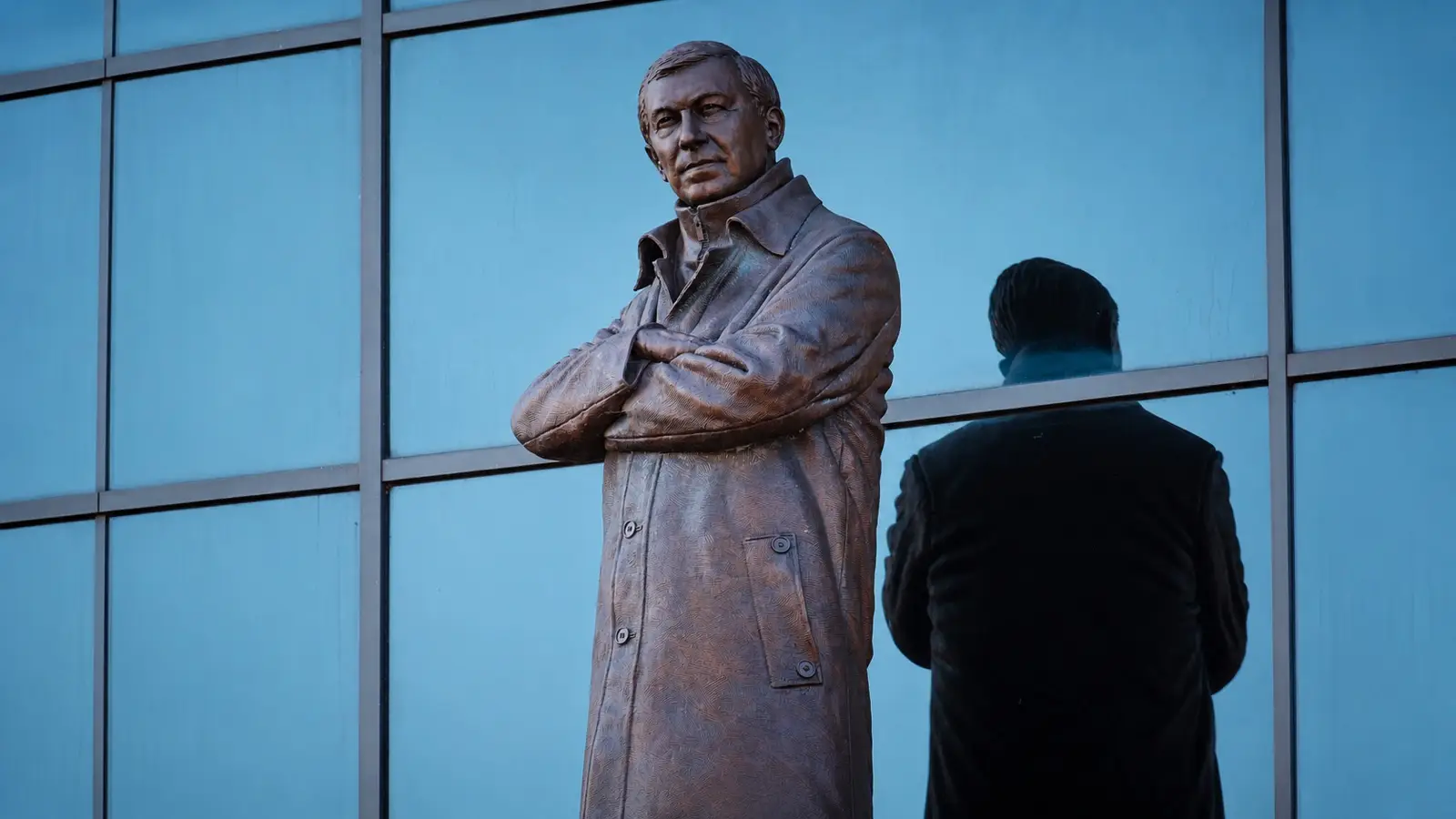
Sir Alex Ferguson had beaten Real Madrid in a European final before he managed a match for Manchester United. Aberdeen’s 2-1 victory in Gothenburg in May 1983 brought the Cup Winners’ Cup to Pittodrie. John Hewitt, sent on from the bench, scored the winner in extra time. Years before Barcelona in 1999, Ferguson already had a European final decided by a substitute.
November 6, 2026 marks 40 years since United appointed him. His place among the best Premier League managers rests on 13 Premier League titles, but the individual victories show how much his work changed along the way. He won with a Scottish challenger, with a United side still trying to establish itself, and with successive teams expected to deliver trophies.
Aberdeen’s European breakthrough
Aberdeen had already survived a demanding quarterfinal against Bayern Munich. After a goalless first leg in Germany, they fell 2-1 behind at Pittodrie and needed two goals to advance. A disguised free-kick routine ended with Gordon Strachan supplying Alex McLeish for the equalizer. Hewitt came off the bench to score the winner in a 3-2 victory.
Eric Black put Aberdeen ahead in the final, Juanito equalized from the penalty spot, and Ferguson eventually replaced Black with Hewitt. In the 112th minute, Mark McGhee’s cross found the substitute’s head. Aberdeen had beaten a Madrid team coached by Alfredo Di Stéfano. Ferguson’s European credentials were established more than three years before he moved to England.
The decisions behind the Manchester United victories
At Wembley in 1990, he made a more uncomfortable change. Jim Leighton had been his goalkeeper in Gothenburg, but after United drew the FA Cup final 3-3 with Crystal Palace, Ferguson dropped him for the replay. Les Sealey took over, kept a clean sheet, and Lee Martin scored the only goal on May 17.
The 1-0 victory delivered Ferguson’s first United trophy. Choosing Sealey meant setting aside a long working relationship with Leighton at a moment when Ferguson himself needed a result. The cup also opened a route back into European competition. A season that had offered little reassurance in the league had produced something United could build on.
That opportunity led to another final against Spanish opposition. On May 15, 1991, Mark Hughes scored twice against his former club as United beat Barcelona 2-1 in Rotterdam. Johan Cruyff’s side were missing Hristo Stoichkov and first-choice goalkeeper Andoni Zubizarreta, but still had Ronald Koeman and Michael Laudrup. Koeman’s late free kick made the finish uncomfortable. United held on for their first European trophy since 1968, in their first season back after the ban on English clubs.
Ending the title wait and chasing Newcastle
The league breakthrough still needed another two years. Against Sheffield Wednesday on April 10, 1993, United were a goal down late in a match that threatened to cost them ground in the title race. Steve Bruce headed an equalizer, then another goal deep into stoppage time. Ferguson and Brian Kidd celebrated on the touchline as a 2-1 win moved United above Aston Villa.
Ferguson had sent on Bryan Robson as United chased the game. For the winner, Gary Pallister crossed after Wednesday had cleared a corner, and Bruce headed home. United won their final seven league matches, with the Wednesday comeback the second victory in that sequence, and ended a 26-year wait for the championship.
At Newcastle on March 4, 1996, a title race turned on a much quieter scoreline. Peter Schmeichel’s saves kept United in the game before Eric Cantona volleyed in Phil Neville’s cross. The 1-0 win cut Newcastle’s lead to one point. Ferguson’s side could survive sustained pressure and still punish an opponent when the chance arrived.
The three comebacks that kept the Treble alive
The FA Cup rivalry with Arsenal produced a different ordeal on April 14, 1999. In the semifinal replay at Villa Park, United lost Roy Keane to a red card and needed Schmeichel to save Dennis Bergkamp’s late penalty. Ryan Giggs then collected Patrick Vieira’s loose pass and ran through Arsenal’s defense to win the match 2-1 in extra time.
Giggs had entered during the second half of normal time. By the time he scored, United were trying to survive with ten men against the club also contesting the league title with them. His run preserved the possibility of the Treble. Schmeichel’s penalty save kept United level long enough for Giggs to settle the tie.
A week later, United faced a different calculation in Turin. Juventus led 2-0 after 11 minutes of the Champions League semifinal second leg, putting them 3-1 ahead on aggregate. Keane headed United back into the tie, then received the booking that would keep him out of the final if they reached it. He continued to help drive the recovery.
Dwight Yorke’s equalizer gave United the advantage on away goals before halftime. They didn’t need a third goal to qualify from that position, but Andy Cole’s late finish completed a 3-2 victory and a 4-3 aggregate win. Turin deserves to stand alongside the final as a performance in its own right.
Barcelona supplied the more extraordinary ending. On May 26, 1999, United trailed Bayern Munich to Mario Basler’s early free kick. With Keane and Paul Scholes suspended, they struggled to control midfield, and Bayern struck the woodwork twice. Ferguson brought on Teddy Sheringham and Ole Gunnar Solskjær as he searched for a goal.
Both substitutes scored in stoppage time, turning defeat into a 2-1 victory. Sheringham also supplied the flick for Solskjær’s winner, with David Beckham delivering both corners. United completed the league, FA Cup and Champions League Treble. Ferguson couldn’t dictate the rebounds or Bayern’s misses, but his attacking options gave him two experienced finishers to introduce when the starting team hadn’t found a way through.
A new United team conquers Europe
By the time Roma came to Old Trafford on April 10, 2007, the attack had changed again. United needed to overturn a 2-1 first-leg defeat in the Champions League quarterfinals. Ferguson started Alan Smith up front, with Giggs operating behind him in a 4-2-3-1. Fourteen months after breaking his leg and dislocating his ankle, Smith was making his first league or Champions League start since the injury.
Smith scored, Giggs supplied four assists, and Michael Carrick and Cristiano Ronaldo scored twice each in a 7-1 victory. United could attack through the middle, move quickly into wide areas and finish from distance. The variety made the performance more revealing than the margin alone. Ferguson’s next European contenders were taking shape around players with different qualities from the Treble side.
That team won the Champions League the following year. Against Chelsea in Moscow on May 21, 2008, Ronaldo’s header and Frank Lampard’s equalizer left the final at 1-1 after extra time. Ronaldo missed in the shootout, John Terry slipped with the chance to win it for Chelsea, and Edwin van der Sar eventually saved from Nicolas Anelka. United won the shootout 6-5.
The result brought Ferguson a second Champions League trophy nine years after the first. Schmeichel, Keane, Beckham, Cole and Yorke were no longer in the team. Van der Sar, Carrick, Ronaldo and Wayne Rooney were among the players who had taken United back to the final. Giggs and Scholes provided continuity, while Ferguson had assembled much of the side around a new group.
Van Persie seals Ferguson’s final title
His last championship was secured against Aston Villa on April 22, 2013. Robin van Persie, in his first season at United, scored all three goals in a 3-0 win. The second was a first-time volley from Rooney’s long pass, a goal that expressed the immediate quality Ferguson had added to his attack.
United had won their 20th English league title, Ferguson’s 13th. He announced his retirement 16 days later. His final champions had settled the title with four matches still to play.
Get more Stadio United on Google.