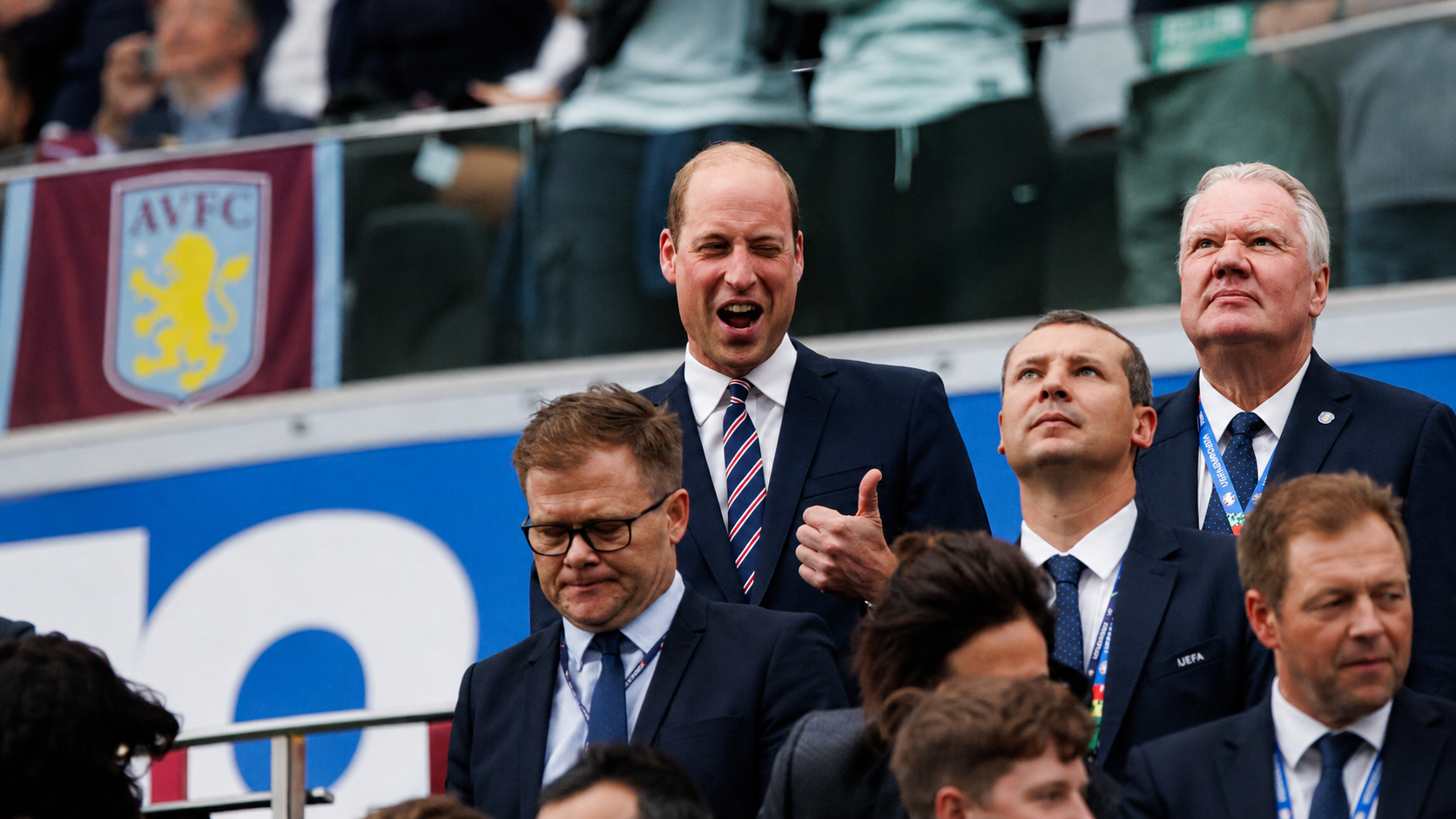
Aston Villa did not need royal endorsement to turn May 20, 2026, into one of the great nights in club history. In Istanbul, Unai Emery’s side beat Freiburg 3-0 to win the Europa League, ending a 30-year wait for a major trophy and a 44-year wait for European silverware. Youri Tielemans, Emiliano Buendía and Morgan Rogers scored the goals. Prince William, watching from the stands, became part of the picture because this was not a borrowed allegiance.
The Prince of Wales has supported Aston Villa since childhood, a choice that always sat a little outside the expected map of royal life. He was raised far from Birmingham, and he came of age while friends were choosing the obvious teams. Asked about it in 2015, William said, “All my friends at school were either Man U fans or Chelsea fans.” Villa offered something closer to “emotional roller-coaster moments” than a predictable winner.
Aston Villa gave him that, and not as a branding line. The club he chose carried a European Cup from 1982, won against Bayern Munich, and a Super Cup secured shortly afterward against Barcelona. It also carried the silence that followed. By the time William’s support became a recurring public detail, Villa were no longer a shorthand for continental power. They were a club trying to reconcile a grand past with an unstable present in the Premier League.
His public record with Villa reaches beyond the final. In May 2019, he was at Wembley as Villa beat Derby County in the Championship playoff final and returned to the Premier League after three seasons away. That appearance matters in the history of the fandom because it placed him at a promotion match, not merely at a continental showpiece. Villa had to restore their standing before they could chase anything larger.
From schoolboy choice to Istanbul
When William began taking Prince George to Villa matches, the connection became more visible without becoming less specific. The 2024 Champions League win over Bayern Munich gave the relationship a historical echo, because Villa’s 1982 European Cup final victory came against the same opponent. That night at Villa Park made the old story feel close again, but the club still needed a trophy to make the revival complete.
The Europa League final supplied it. Tielemans struck before halftime. Buendía bent in the second before the break, then set up Rogers after the interval. For Emery, it was a fifth title in the competition, and the first with an English club. For Villa, it was the first major trophy since the 1996 League Cup and the first European title since 1982.
William’s role should be kept in proportion. Emery and his players delivered the football. John McGinn lifted the trophy. Villa’s executives, staff and squad built the conditions that made the night possible. Yet fandom is part of football’s archive, and William’s place in this one is unusually coherent. He chose Villa because they offered uncertainty. The club then gave him relegation, repair, promotion, Europe and, finally, the sight of a European trophy in claret-and-blue hands.
The title also changes the weight of a childhood explanation. What once sounded like a neat answer to why a prince from outside Birmingham supports Villa now reads as a summary of the last decade. The roller coaster included the drop into the Championship, the playoff final at Wembley, survival battles, a Champions League return and Emery’s European precision.
William’s Aston Villa fandom has never needed to be the main event. Its value is as a thread through the event, one that runs from a schoolboy resisting the obvious choices to a future king watching a club with European history lift a trophy again. Villa’s win in Istanbul belongs first to the club. It also completes the logic of the prince’s choice. He did not pick the easiest team to support, and the reward arrived with the force of a long wait ending.