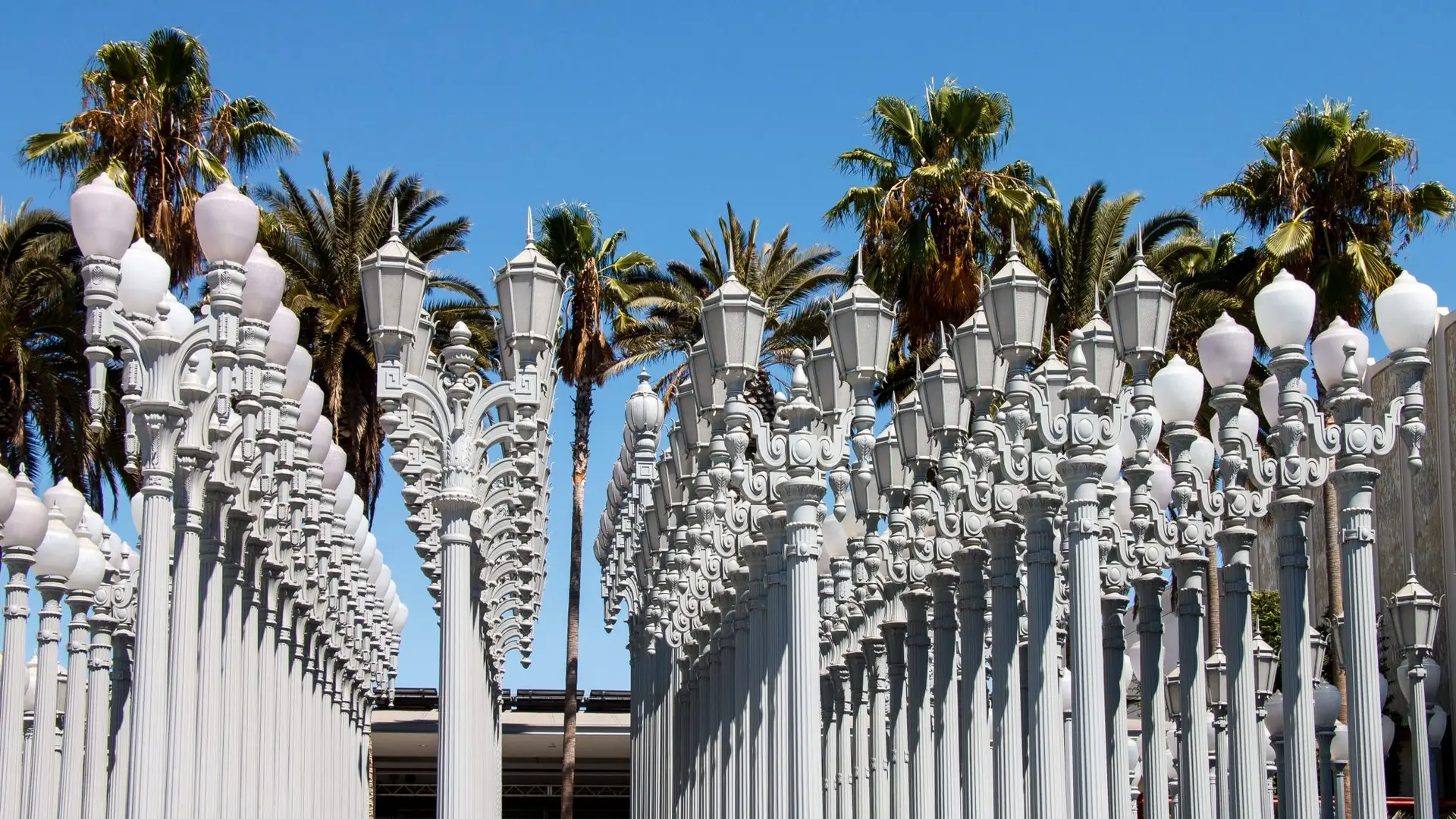
Los Angeles is too big to treat as a one-stop tournament city. For the 2026 World Cup in Los Angeles, the smarter move is to map the city by football scenes: SoFi Stadium in Inglewood for the matches, Exposition Park for opening-weekend fan energy, La Brea and Fairfax for streetwear, the Arts District for walls and design, Westlake for pickup soccer, Carson for LA Galaxy history, and the Westside for beach football. SoFi Stadium will host eight World Cup matches, including the U.S. men’s national team opener against Paraguay on June 12, 2026, but the city’s tournament map is much wider than one stadium.
That is the first rule of doing LA well: plan by clusters. Choose one neighborhood route for the day, then let the match schedule, fan-zone calendar, or pickup field decide the rest. Trying to do Fairfax, Downtown, Carson, Venice, and Inglewood in one sweep is how a football trip turns into a traffic story.
Start with the World Cup anchor: Inglewood and Exposition Park
The tournament anchor is SoFi Stadium in Inglewood, listed during the event as Los Angeles Stadium. This is where the ticketed matches happen, so any matchday plan should begin with transportation. Metro has World Cup service planned around direct pickup locations, which means the smarter question is not just where you are staying, but where you can reach a match shuttle without burning half the day.
Exposition Park is the other early stop. The FIFA Fan Festival Los Angeles is scheduled at the Los Angeles Memorial Coliseum from June 11 to June 14, giving opening weekend a public gathering point away from the stadium gates. That matters because the Coliseum sits near BMO Stadium, USC, museums and Metro’s E Line, making it one of the easiest World Cup areas to build a half-day around.
The broader fan-zone map spreads the tournament across the county. The Original Farmers Market, Union Station, Hansen Dam Lake, Magic Johnson Park, Whittier Narrows, Venice Beach, Fairplex, West Harbor and Downtown Burbank are all part of the official Los Angeles World Cup 26 fan-zone network. Use those sites as calendar anchors, not just extra events. They can give a neighborhood a clear matchday purpose.
Route 1: La Brea, Fairfax and Melrose for streetwear
For streetwear, start on La Brea. Union Los Angeles at 110 South La Brea Avenue, Stüssy Los Angeles at 112 South La Brea Avenue, and UNDEFEATED La Brea at 111 South La Brea Avenue sit close enough together to make this one of the cleanest walks in the city. It is a rare LA route where the best first move is simply crossing the street.
From La Brea, head toward Fairfax. Brain Dead Studios at 611 North Fairfax Avenue adds the cinema-and-design layer, GOLF WANG LA sits at 350 North Fairfax Avenue, RIPNDIP is at 441 North Fairfax Avenue, and Flight Club Los Angeles at 535 North Fairfax Avenue gives the route a sneaker-resale anchor. This is where LA’s skate, streetwear, sneaker and graphic-design cultures feel most immediately connected.
Melrose can extend the day, but it should not turn into a checklist. BAIT Los Angeles is at 7708 Melrose Avenue, CoolKicks LA is at 7565 Melrose Avenue, BAPE Store Los Angeles is at 8810 Melrose Avenue, Supreme West Hollywood is at 8801 Sunset Boulevard, and Kith West Hollywood is at 8500 Sunset Boulevard. Pick two or three stops, leave room for food, and check store hours before you go. A good LA retail day needs pace as much as ambition.
Route 2: Arts District, Little Tokyo and community art
The Arts District works differently. It is less about one single shop or mural and more about the street itself: old warehouse walls, bright doors, layered textures, galleries, coffee, shadows and open industrial blocks. Start at Dover Street Market Los Angeles at 606–608 Imperial Street, then use the neighborhood as a walking route rather than a straight shopping list.
Murals should be treated as living landmarks in Los Angeles. Some football-themed walls from older guides have changed, disappeared or were built as temporary campaigns. That does not make them useless; it just makes them risky as fixed itinerary stops. For 2026, the better approach is to use public art as a bonus: walk the Arts District, check current neighborhood imagery before traveling to a specific wall, and prioritize official World Cup community art when it appears.
From the Arts District, you can keep the day central. Little Tokyo is close by, Union Station is reachable, and Vista Hermosa Natural Park at 100 North Toluca Street offers a soccer-field option near Downtown. That makes this one of the more efficient non-stadium days: design, food, public art and a field without trying to cross the entire city.
Route 3: Koreatown, Westlake and MacArthur Park
Koreatown and Westlake belong on the map because LA soccer is not only played in stadiums or branded fan zones. It is also visible in parks, food corridors, immigrant neighborhoods and informal games that already existed before the World Cup arrived.
MacArthur Park, at 2230 West 6th Street, is the key stop here. If pickup soccer is happening, treat it like a local space, not a tourist attraction. Watch first. Ask before joining. Bring water. Be ready for the game to be faster, tighter and more casual than anything scheduled through an app.
This route also pairs well with Koreatown food and transit. It is not as polished as Fairfax or as photogenic as the Arts District, but it gives the guide a necessary reality check: the World Cup is visiting Los Angeles, but football has been living here for decades.
Route 4: Carson and South Gate for LA soccer history
Carson deserves its own outing. Dignity Health Sports Park at 18400 Avalon Boulevard is the LA Galaxy’s home, and it remains one of Southern California’s most important soccer landmarks even though the World Cup matches are at SoFi. For visitors who want LA soccer history rather than just a tournament atmosphere, this is the stop.
The strongest update here is Legends Plaza. Cobi Jones’ statue joined David Beckham and Landon Donovan in 2026, making the plaza a more durable soccer landmark than most mural stops. If you are already heading south of Downtown, this is where LA’s MLS history comes into view.
South Gate works as the playing extension of that route. Sofive South Gate, at 9599 Pinehurst Avenue, offers organized small-sided soccer with 5-a-side and 7-a-side fields. That makes it a better choice for visitors who want a bookable football experience rather than hoping pickup is available at the exact moment they arrive.
Route 5: Santa Monica, Venice Beach and the Westside
The Westside is the easiest route to make feel like summer. Start in Santa Monica, where UNDEFEATED has a shop at 2654 Main Street, Unit B, then keep the day loose: Main Street, the beach, a field and a late meal. Santa Monica Airport Park at 3201 Airport Avenue has a synthetic turf sports field, which makes it a useful option if your group wants to play rather than only watch.
Venice becomes especially important during the tournament. U.S. Soccer House is scheduled for Venice Beach, giving American supporters a coastal gathering point during the first half of the World Cup. Later in the tournament, Venice Beach is also part of the official fan-zone calendar, making the Westside more than a beach detour.
The Westside route should stay simple. Do not pair it with Carson or Fairfax unless you have a full day and a realistic transportation plan. In LA, the best itinerary is often the one that admits distance is part of the culture.
A simple LA football map for 2026
The best Los Angeles World Cup plan is not the most crowded one. It is the one that understands the city’s scale. Use Inglewood for the matches, Exposition Park for official fan energy, Fairfax and La Brea for streetwear, the Arts District for visual culture, Westlake for pickup soccer, Carson for club history, and Venice or Santa Monica for the beach.
If you are buying 2026 World Cup tickets, build the matchday backward from SoFi transportation. If you are not going to a match, build around one viewing site, one neighborhood, and one backup plan. LA rewards focus. It punishes overpacking.
That is what makes the city such a strange and fitting World Cup host. Los Angeles is not one football scene. It is many scenes layered over each other: sneakers on Fairfax, murals downtown, pickup at the park, statues in Carson, beach energy in Venice, and the world’s game arriving in Inglewood.