The quarterfinals are here, and the bracket has moved on. France, Morocco, Spain, Belgium, Norway, England, Argentina and Switzerland now carry the tournament into its final eight, while Mexico’s World Cup run has already become something more durable than a result. It became a setting. A color. A sound. A memory the tournament will keep carrying after El Tri’s exit.
Mexico didn’t own the largest share of the schedule. In a 48-team World Cup spread across three countries and 104 matches, Mexico received only a fraction of the games before the final stretch moved north. That imbalance is part of the story. The country’s presence felt bigger than its allocation.
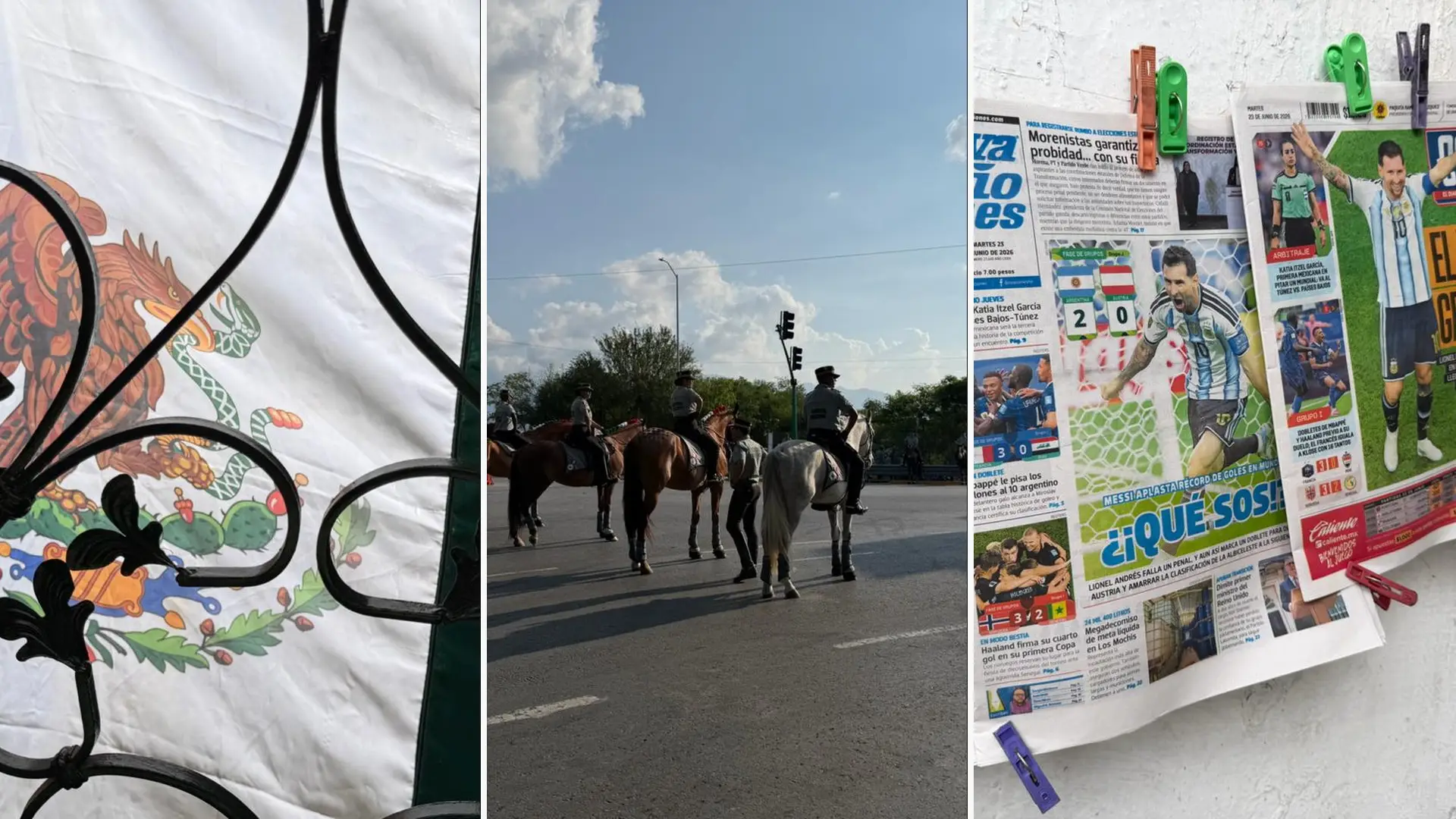
I was there for some of it, and Mexico City didn’t treat the World Cup like an event passing through town. It folded the tournament into daily life. The altitude, traffic, rain, food stalls, flags in windows and songs around the city didn’t feel separate from the football. They felt like the conditions of it.
For weeks, the tournament seemed painted green. Green kits moved through streets, plazas, Metro platforms and the areas around the Azteca. They appeared at the Ángel de la Independencia, on kids and families, on dogs and religious icons, and in the smaller oddities that give a World Cup its local texture, including the unofficial World Cup duck mascots that turned match-day dress into something stranger and more tender than branding.
The phrase attached to the run was brief and conditional: ¿Y si sí? What if yes? It wasn’t a prediction. It was a question Mexico had earned through a perfect group stage, a first knockout win since 1986 and the rare feeling that a home World Cup might still have another door to open.
The memory Mexico leaves behind
The venues gave the story its own geography. The Azteca was heavy with history before this tournament began, then became the first stadium to host the opening match of a World Cup for a third time. Monterrey brought a different image, a modern stadium with mountains rising behind it. Guadalajara added another rhythm, another Mexican frame for a tournament that was always too large to belong to one city.
That contrast is sharper now because the World Cup’s center of gravity has shifted. The United States had scale, most of the matches and the NFL stadiums built for spectacle. But its team’s exit was pulled into a procedural story around Folarin Balogun’s red-card suspension, which FIFA lifted after President Donald Trump called Gianni Infantino, before Belgium won 4-1 in Seattle and the United States’ World Cup ended in the Round of 16.
Mexico’s ending was different. England won 3-2 at the Azteca, and the scoreline will hold its place in the record. Jude Bellingham’s quick double gave England control. Jarell Quansah’s red card changed the shape of the match. Harry Kane’s penalty restored the gap. Raúl Jiménez’s penalty cut it back again. The game had enough turns to stand on its own, but its force came from the setting around it.
It wasn’t just that Mexico lost at home. It was that the exit happened in the one place built to make defeat feel larger than the night. The Azteca has always made football answer to memory. This time, it turned a Round of 16 match into the farewell scene for a host that had given the tournament much of its visual identity.
For anyone supporting Mexico from the United States, the feeling wasn’t distant. It carried across borders because Mexican football doesn’t stop at the border. It lives in families, neighborhoods, watch parties, shirts, old arguments, old disappointments and the recurring belief that one tournament might finally feel different.
Now the quarterfinals will decide who keeps chasing the trophy. They will give the World Cup its pressure, its finalists and its champion. Mexico already gave it something else: color, place, personality and a question that was still alive until the final whistle.
Gracias, México. For the green. For the noise. For the landscape. For the soul.