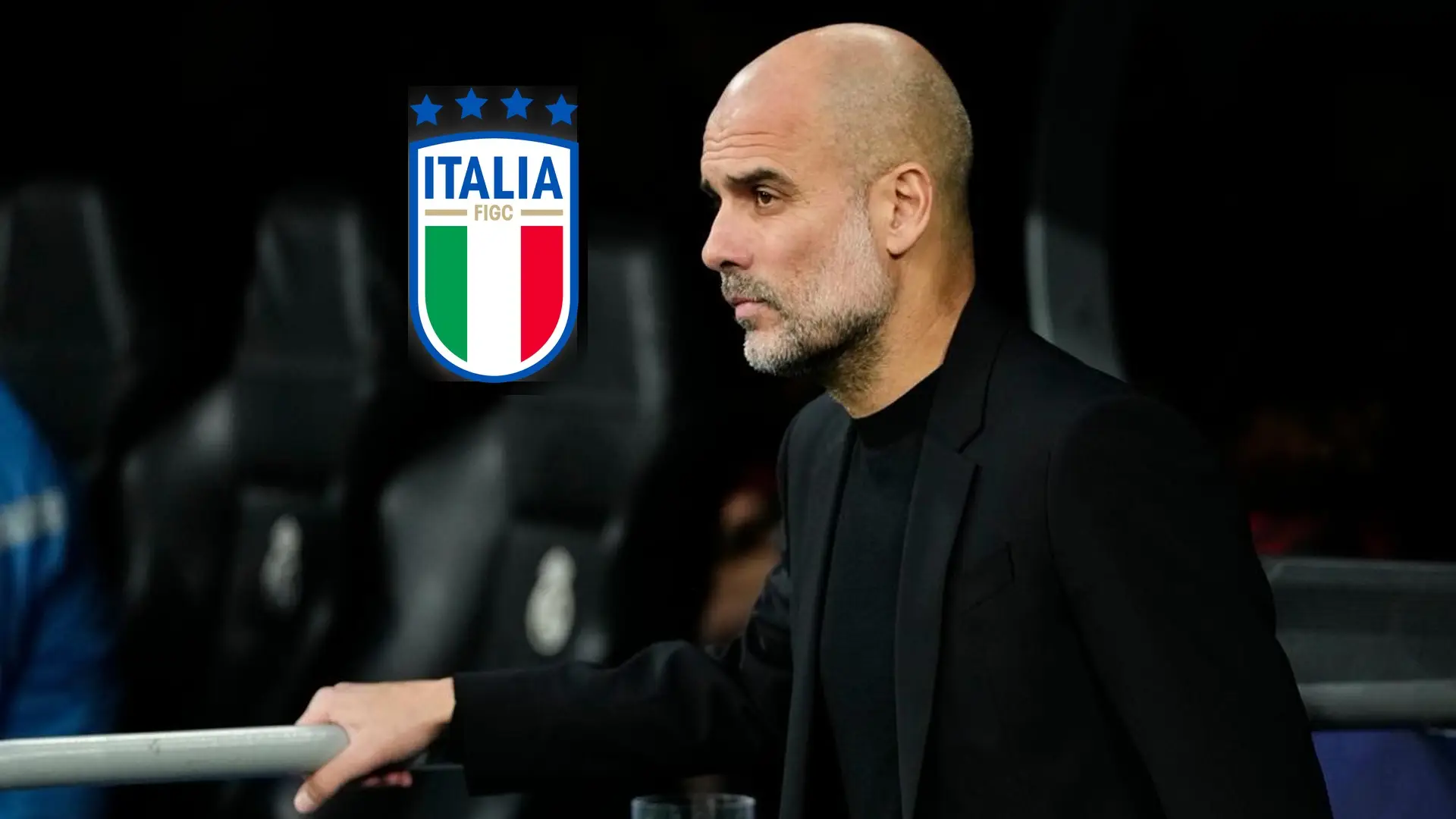
Paolo Maldini and Leonardo traveled to Barcelona over the weekend to present Pep Guardiola with a proposal that reaches beyond the senior national team. Sky Sport Italia reported that the two Italian Football Federation officials made a concrete attempt to persuade him to become Italy’s next coach. As of July 21, 2026, no agreement had been reported, and the federation was still waiting for Guardiola’s answer.
The approach follows Italy’s third consecutive World Cup miss, sealed when a 1-1 playoff draw with Bosnia and Herzegovina ended in a 4-1 shootout defeat. Gennaro Gattuso left his post days later. Federation president Gabriele Gravina and delegation head Gianluigi Buffon also stepped down, leaving vacancies across the senior team and federation leadership.
Giovanni Malagò, Gravina’s successor, turned to Paolo Maldini’s post-playing career as part of the reset. On July 11, Maldini was named FIGC technical director and president of Club Italia, with Leonardo serving as an adviser. His official remit covers the senior side and the full chain of youth national teams. The four-year commitment is designed to run through Euro 2028 and toward the 2030 World Cup.
The official mandate closely resembles the project reportedly presented to Guardiola. Italy isn’t merely seeking a coach to select a squad and manage a series of international windows. It is trying to establish a common technical direction from the youth teams upward. Guardiola would become the most visible figure in a federation-wide reconstruction, not simply the replacement for Gattuso.
Guardiola’s connection to Italy is established. He played in Serie A for Brescia and Roma, and in 2025 said he wanted to coach at a World Cup or European Championship. Still, he left Manchester City in May after 10 seasons and 20 major trophies, then said he needed time away from coaching. His interest in international soccer makes the proposal plausible. His recent decision to step back makes an immediate appointment uncertain.
Italy’s problem starts before the senior team
The FIGC’s own research explains why a conventional coaching appointment would be inadequate. Serie A ranked 49th among 50 monitored leagues for the percentage of minutes played by under-21 players eligible for the Italian national team. The figure was 1.9 percent. Only Atalanta and Juventus appeared among the world’s top 50 academies measured by 10-year revenue from homegrown player sales. A senior coach inherits the effects of that pipeline without controlling the weekly decisions that shape it.
Guardiola could still alter how the federation works internally. He could align age-group teams around shared principles in possession and pressing, help define the player profiles Italy wants to develop, and influence scouting and coach education. Those possibilities haven’t been confirmed as contractual powers. The central question is whether the FIGC is offering genuine authority or attaching a celebrated name to a broad but limited brief.
International soccer also gives a coach little time to install complex ideas. Italy begins its Nations League campaign in September, leaving the next appointment with short training windows and no control over club recruitment. Guardiola’s club teams were refined through repeated sessions and carefully assembled squads. With Italy, he would need to reduce his methods to a few durable principles rather than attempt to reproduce Barcelona, Bayern Munich or Manchester City.
No salary has been publicly confirmed. Timing is the more concrete obstacle. Guardiola’s intention to take a break is recent, while the FIGC needs a coach in place for the next competitive cycle. Even if both sides recognize the appeal of the project, their schedules may not align.
The pursuit reflects a different diagnosis of Italy’s decline. Three missed World Cups are the visible result, while the federation’s youth-development figures identify constraints that begin years before a player reaches the senior squad. Guardiola could provide a clear football language and unusual institutional weight. He cannot create Serie A minutes, compel academy investment or make clubs accept reforms.
Italy’s proposal becomes credible only if the structure around Guardiola is as substantial as the name at its center. Without defined powers and cooperation from the domestic game, the FIGC would place one of soccer’s most exacting coaches at the head of a system he could describe but not fully change.