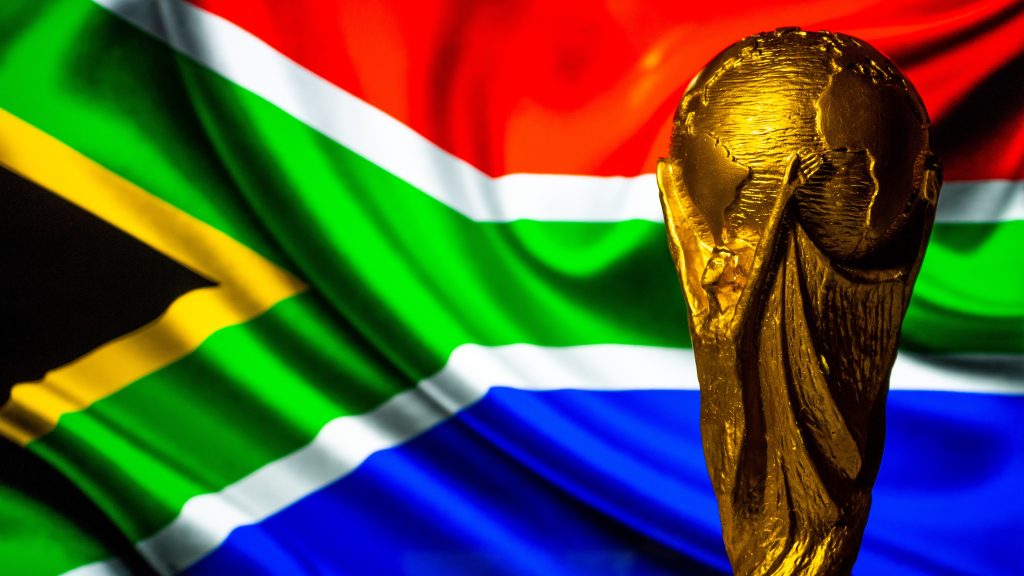
South Africa kick off their 2026 World Cup campaign in Mexico City against Mexico on June 11. Since they haven’t reached the finals since 2010, this opener is a fresh start. There’s no warm-up period; the action begins right away.
If you want to follow South Africa, their path is straightforward. They play group matches in three cities: Mexico City, Atlanta, and Monterrey. This spread affects travel plans and how broadcasts present the team, since each city has its own stadium and public viewing events.
To get to know South Africa, start with their nickname. The men’s national team is called Bafana Bafana, a name that came about in the early 1990s when they rejoined international football. It means “The Boys” and is central to how the team is talked about both at home and abroad.
This timing is important because South Africa’s recent football history began when they rejoined global competition. Their FIFA membership was restored on July 3, 1992, after years of exclusion due to apartheid. Just days later, the national team played an official match in Durban and beat Cameroon 1–0 at Kings Park, marking the start of a new era in more than just name.
The early peak came quickly. In 1996, hosting the Africa Cup of Nations, South Africa won the tournament with a 2–0 victory over Tunisia in the final. Their World Cup record is more uneven, appearances in 1998, 2002, and 2010, then a long absence from the finals. In 2010, as hosts, they opened the tournament against Mexico and scored first through Siphiwe Tshabalala, but they did not advance from the group. In 2026, they return as qualifiers, not hosts, which changes both the pressure and the purpose.
South Africa’s group stage will take place in three cities, starting in Mexico City.
South Africa made it to the World Cup by winning their CAF group, even after a three-point deduction for an eligibility issue earlier in qualifying. They secured their spot with a clear 3–0 win over Rwanda on October 14, 2025. Thalente Mbatha and Oswin Appollis scored in the first half, and Evidence Makgopa added another in the second.
South Africa is in Group A with Mexico, Korea Republic, and the winner of UEFA Path D. While the draw is important, the schedule is even more useful for fans. Their matches are set: Mexico on June 11 in Mexico City, the UEFA Path D winner on June 18 in Atlanta, and Korea Republic on June 24 in Monterrey.
One thing to note: tournament listings often use city names instead of sponsored stadium names. For example, the opener is at Mexico City Stadium, which is Estadio Azteca, and Monterrey Stadium refers to Estadio BBVA. When checking schedules or tickets, you might see both names. The easiest way to keep track is to focus on the city name first.
A follow guide also needs a cultural key, the small identifiers that let you recognize South Africa in a highlight before the scoreboard even appears. One is linguistic. “Laduma” is used as a goal call in South African football culture and is commonly explained as an isiZulu term meaning “it thunders.” It shows up in commentary, in clips, and in the way goal moments are titled and tagged.
Two more things stand out visually and audibly. The vuvuzela, a plastic horn, became famous during the 2010 World Cup and is still linked to South African football. The makarapa, a decorated hard hat, is another symbol of South African fans. While these aren’t needed to understand tactics, they help you spot South Africa in today’s highlight clips and short videos.
To follow South Africa, pay attention to key players. Start with the goalkeeper, Ronwen Williams, who has been crucial in recent matches. At the 2023 Africa Cup of Nations, held in early 2024, he saved four penalties in a quarterfinal shootout against Cape Verde, helping South Africa reach the semifinals. Later that year, he was named Africa’s best goalkeeper at the CAF Awards. If South Africa are to get through close games in 2026, Williams will be a key figure.
Next, watch the players who helped secure qualification. Mbatha, Appollis, and Makgopa aren’t just names—they played key roles in the match that got South Africa to the finals. This is important when looking at future team selections, as coaches often trust players who have already delivered results.
The coaching thread is also worth following because it signals what the staff is building toward 2026, not just what they need today. Hugo Broos has shown a williIt’s also helpful to follow the coaching approach, as it shows the team’s plans for 2026. Coach Hugo Broos has brought young players into senior camps to prepare for the future. In late 2025, he called up 20-year-olds Shandre Campbell and Tylon Smith, giving them early experience with the senior team. While this doesn’t guarantee them a spot at the finals, it shows which players are being prepared early—a useful hint when watching friendlies and roster updates.ities, the most reliable anchors are the official public fan zones tied to each host location. In Mexico City, a major fan festival is planned for the Zócalo, the central public square in the historic core. In Atlanta, Centennial Olympic Park has been announced as the home of the city’s FIFA Fan Festival. In Monterrey, Fundidora Park has been positioned as the site for the city’s fan festival programming. These are the places designed for mass viewing and tournament programming, which means they matter even if you never set foot inside a stadium. They influence where cameras go, where broadcast cutaways land, and where the surrounding tournament footage is most likely to be produced.
Rivalries are a final point, and South Africa’s group in 2026 is unique. There’s no classic derby, but context and timing matter. Mexico is the first opponent, which is significant because of the 2010 opener. Korea Republic is the last group match, which could be crucial depending on earlier results. The UEFA Path D winner adds some uncertainty, as their identity will affect scouting and media coverage as the tournament approaches.
To follow South Africa in 2026, keep things simple. Start with their schedule and the cities they’ll play in. Learn the cultural signs that help you spot their matches. Focus on key players like Williams, the goal scorers from qualification, and the young talents joining the senior team. Use the fan festival sites in each city as your main viewing spots. The rest is optional and might distract you from what really matters.