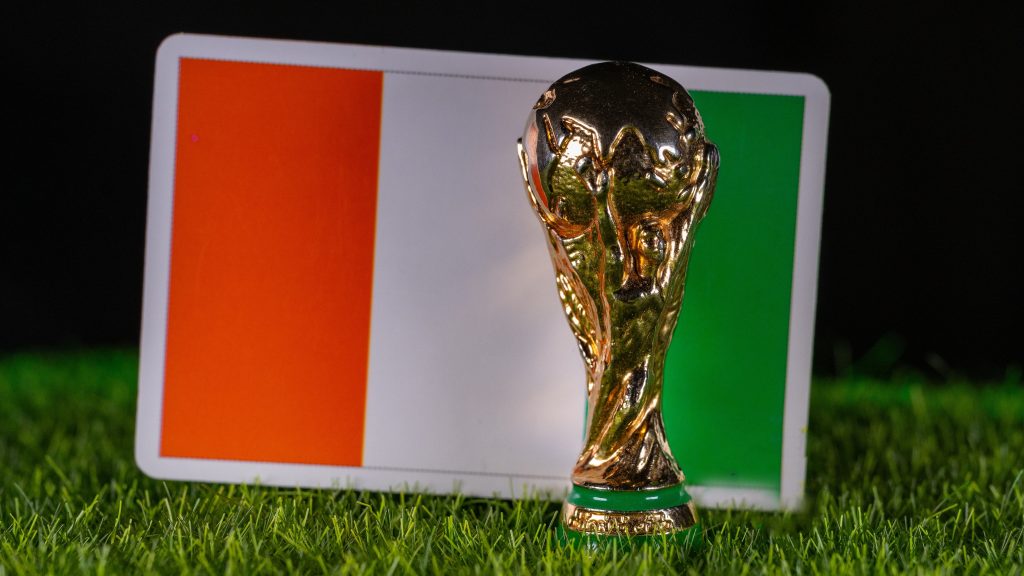
Côte d’Ivoire is officially back at the World Cup. The team earned its spot on October 14, 2025, finishing African qualifying with a 3-0 win over Kenya. This marks their fourth World Cup appearance and their first since 2014.
Qualifying for North America matches the team’s recent progress. In February 2024, Côte d’Ivoire won the Africa Cup of Nations at home, beating Nigeria 2-1 in the final with goals from Franck Kessié and Sébastien Haller. This title was earned through strong performances, not just memories, and it sets a standard for what fans will expect in 2026.
The national team’s identity has stayed consistent, even as the squad has changed over the years. They are still called Les Éléphants, and people still talk about the team in light of the famous mid-2000s to mid-2010s era. The Drogba and Touré years made Côte d’Ivoire well-known internationally, even though their tournament results were often modest.
That limitation is the quiet tension underneath the 2026 story. Côte d’Ivoire qualified for three straight World Cups from 2006 through 2014 and did not reach the knockout rounds in any of them. The record isn’t a punchline, but it is a clear line in the sand: the next step has never been talent alone, it’s been tournament-level consistency.
The 2026 tournament gives Côte d’Ivoire a new chance to move forward. With 48 teams, 12 groups, and a round of 32, the World Cup is bigger and the group stage works differently than in 2014. Côte d’Ivoire is in Group E with Germany, Ecuador, and Curaçao, and their schedule is straightforward, which is rare in a World Cup hosted by three countries.
Now that the schedule is set, you can make your plans to follow the team.
If you’re building a World Cup routine around Côte d’Ivoire, start with the calendar because the match locations are unusually clean. They open on Sunday, June 14, 2026 against Ecuador at Lincoln Financial Field in Philadelphia with a 7:00 p.m. Eastern kickoff. The second match is the group’s headline fixture, Germany vs Côte d’Ivoire on Saturday, June 20 at BMO Field in Toronto, kicking off at 4:00 p.m. Eastern. The group stage closes with Curaçao vs Côte d’Ivoire back in Philadelphia on Thursday, June 25 at 4:00 p.m. Eastern.
Having two matches in Philadelphia makes it easier to follow the team in person. You can use Philadelphia as your base and only need to cross the border once if you want to see the Germany match live in Toronto. This avoids the frequent travel that other groups might face. Even if you’re not traveling, the schedule helps you know when to look out for squad updates, travel days, and lineup news.
Next, keep an eye on the coach, since Côte d’Ivoire’s coaching situation is important right now. Emerse Faé became the permanent head coach in February 2024 after leading the team during the Africa Cup of Nations. This stability matters because a settled coach usually means more predictable choices in the lineup and player roles.
You’ll start to see these patterns before the first match in Philadelphia. Friendly games and roster announcements in the months before June 2026 will show if Faé is sticking with the AFCON-winning core or trying something new. Following Côte d’Ivoire closely means paying attention to repeated choices, especially in midfield and the attack, rather than just memorizing player names.
The AFCON final is the best way to understand the team’s current strengths. Kessié and Haller both scored in the biggest match of the cycle, and they show two ways Côte d’Ivoire can win: Kessié controls the midfield, while Haller can score at key moments. The rest of the team is important too—a World Cup is rarely won by just one star. Wingers who can move the ball quickly, midfielders who can hold a lead, and defenders who can handle pressure often make the difference in breaking through the group stage.
If you want a simple list of players to watch, start with Franck Kessié and Sébastien Haller, who stood out in the AFCON win. Then, pay attention to how often players like Simon Adingra, Ibrahim Sangaré, Amad Diallo, and defender Evan Ndicka play in important moments. The goal isn’t to guess the final squad, but to see which players the coaches rely on when it counts.
Group E also gives you a clear way to look at the opponents. Germany is a strong team with high expectations, and the match in Toronto will probably have the biggest impact on the group standings. Ecuador is the first opponent, making that game important both mentally and tactically. Curaçao has less World Cup experience, but the last match in Philadelphia could be crucial, depending on earlier results.
When it comes to watching the games, sort out your broadcast plans early and double-check them before matchday. In the United States, you can watch in English on Fox or in Spanish on Telemundo. In Canada, games will be on CTV and TSN. If you’re in another country, check your local broadcaster well before June and make sure your streaming works a few days before each match so you don’t miss kickoff.
Ticketing and attendance are similar. For a tournament of this size, the safest habit is to treat official FIFA ticketing channels as the baseline and to be cautious with third-party resale listings, even when they look polished. If you’re traveling internationally, add one more stable step: confirm passport validity and entry requirements for the United States and Canada early, then confirm again as the tournament approaches.
Finally, remember the team’s history, but don’t let it overshadow what’s happening now. Côte d’Ivoire didn’t reach the knockout stage in their last three World Cups, which is why 2026 is so important. They’re experienced, but a deep run would be something new. With a recent AFCON title, a stable coach, and an easy-to-follow schedule, the next step is clear. The dates and opponents are set in Philadelphia and Toronto.