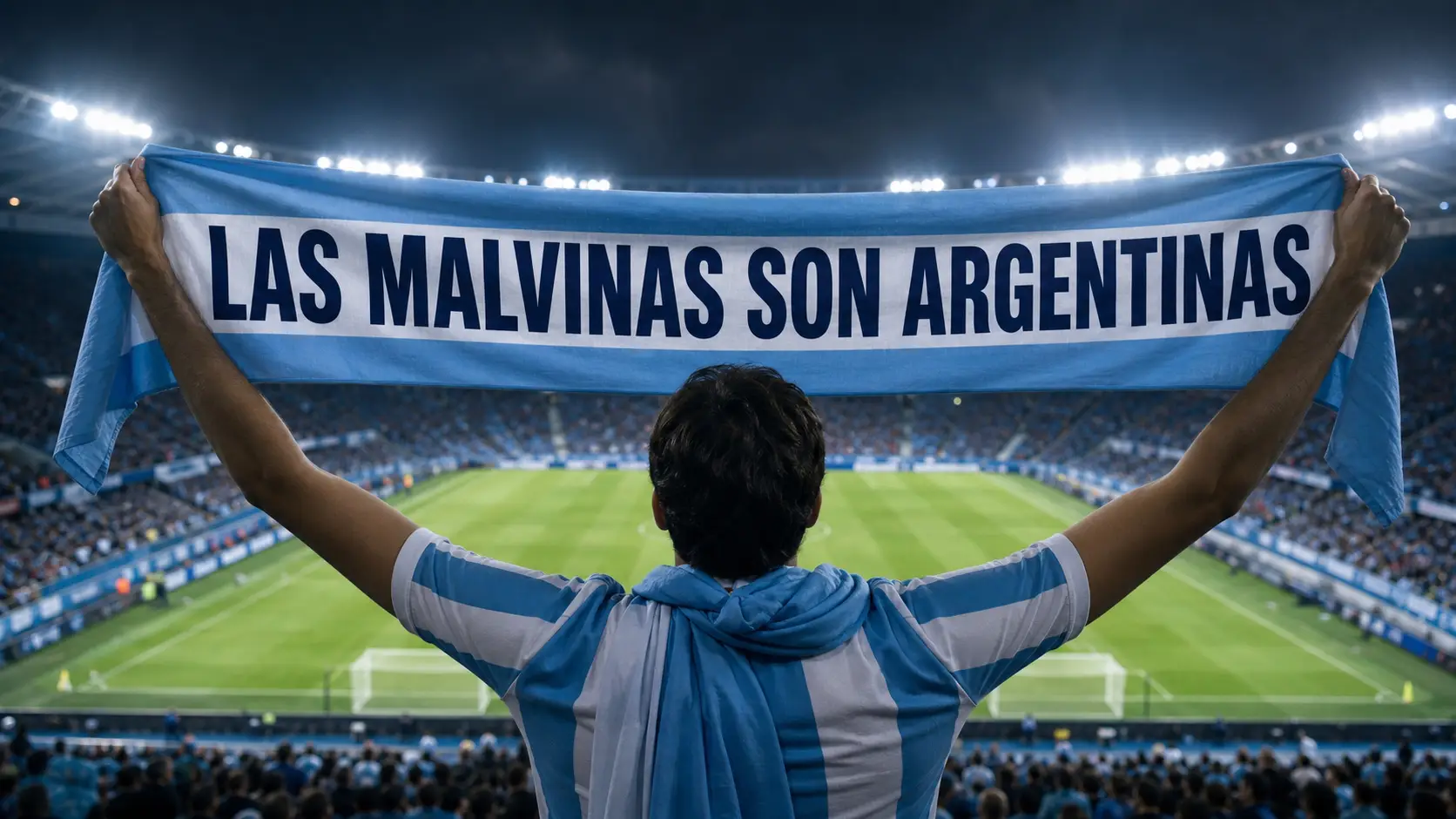
FIFA has opened disciplinary proceedings against the Argentinian Football Association after a World Cup campaign that included players displaying a banner reading Las Malvinas son Argentinas. The display followed Argentina’s 2-1 World Cup semifinal victory over England in Atlanta on July 15. No breach has been established, no sanction has been announced, and FIFA’s public notice is less specific than the incident now connected to it.
The July 29 notice cites potential breaches of four provisions covering non-sporting demonstrations, team misconduct, discrimination and racist abuse, and order and security at matches. It also refers to discriminatory chants and gestures, late kickoffs, failures to follow match and security protocols, inappropriate messages by the team and spectators, and objects thrown from the stands. Those allegations concern several Argentina matches, not one isolated event.
Separate reporting identifies the banner as the issue behind the provision banning the use of a sports event for a non-sporting demonstration. FIFA’s notice, however, never uses “Falklands,” “Malvinas” or the wording on the banner. The named respondent is the AFA. FIFA has not announced banner-specific proceedings against Giovani Lo Celso, Lisandro Martínez or any other player seen with it.
The video shows the banner moving from the supporter area to players before it is carried onto the field. It doesn’t establish who made it, who brought it into the stadium or how it passed entry controls. FIFA’s published stadium code prohibited political material and made banner inspection part of the entry rules. Argentina’s security minister also said before the semifinal that Malvinas references would not be admitted, although the match-specific operational plan wasn’t made public.
The display sits within Argentina and England’s long World Cup history, but its clearest disciplinary comparison came outside this tournament. FIFA reprimanded the AFA and fined it CHF30,000, about $33,200 at the time, in 2014 after Argentina players stood behind a banner carrying the same words before a friendly against Slovenia. That decision is a precedent, not a price list. The current code’s general recidivism period for other offenses is three years, placing the 2014 case outside that window.
The public case is broader than the banner
FIFA has bundled several kinds of alleged conduct into a single association-level proceeding. The published material doesn’t allow Articles 14, 15 and 17 to be assigned to the banner, nor does it establish that the banner itself amounted to discrimination. Article 13 is the provision connected to the display. It covers political or other non-sporting demonstrations staged through a sports event.
The disciplinary code allows FIFA to consider culpability, aggravating or mitigating circumstances and cooperation before selecting a measure. It contains no fixed tariff for this banner, so the previous sanction cannot be treated as a forecast. The code allows warnings, reprimands, fines and other measures, but the committee has not indicated which, if any, it may use.
The political dispute also remains separate from FIFA’s rules. The Falkland Islands are a self-governing British Overseas Territory claimed by Argentina. The United Kingdom relies on the islanders’ stated wish to remain under British sovereignty, while Argentina rejects British control and continues to seek sovereignty through peaceful means. The United Nations recognizes that a dispute exists and calls for negotiations. It has not awarded sovereignty to either side. More than 900 people were killed in the 1982 war.
Political interventions since the semifinal don’t decide the disciplinary question. Argentina’s president defended the expression, British and Falkland Islands officials called for action, and a White House World Cup taskforce official invoked US free-speech principles. The FIFA Disciplinary Committee still applies the tournament’s rules.
FIFA says the respondents may now present their positions and that a decision will follow in due course. No public AFA defense or ruling had appeared by July 30. Until that changes, the case remains an association-level proceeding over potential breaches, with separate reporting linking the Falklands banner to Article 13 but FIFA’s notice not expressly naming it.