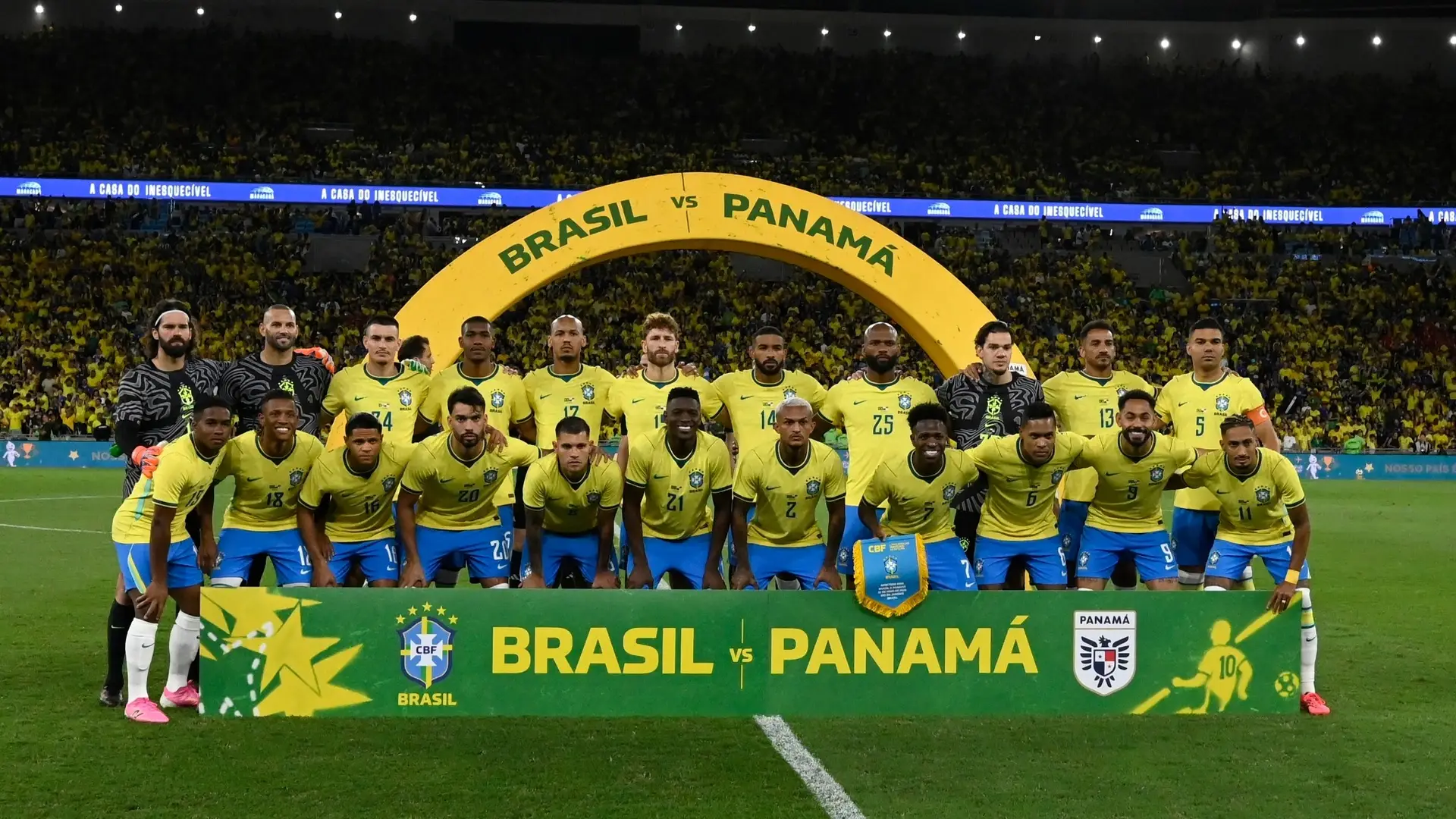
Brazil arrived in the United States with ceremony around the aircraft and uncertainty around the team. Brazil’s World Cup journey begins with five stars on the shirt, a chase for a sixth, and a question that does not usually sit comfortably beside the Seleção: can the most successful national team in men’s World Cup history manage the tournament before it tries to decorate it?
Group C gives Brazil a path it should control. Morocco, Haiti and Scotland are different problems, not equal ones. Morocco are the opening stress test on June 13 in New Jersey. Haiti should be the match Brazil use to secure points and margin. Scotland bring structure, size and enough set-piece threat to make a favorite work through uncomfortable minutes. In the 48-team format, the top two advance and eight best third-place sides follow, so Brazil’s first task is not perfection. It’s control.
Carlo Ancelotti brings the control. Brazil did not glide through qualifying. They finished fifth in CONMEBOL, lost heavily to Argentina along the way, and changed managers before the tournament. Ancelotti’s job is less about installing a grand identity than lowering the temperature. He has inherited an attack with speed and invention, but also a squad with narrower margins than Brazil’s reputation suggests.
At their best, Brazil can still tilt a knockout match in a few seconds. Vinícius Júnior is now the forward whose game most closely matches the team’s need. He is one of the players to watch at World Cup 2026, not because of storyline, but because his speed changes a match before an opponent can reset. Raphinha, Gabriel Martinelli, Endrick and Matheus Cunha give Ancelotti different ways to stretch or finish a game. Behind them, Alisson, Marquinhos, Gabriel Magalhães, Bruno Guimarães and Casemiro give Brazil a spine that should travel.
The Neymar question
Neymar’s involvement is half symbolic, half tactical. He is Brazil’s all-time leading scorer, but this version of the squad cannot be built around the assumption that he will be whole. A Grade 2 calf strain has already interrupted his preparation, and his camp has become more about recovery than rhythm. If he starts before he is ready, Brazil risk losing pressing, spacing and defensive balance. If he is used later in matches, he can still change tempo, draw contact and find passes that Brazil’s runners need.
For certain, Neymar is not asked to be the center of gravity. Vinícius can carry the field-position threat. Neymar can carry selected moments. That would be a difficult adjustment for a player who has been the face of Brazil for more than a decade, but it may be the only way this roster gets the best of him without becoming dependent on a body that has not offered consistency.
The other problem is less symbolic and more obvious. Wesley’s adductor injury removed the only specialist right back from Ancelotti’s original 26-man squad, forcing Brazil toward patched solutions with Danilo or Ibañez. The right side will be a target. A team that wants to play with four attackers cannot afford a flank that needs constant repair. If Ancelotti leans into a front-heavy shape, the midfield also has to stay compact. Casemiro cannot be asked to defend open lanes all night, and Bruno Guimarães is most useful when he is controlling tempo, not putting out fires.
Morocco are the opponent with the best chance to disturb the group. They are not simply a memory from 2022. They profile as a World Cup dark horse because they can keep games close, defend with confidence and force favorites to solve problems without easy space. Brazil should still have enough to win Group C. Seven points is the realistic target, with the opener deciding whether the group feels orderly or tense.
Brazil should leapfrog the group and then some, all the way to the quarterfinals. A semifinal is realistic if Vinícius turns turnovers into long runs, if Gabriel and Marquinhos protect the full-back issues, and if Neymar becomes the pragmatist razor, used wisely. In short, a title run and sixth star is possible.
Brazil’s chance rests on a strange reversal. The team often associated with excess may need restraint. The side most tied to individual genius may need role discipline. Ancelotti’s got the talent. His aim is to unleash them within his reserved style. The sixth star is within range.