A soccer coach, a laptop and three minutes of water have turned one of the 2026 World Cup’s most practical safety measures into something more complicated.
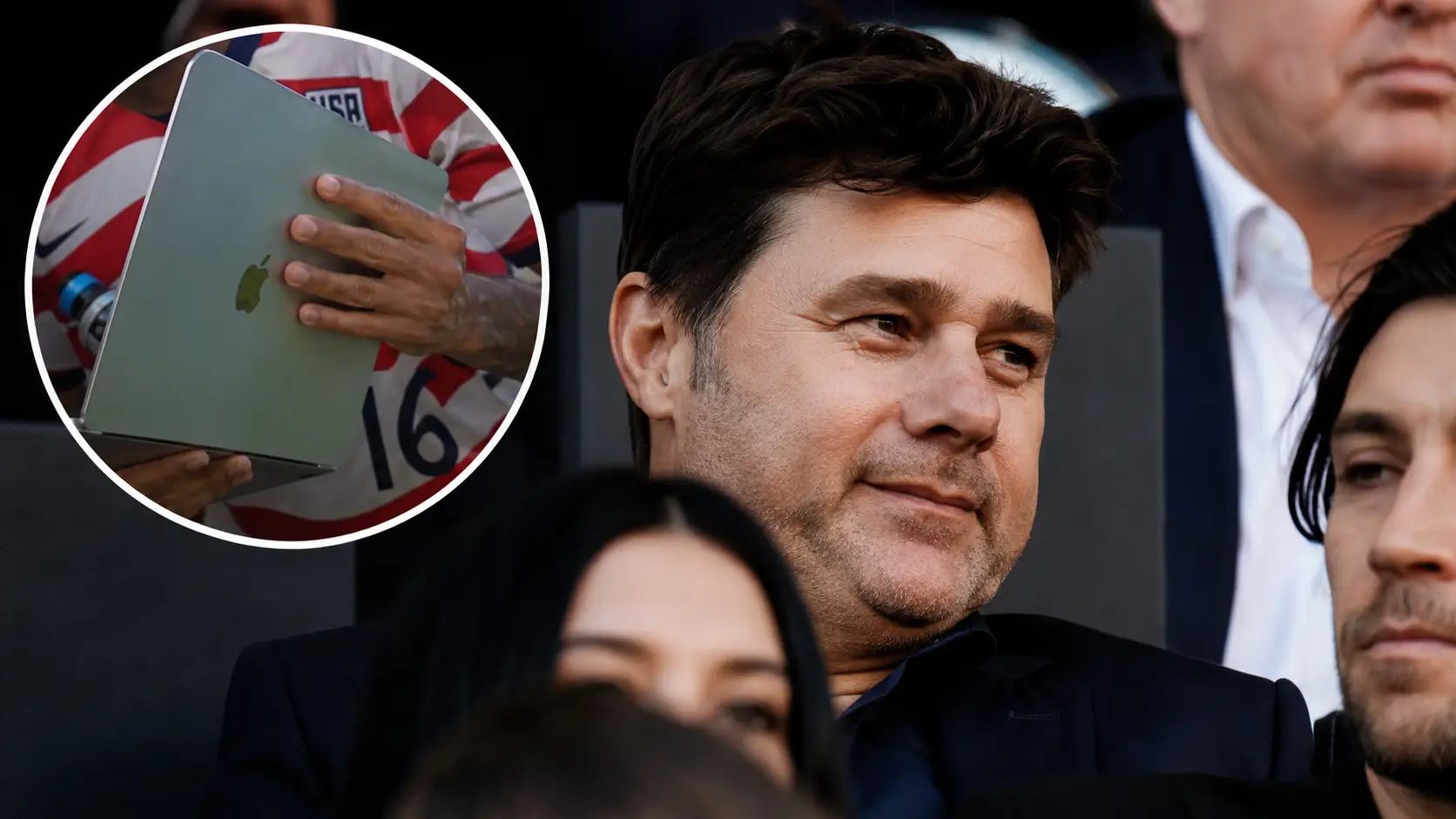
During the United States’ 3-2 win over Senegal in Charlotte, the first-half hydration break arrived in the 24th minute. The U.S. players did not simply take on water at the touchline. They gathered near the bench while Mauricio Pochettino pointed at a laptop screen and walked them through tactical details. The scene fit the logic of Pochettino’s USMNT roster, a team being shaped around structure, control, and sharper decisions.
“Players need to think, but they also need to see,” Pochettino said afterward. FIFA has not yet clarified whether the same setup will be allowed during the World Cup. Its public response so far was that it would “look into this and come back if there’s anything we can share.”
The question is not whether a coach can use a computer. IFAB’s Laws of the Game allow team officials to use small, mobile electronic equipment, including tablets and laptops, when it relates directly to player welfare, safety or tactical coaching. Players face stricter limits on electronic communication equipment, with narrow exceptions for approved tracking systems. The unsettled space in the World Cup’s rulebook is the break itself, and whether a pause created for hydration can become a structured video session.
FIFA’s 2026 policy makes the issue unavoidable. Every World Cup match will include a three-minute hydration break midway through each half, regardless of weather, roof, or temperature. In a 104-match tournament, that creates 208 planned breaks and 624 minutes of scheduled mid-match pause time. Throughout the tournament, a safety measure amounts to 10 hours and 24 minutes of interruption in a sport built around continuous play.
A three-minute pause with more than one purpose
The welfare argument is real. The tournament will be played across June and July in the United States, Mexico and Canada, with several host cities exposed to heat and humidity. World Weather Attribution estimates that roughly a quarter of the 2026 World Cup’s 104 matches could be played in conditions above FIFPRO’s recommended heat-safety limits. FIFPRO’s guidance calls for cooling measures above 26°C WBGT and recommends postponement above 28°C WBGT, a standard that accounts for heat, humidity, wind and sun exposure rather than air temperature alone.
Once a stoppage is guaranteed, it begins to collect other uses. Sports Business Journal reported that FIFA will allow broadcasters to cut away to advertisements during hydration breaks, with rules around when ads can begin and when coverage must return. That fits the commercial logic of FIFA’s $13 billion World Cup, where 48 teams and 104 matches have already expanded the tournament’s scale. The water break is not only a medical pause. It is also a predictable window in the middle of each half.
Coaches have understood the tactical value of these pauses for years. At the 2014 World Cup, Louis van Gaal used a cooling break during the Netherlands’ round-of-16 match against Mexico to change his team’s setup. “Then I moved to plan B and yes, I did that in the cooling break,” Van Gaal said afterward. The Netherlands scored twice late and won 2-1. Pochettino did not invent the tactical water break. He brought it into the laptop era.
The laptop changes the texture of the stoppage. A coach talking during a break is familiar. A coach showing video gives the pause a fixed image, a replay and a tactical map. If FIFA requires players to remain on the field during hydration breaks, the exact bench-side scene from Charlotte may not be repeated. The central issue will remain: how much visual instruction can fit inside a break designed for water?
Soccer has traditionally given managers less direct in-game control than other major team sports. Substitutions matter. Halftime matters. Touchline instruction matters, but the match usually keeps moving beyond the coach’s reach. Hydration breaks alter that rhythm. Twice per match, every match, managers get a chance to slow the picture down.
Pochettino’s huddle may become a footnote if FIFA sets stricter limits before the tournament begins. It may become the first clear example of a new match habit if FIFA allows it. Either way, the 2026 World Cup’s hydration breaks are already more than a drink. They are a welfare measure, a coaching opportunity, a broadcast window and a test of how much interruption modern soccer is willing to absorb.