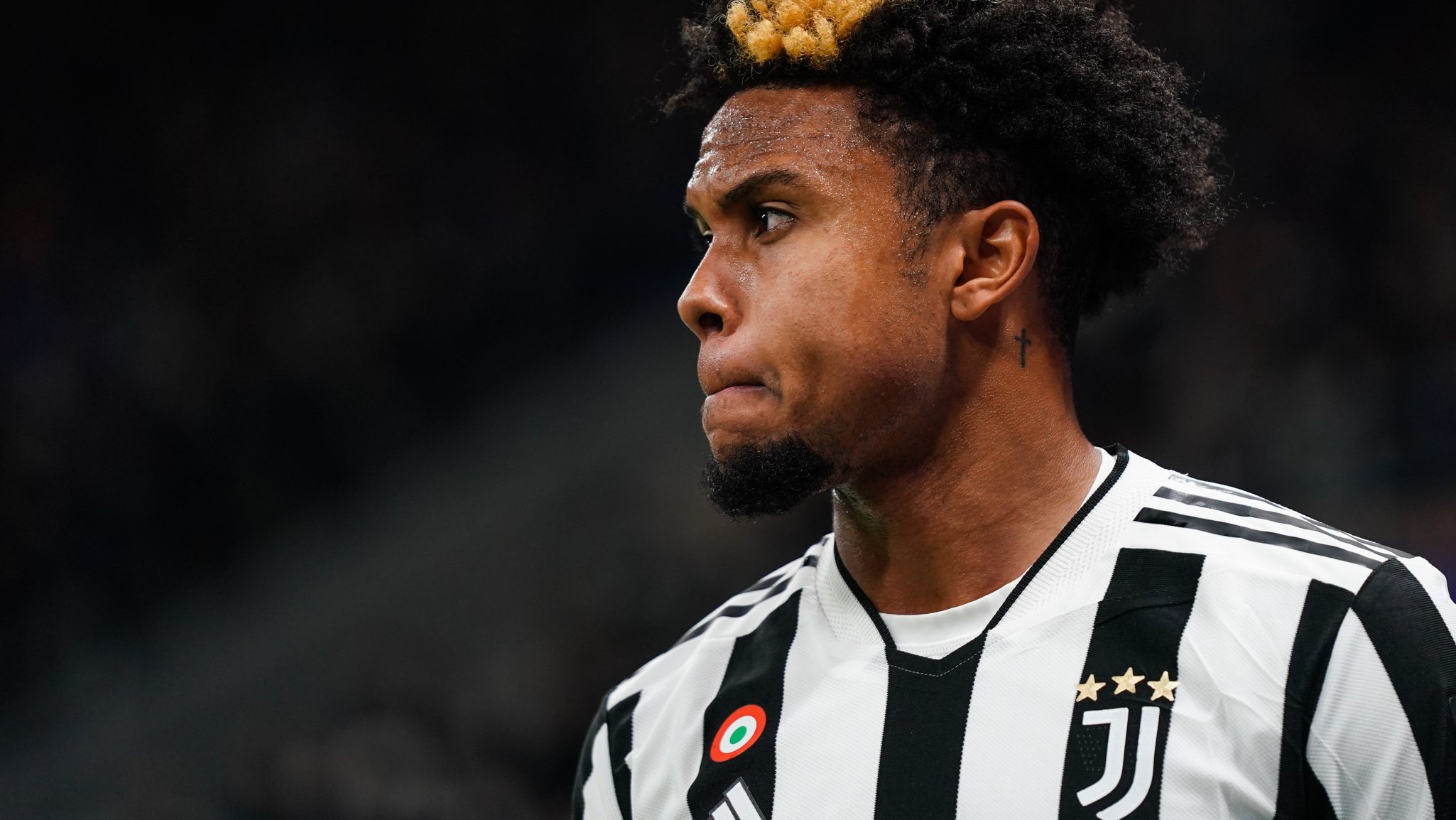
Juventus did not merely keep Weston McKennie. It made time part of the argument. On March 2, the club extended his contract through June 30, 2030, a deal that could carry him through a full decade in Turin after he first arrived from Schalke in 2020.
The decision sits against a jagged recent history. McKennie was loaned to Leeds United in 2023, returned to Juventus after Leeds’ relegation, and stepped back into a club that had repeatedly treated his place as negotiable. By this spring, Juventus was citing 220 appearances, 26 goals, and 26 assists, the kind of record that turns a utility player into something closer to a fixed point.
The shift has been clearest under Luciano Spalletti. Juventus’ own announcement described a player who, after starting as a central midfielder, had also been used as a striker, attacking midfielder, winger, full-back, and defender. Few player labels survive that spread. McKennie has made the spread itself part of his case.
In January, the production followed. Juventus named him its EA Sports MVP of the month after a run that included goals against Lecce, Cremonese and Benfica, plus an assist against Cremonese. It was not a sentimental award. It was recognition of a player making himself useful in the final third while still absorbing whatever shape the team needed around him.
The contract announcement gave the form a formal consequence. AP reported the new deal included a raise to about $4.7 million per season, up from about $3 million. More important for the World Cup picture, Juventus stopped treating his flexibility as a temporary fix. It made that flexibility part of the club’s future.
The World Cup question
With the U.S., McKennie’s status is secure in one sense and unsettled in another. U.S. Soccer listed him on the March roster after he missed November camp, noting that he had four Serie A goals, four Serie A assists and four Champions League goals at that point. It also noted that he had become the third Juventus midfielder to reach 10 Champions League goals, joining Michel Platini and Pavel Nedvěd.
The national-team evidence arrived quickly. Against Belgium on March 28, McKennie scored in the 39th minute, his 12th international goal and his first for the U.S. since March 2023. The match ended in a 5-2 defeat, but the goal still mattered for the individual argument. His club rhythm had not vanished when he changed shirts.
The question for Mauricio Pochettino is not whether McKennie belongs in the 26-man World Cup squad. It is how much structure should be built around a player whose best work often begins when a structure bends. The U.S. has deeper midfield questions, advanced-midfield competition involving players such as Malik Tillman, Gio Reyna and Diego Luna, and an attacking core still organized around Christian Pulisic.
McKennie does not offer the cleanest positional answer. He offers a tournament answer. A World Cup compresses decisions. Injuries, suspensions and opponent-specific plans can change a team’s needs in days, not months. A player who can defend wide areas, arrive late in the box, play through contact and take on emergency roles gives a manager more ways to adjust without remaking the squad.
That versatility can also work against him. When a player can do many jobs, the temptation is to make him the solution after the plan has already failed. For the U.S., the sharper use would be different. McKennie should not arrive in June as insurance. He should arrive with a defined lane, even if that lane changes by game state.
Resurgence may be too small a word for it. Juventus has already reached its conclusion, rewarding a player whose value became clearer after years of role changes and uncertain summers. Pochettino’s task is to decide whether the same qualities that made McKennie indispensable in Turin can help the U.S. manage Paraguay, Australia and Türkiye when the World Cup begins.