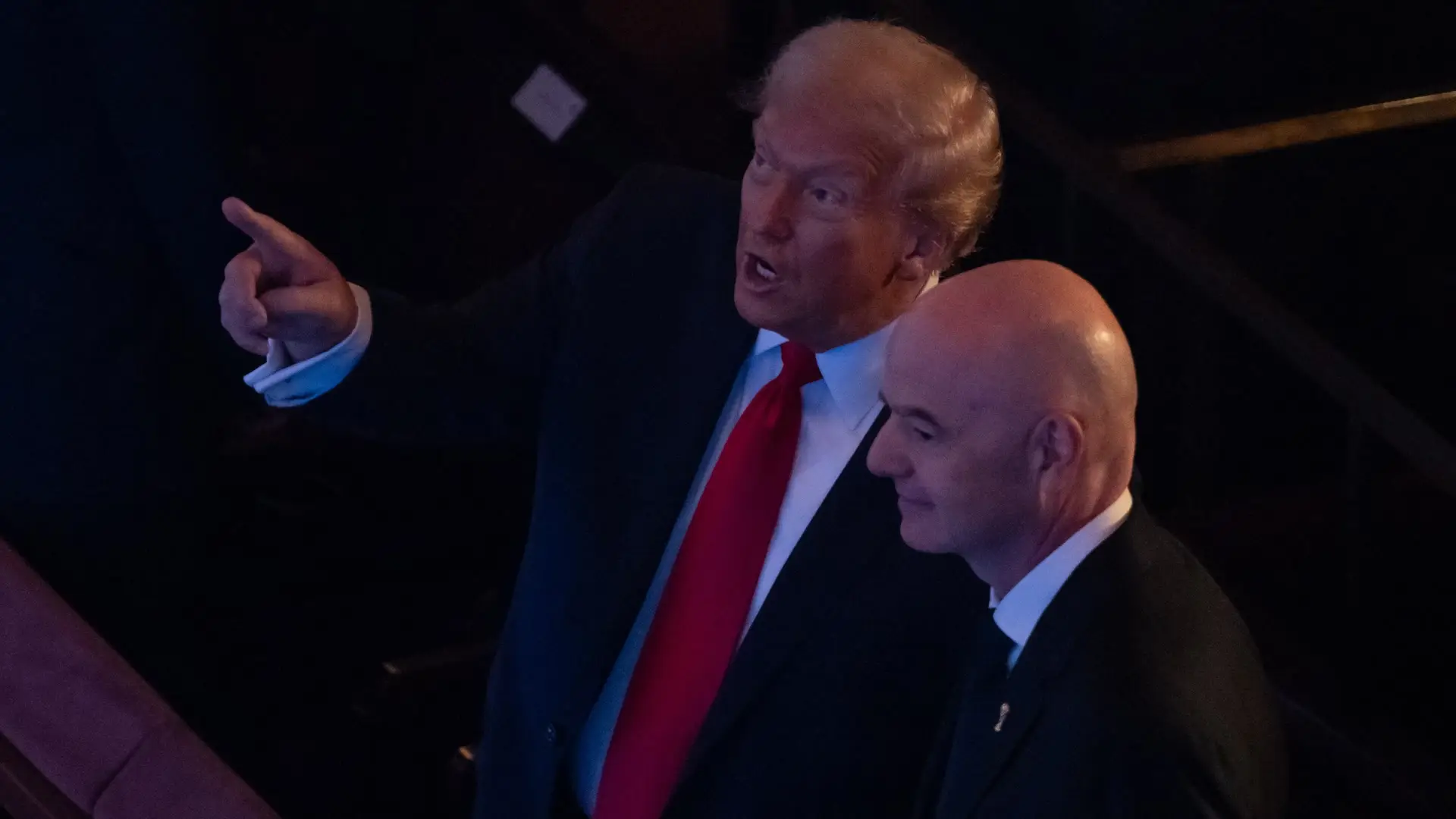
Donald Trump has stepped into FIFA’s governance crisis with a direct defense of Gianni Infantino. At 9:31 p.m. EDT on August 10, the U.S. president wrote on Truth Social: “FIFA would be making a terrible mistake if, for any reason, they even considered replacing President Gianni Infantino.” The post arrived after Infantino abandoned the FIFA Forward Enterprise proposal that opened the current rupture.
Trump called Infantino “fantastic” and said he had presided over “the most successful World Cup, by four times, ever presented.” He didn’t define the measure, and the post offered no evidence for its profitability prediction. Institutionally, Trump can’t appoint, remove or re-elect FIFA’s president. That authority belongs to FIFA’s 211 member associations. His post reinforces Trump and Infantino’s public alliance, but it doesn’t alter FIFA’s governing arithmetic.
That distinction is unusually sharp in the United States. Hours before Trump’s post, U.S. Soccer joined Canada Soccer, the Caribbean Football Union and the Central American Football Union in calling for “meaningful change” to FIFA’s governance, transparency and accountability. The four bodies didn’t address Infantino’s future, endorse a challenger or threaten a boycott. Their intervention preceded Trump’s and can’t be described as a response to him.
The larger institutional challenge came from UEFA, the AFC and Concacaf. Their presidents, all FIFA vice presidents, and their general secretaries signed a letter accusing FIFA’s leadership of “deception.” It described the bid to bring private investors into the World Cup business as a “fundamental breach of trust.” They want records preserved and any review conducted by a “fully independent third party.” The letter doesn’t name Infantino or use the word resign.
The split can’t be reduced to three confederations against the other three. CAF’s executive committee has backed Infantino, but that isn’t proof of 54 separate association positions. CONMEBOL criticized unilateral action while insisting on institutional procedures. Football Australia backed the AFC’s demand for an independent process without taking a position on Infantino’s tenure. Norway remains the only identified national federation to have explicitly demanded his immediate resignation. No verified association count turns those separate actions into a decisive voting bloc.
Reported rival talks remain far from a competition
FIFA Forward Enterprise remains withdrawn, and no transaction occurred. FIFA proposed raising up to $4.2 billion by selling minority, non-controlling interests in a commercial subsidiary with an implied initial valuation of $20 billion. The plan still required majority support from member associations and FIFA Council approval when Infantino withdrew it on July 31. No public evidence shows that the proposed subsidiary was incorporated or that an approval, investment or equity sale occurred. FIFA later said the idea was “off the table,” admitted process errors and promised a report to the Council. It hasn’t named an independent reviewer.
Reported talks about alternative competitions remain preliminary. Officials from UEFA, the AFC and Concacaf are said to have discussed ways to preserve international fixtures if a boycott disrupts FIFA events. None of the three has confirmed an authorized project. There’s no announced format, team list, calendar, venue plan, budget, broadcaster, sponsor or rulebook.
Here, alternative could mean very different things. Matches arranged within existing international windows wouldn’t equal a breakaway World Cup. An unauthorized global tournament would have to resolve player release, club obligations, insurance, refereeing, discipline, anti-doping, broadcast contracts and recognition across national associations. There’s no evidence those questions have moved beyond preliminary discussion.
FIFA’s latest public defense, issued August 8, said any process concerning its presidential election must follow its statutes and alleged a “concerted and ongoing effort” to undermine the organization and Infantino. The three-confederation letter rejects FIFA’s promised internal review and demands outside scrutiny. Trump has now supplied Infantino with the most prominent political endorsement in the dispute, but no institutional remedy to that challenge.
Two stories are moving beside each other. One is documented: a fight inside FIFA’s own hierarchy over authority, consultation and trust, now joined by the U.S. president. The other is provisional: reported contingency talks with no competition attached. The public record supports calling the first a revolt. Calling the second a breakaway World Cup still outruns the evidence.