
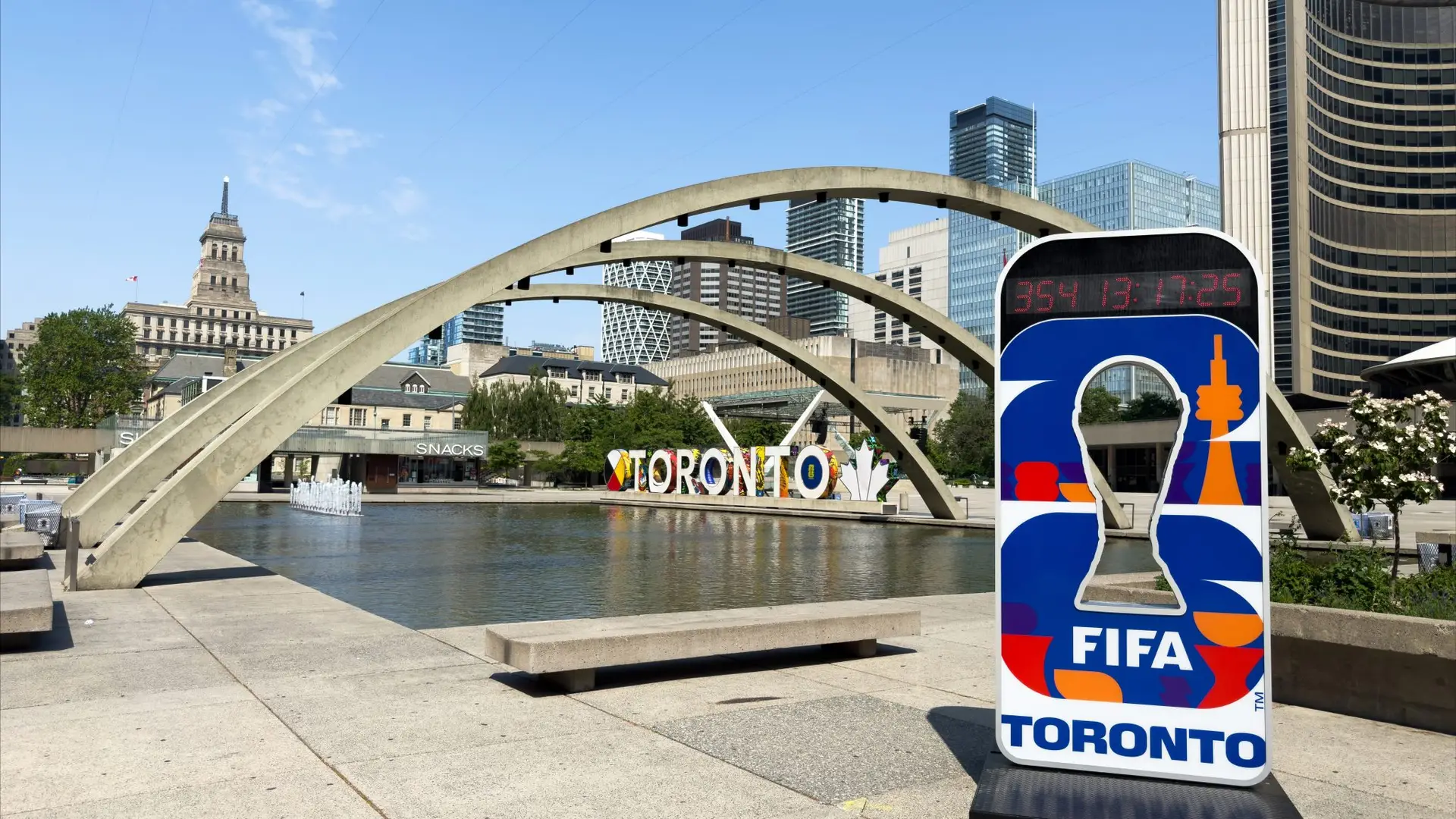
Toronto’s role in the 2026 FIFA World Cup is no longer an abstract host-city promise. It now looks like a full summer travel plan: six matches, a rebuilt stadium, a ticketed-but-free Fan Festival, a transit-first mobility plan, and a waterfront corridor that will shape how visitors move through the city.
The useful thing about Toronto is that the World Cup footprint is compact. Most of the action sits between Union Station, Fort York, The Bentway, Liberty Village, Exhibition Place, and Toronto Stadium. That changes the way visitors should plan the trip. This is not a host city where the stadium, fan zone, hotels, airport rail, and downtown attractions all feel disconnected. In Toronto, the smartest plan is to pick a base that keeps you close to transit and reduces the number of late-night transfers after a match or public screening.
Toronto will host six matches from June 12 to July 2, 2026. The first is Canada vs. Bosnia and Herzegovina on June 12 at 3 p.m. ET, a historic moment because it will be the first men’s World Cup match ever played on Canadian soil. The city’s final game is a Round of 32 match on July 2 at 7 p.m. ET.
Toronto World Cup 2026 Match Schedule
| Date | Time | Match |
|---|---|---|
| Friday, June 12, 2026 | 3 p.m. ET | Canada vs. Bosnia and Herzegovina |
| Wednesday, June 17, 2026 | 7 p.m. ET | Ghana vs. Panama |
| Saturday, June 20, 2026 | 4 p.m. ET | Germany vs. Côte d’Ivoire |
| Tuesday, June 23, 2026 | 7 p.m. ET | Croatia vs. Panama |
| Friday, June 26, 2026 | 3 p.m. ET | Senegal vs. Iraq |
| Thursday, July 2, 2026 | 7 p.m. ET | Round of 32: Group K runner-up vs. Group L runner-up |
All six matches will be played at Toronto Stadium at Exhibition Place, the World Cup name for BMO Field. The stadium has been expanded with more than 17,000 new seats, bringing tournament capacity to 45,736.
Toronto Stadium Is Ready for the World Cup
Toronto Stadium is now ready for the World Cup after a major transformation from its usual role as an MLS and CFL venue. The project added expanded seating, new LED videoboards, improved lighting and sound, faster Wi-Fi, new hospitality areas, upgraded concessions, enhanced player facilities, and a FIFA-standard pitch.
Some changes are temporary, especially the added seating. Others will remain after the tournament, which means Toronto FC, the Argonauts, and future events should inherit a better venue once the World Cup leaves town.
For visitors, the stadium’s location matters as much as the upgrades. Exhibition Place sits west of downtown near the waterfront, close to Liberty Village, Fort York, The Bentway, and Exhibition GO Station. That makes it reachable by regional rail, streetcar, walking routes, and bike routes, but it also means matchdays will put pressure on a tight corridor.
The Fan Festival Is Free, But You Need a Ticket
Toronto’s official FIFA Fan Festival will run from June 11 to July 19 at Fort York and The Bentway. This is the city’s main public viewing and celebration site, with live match broadcasts, music, cultural programming, food vendors, and fan experiences.
The key update is ticketing. General admission is free, but visitors still need a ticket to enter. Tickets are reserved online in advance, not at the gate. General admission includes all-day entry, live match broadcasts, entertainment, and fan experiences. The event is rain or shine, and there is no re-entry after leaving with a general admission ticket.
A new wave of general admission tickets is scheduled for Friday, May 15 at 10 a.m. ET. That detail could change quickly as tickets are claimed, so visitors should treat Fan Festival access as something to reserve early, not something to figure out on arrival.
Premium options are also available, with experiences such as the Garden Pavilion, Pitchside Terrace, and Casamigos Clubhouse. Those packages add perks like expedited entry, shaded or elevated viewing areas, private washrooms, lounge access, and premium sightlines depending on the ticket.
Where to Stay for Toronto World Cup 2026
The easiest areas for matchdays are downtown west, Fort York, Liberty Village, King West, Queen West, and the Entertainment District. These neighborhoods keep visitors close to the stadium, the Fan Festival, restaurants, nightlife, and transit.
For a more classic first-time Toronto trip, Union Station, the Financial District, and the central waterfront are also strong choices. Visitors will be slightly farther from Exhibition Place, but they gain easier airport access, more hotel inventory, and a better hub for regional rail.
The smartest rule is to plan around the exit route, not just the arrival route. A 3 p.m. match is one kind of travel day. A 7 p.m. match followed by crowd movement through Exhibition GO, streetcar stops, and downtown streets is another. Hotels that look equally convenient on a normal map may feel very different after a late kickoff.
Do Not Build This Trip Around Driving
Toronto’s mobility plan is built around transit, walking, and cycling. The City has already said there will be no public parking at Toronto Stadium, Exhibition Place, or nearby neighborhoods such as Liberty Village and Fort York during event operations. Local access restrictions will also be in place.
That makes transit the safest default. Exhibition GO Station is the key rail stop near the stadium, with Union Station acting as the main downtown hub. The TTC will also be central, especially the 504 King, 509 Harbourfront, and 511 Bathurst streetcars, which are expected to run frequently during the tournament period. Line 1, Line 2, Dufferin routes, and Bathurst connections will also matter depending on where visitors stay.
Metrolinx is also adding GO Transit and UP Express service for the tournament window. That matters because Toronto’s World Cup crowd will not only come from downtown. Fans will move in from the suburbs, Pearson Airport, nearby cities, and regional hotel markets. The stronger the connection to Union Station or a major transit route, the easier the trip becomes.
Airport Access Is One of Toronto’s Advantages
Toronto Pearson has a direct rail link to downtown. UP Express connects Pearson Airport with Union Station in about 28 minutes, which is a major advantage for travelers staying downtown or connecting onward by GO or TTC.
Billy Bishop Toronto City Airport is even closer to the core, especially for travelers flying from cities served by Porter and other regional routes. It sits on the island just off downtown, with mainland access by tunnel or ferry and transit connections nearby.
For World Cup travelers, Pearson will likely offer more international and long-haul flexibility, while Billy Bishop can be useful for shorter North American trips. Either way, Toronto’s airport access is easier than many tournament cities if visitors stay near the downtown transit spine.
Ticket Resale Is Different in Toronto
Toronto also has a ticketing wrinkle that fans should understand before buying on the secondary market. FIFA’s resale policy for Toronto matches has been updated to comply with Ontario’s ticket rules. Tickets for Toronto Stadium matches on FIFA’s official resale platform may only be listed at the original price paid to FIFA Ticketing, including applicable taxes and fees, or for less.
That does not mean Toronto tickets will be easy to get. It does mean official resale in Toronto is different from many other host cities, where market pricing can climb much higher. Fans should still use official FIFA channels and avoid unofficial sellers, especially as demand builds for Canada’s opener and the Germany match.
What to Do Between Matches
Toronto’s appeal is not limited to the stadium zone. Once visitors are using transit, the city opens up quickly. The waterfront, CN Tower, Rogers Centre, Queen West, King West, Kensington Market, Chinatown, Little Italy, the Distillery District, and the islands can all fit into a World Cup itinerary depending on how much time is available.
The city’s diversity is part of the point. Toronto’s official host-city theme leans into “The World in a City,” and for visitors that is not just branding. It shows up in food, languages, neighborhoods, and the way international fan communities will gather during the tournament.
Toronto is also supporting more than 60 community celebration events across the city, including neighborhoods such as Little Jamaica, Little Portugal, Little Italy, Chinatown, Greektown, Roncesvalles Village, the Danforth, and Kensington Market. That means the best World Cup days may not all happen inside the official footprint. Some will happen in neighborhood streets, restaurants, parks, and community events where the city’s soccer cultures already live.
Weather: Warm, Humid, and Mostly Outdoor-Friendly
Toronto in June and early July should be warm enough for outdoor screenings, but visitors should plan for sun, humidity, and rain. Average daily highs are around the mid-20s Celsius in June and upper-20s Celsius in July, which is comfortable for evening events but can feel hot on pavement during the afternoon.
Pack like someone who will be outside for longer than planned: comfortable shoes, a hat, sunscreen, a light rain layer, and a refillable water bottle where allowed. The Fan Festival and stadium zone may look compact on a map, but matchdays involve standing, walking, waiting, and moving with crowds.
How Toronto Compares With Other Host Cities
Toronto’s biggest strength is that the main visitor corridor is relatively easy to understand. The stadium is not downtown, but it is close enough to the core that a transit-first traveler can build a simple plan. The Fan Festival is not far away in a separate district. Union Station is close enough to act as the main anchor. The airport train feeds into that same hub.
That travel-first approach is showing up across other World Cup 2026 host cities, but Toronto’s version is unusually concentrated. Mexico City revolves around a historic stadium in the south and a Zócalo-centered public viewing plan. Monterrey is shaped by a stadium outside the central tourist core and a major Fan Festival at Fundidora Park. Toronto’s version is more compact: waterfront stadium, downtown rail hub, and Fan Festival sites close to the city’s central visitor neighborhoods.
Readers comparing multiple stops can also use our Monterrey World Cup 2026 guide to see how Toronto’s waterfront setup differs from a hotter, mountain-framed host city where stadium distance and heat planning are bigger parts of the trip.
Bottom Line
Toronto’s World Cup plan is now much clearer. The match schedule is set, the teams are listed for the group-stage games, the stadium upgrades are complete, the Fan Festival has ticketing rules, and the city has released a mobility plan that makes transit the center of the experience.
The best Toronto World Cup plan is simple: book early, stay near a clean transit route, reserve Fan Festival tickets in advance, do not count on driving, and leave room for late operational updates. Toronto’s World Cup will be crowded, expensive, and busy, but it should also be one of the easiest host-city experiences to understand once the trip is built around the waterfront corridor between Union Station and Exhibition Place.