
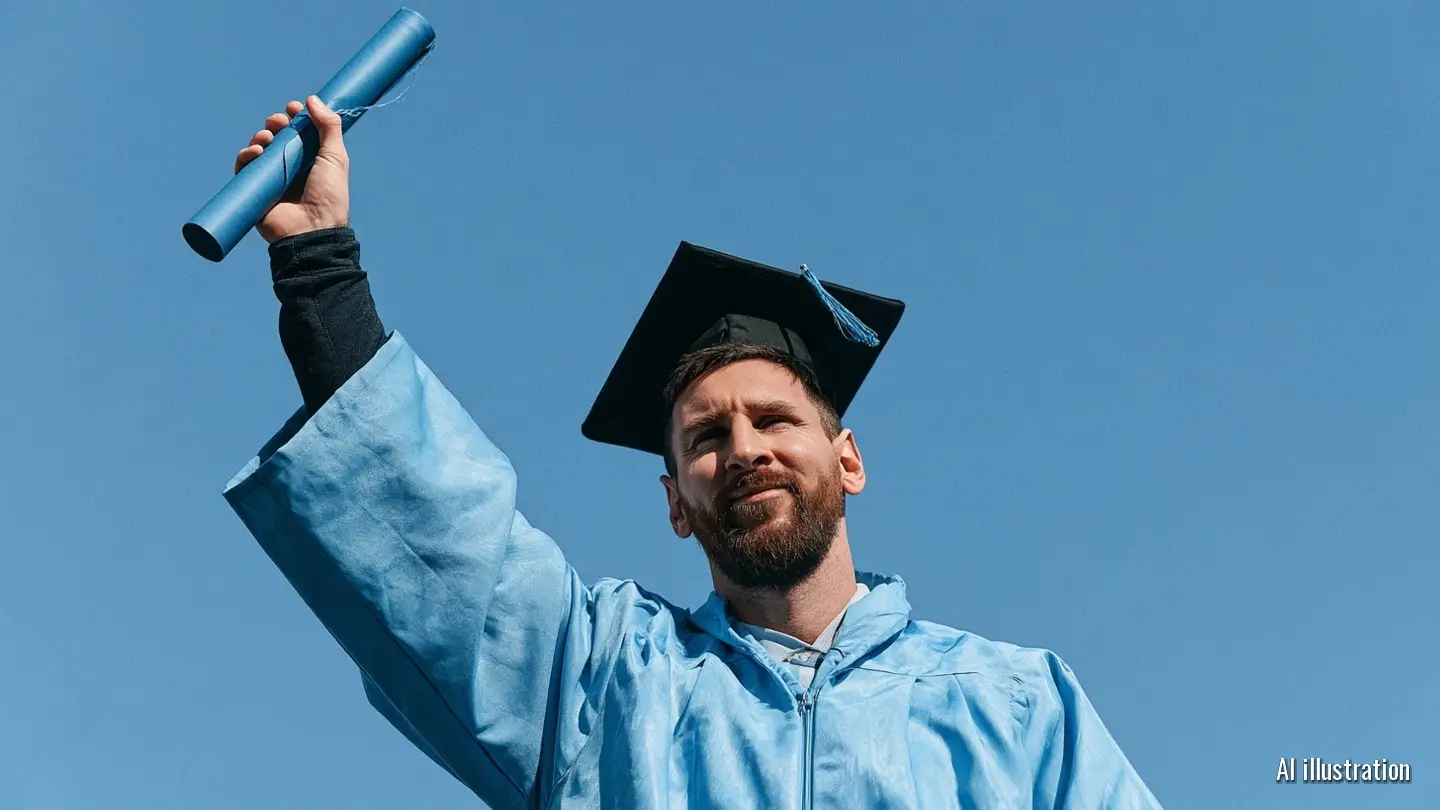
Lionel Messi will walk into the Monumental for his final match with Argentina carrying a title that has nothing to do with football. The University of Buenos Aires has named him Doctor Honoris Causa, the highest honorary distinction the university can award, with the diploma set to be presented on October 6 before Argentina face Benin.
The timing places the honor directly alongside Messi’s farewell from international football. The same day Argentina celebrates the end of his national-team career, one of the country’s most important public institutions will recognize a legacy that UBA believes extends well beyond goals, trophies and individual awards.
There is an important distinction behind the inevitable “Doctor Messi” headlines. UBA’s own regulations state that a Doctor Honoris Causa title isn’t equivalent to an academic degree. Messi hasn’t completed a doctorate or earned a PhD. The title recognizes exceptional contributions and careers across fields that include culture, professional life and society.
UBA’s Superior Council approved Messi’s distinction unanimously. In explaining the decision, the university highlighted his excellence, perseverance, humility, ethical conduct and commitment to representing Argentina. Rector Ricardo Gelpi went further, describing Messi as an example and ambassador of Argentine popular culture and national identity.
Messi’s place in Argentina now extends beyond football
The football case hardly needs embellishment. Messi captained Argentina through an extraordinary run that included the 2021 Copa América, the 2022 Finalissima, the 2022 World Cup and the 2024 Copa América. Argentina then reached another World Cup final in 2026. By the time of his farewell, the national-team career once judged largely by the trophies Messi hadn’t won had been transformed by one of the most successful periods in Argentine football history.
The university recognition places that career in a broader context. UBA has used the same honorary title to recognize major figures in Argentine cultural life. In 2025, musician Charly García received the distinction, with the university emphasizing his influence on Argentine culture and identity. Messi now enters that conversation from football.
His public life away from the pitch has also developed over decades. Messi has served as a UNICEF Goodwill Ambassador since 2010, while the Leo Messi Foundation has supported initiatives connected to children’s health, education and sport. Those efforts sit alongside a sporting career that made him one of Argentina’s most recognizable figures around the world.
From Argentina heartbreak to a national farewell
The contrast with the earlier stages of his Argentina career is striking. Messi spent years being measured against Diego Maradona, against lost finals and against the perception that his greatest football belonged to Barcelona rather than the national team. He briefly retired from international football in 2016 after another Copa América final defeat, then returned.
View this post on Instagram
The breakthrough at the 2021 Copa América began a run that changed that relationship. Qatar completed the transformation. The goals and trophies followed, but so did a different image of Messi as Argentina’s captain and the central figure in a generation that returned the country to the top of international football.
When Messi announced his international retirement after the 2026 World Cup, Argentina’s official account responded with its own farewell: “Gracias eternas, Leo. Te vamos a amar hasta el final de nuestros días.”
October 6 brings those threads together. Argentina will say goodbye to Messi at the Monumental, while UBA will formally present him with its highest honorary distinction before the match.
The doctorate doesn’t turn Lionel Messi into an academic. It recognizes where his career has ultimately placed him in Argentina.
Not simply among the country’s greatest footballers, but among the figures UBA believes have helped shape its culture and national identity.
View this post on Instagram