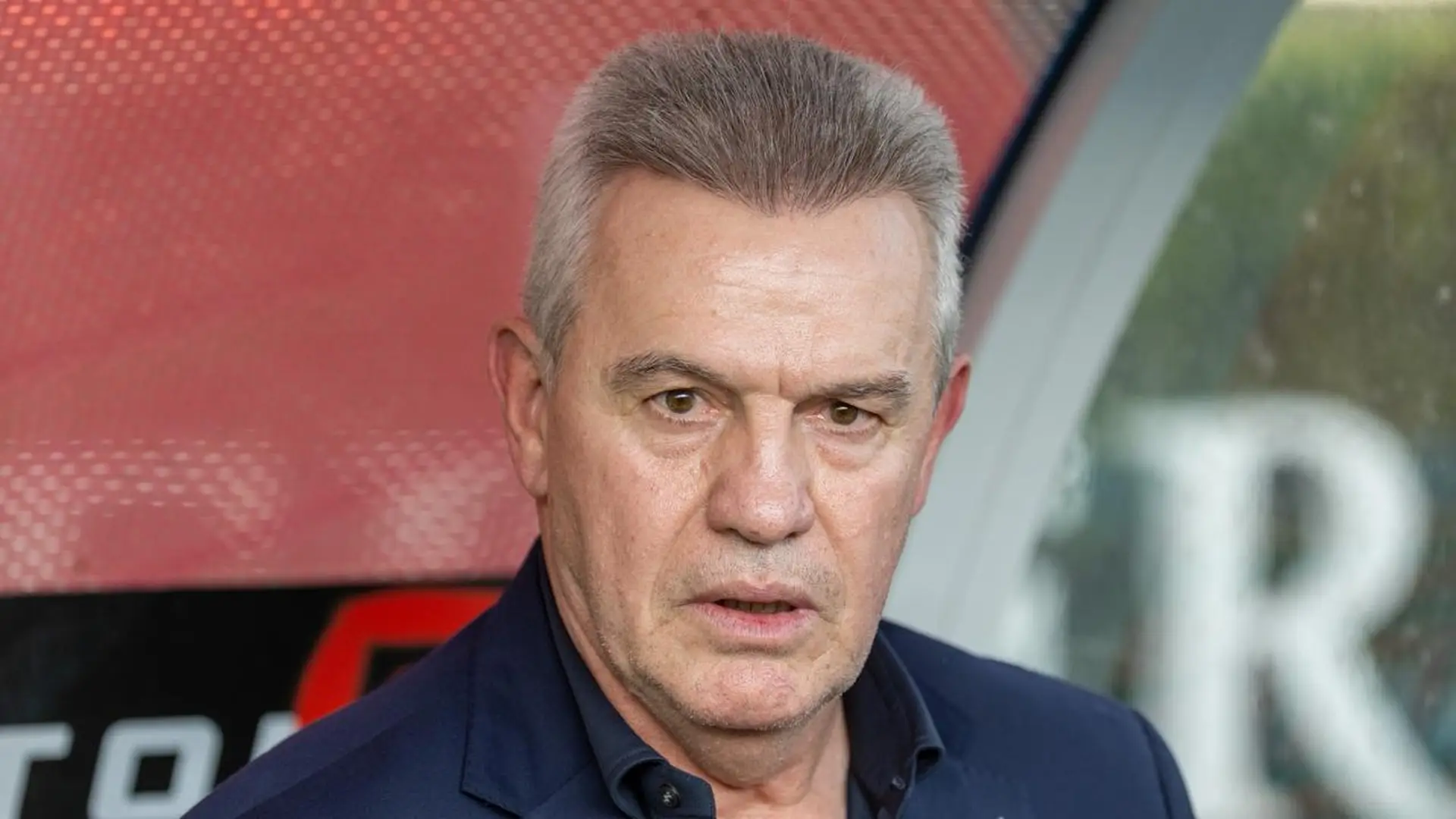
Javier Aguirre’s last match as Mexico manager didn’t need a postscript, but it got one in the 26th minute at the Azteca. With Mexico and England still scoreless, Aguirre caught Anthony Gordon’s attention and offered two words in English. “Fuck you,” he said, then laughed. Gordon laughed too. By the end, England beat Mexico 3-2, and the exchange had become a sharper way to read Aguirre’s final night than any ceremonial farewell.
Gordon’s version keeps the moment in its proper scale. He later called it “a bit of fun” and “a bit of a compliment.” He had just run Mexico’s fullback down the line, and the Mexico coach had answered the problem in the language of a veteran coach, blunt enough to cut through the match, light enough to vanish as soon as both men laughed.
Aguirre had also been talking to Jude Bellingham during the match, according to Gordon. The sideline chatter wasn’t a random interruption. It followed England’s two most disruptive players on the night. Bellingham soon gave England control, heading in Bukayo Saka’s cross and then finishing from Harry Kane’s setup in a burst before halftime.
Mexico didn’t fold after the second goal. Julián Quiñones pulled one back before halftime, and the match tightened again after Jarell Quansah was sent off in the 54th minute following a VAR review. Kane’s penalty restored England’s two-goal cushion after Gordon was fouled by goalkeeper Raúl Rangel, then Raúl Jiménez scored a penalty for Mexico to bring it back to 3-2.
For Aguirre, the result landed at the edge of something Mexico had just begun to move past. Four days earlier, Mexico beat Ecuador 2-0 for its first World Cup knockout win in 40 years. The tournament had already answered one old question. England brought another, and Mexico left it one goal short.
A farewell in plain view
Aguirre had already said this would be his final tournament in charge. After the match, he didn’t try to soften the ending. “I would have liked to say goodbye to my people with a victory. That hurts,” he said. There was pride in his answer, without disguise.
His third spell had been shaped by the pressure of a home World Cup, a tournament that allowed no soft landing. The Mexico he left behind had won its group, crossed a knockout barrier and then lost at the Azteca to a team carried by Bellingham’s finishing, Kane’s penalty and enough defending to survive the red card.
Aguirre’s own summary stayed close to identity. “I leave with a lot of pride,” he said. “We recovered the sense of belonging and the identity of this team.” It wasn’t a grand claim about a completed project. It was a coach leaving evidence for the next one.
The succession belongs to Rafa Márquez, Aguirre’s assistant during the tournament and now his successor. Aguirre’s endorsement was direct: “He is more than capable, and he will do better than me.” The handoff gave the night a cleaner shape. Aguirre took the loss, kept the pride and pointed the team forward.
The Gordon exchange belongs there, not as a separate joke but as a final detail from the touchline. It showed Aguirre without polish or distance, still needling, still watching, still reacting to the player giving Mexico trouble. Two words could have sounded harsh in isolation. With Gordon laughing back, they became a small confession from a manager on his way out. The opponent had done his job, and Aguirre had noticed.