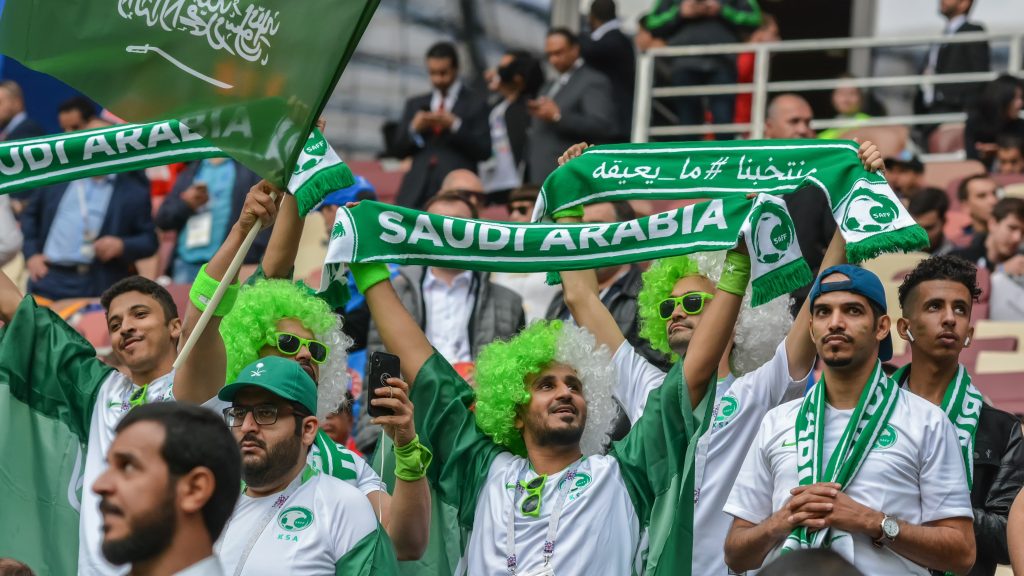
Saudi Arabia qualified for the 2026 World Cup on October 14, 2025, sealing their place with a 0–0 draw against Iraq in Jeddah. The final minutes mattered, because a stoppage-time save by goalkeeper Nawaf Al Aqidi protected the point they needed. It will be Saudi Arabia’s seventh appearance at the men’s World Cup, and their third in a row after qualifying for 2018 and 2022.
The draw has also given them a clean, trackable route through the United States. Saudi Arabia are in Group H with Spain, Uruguay, and Cape Verde. Their three group-stage matches are scheduled for June 15, 2026, against Uruguay at Hard Rock Stadium in Miami Gardens, June 21 against Spain at Mercedes-Benz Stadium in Atlanta, and June 26 against Cape Verde at NRG Stadium in Houston.
For long-time followers, the geography alone makes 2026 feel like a loop closing. Saudi Arabia’s first World Cup, in 1994, took place in the United States, and it remains their best tournament run. They reached the round of 16, a campaign still tied to a defining highlight, Saeed Al-Owairan’s solo goal against Belgium, and to the end point, a knockout loss to Sweden in Dallas.
More recently, Saudi Arabia authored one of the most consequential results of the 2022 World Cup when they beat Argentina 2–1 in their opening match. Saleh Al Shehri and Salem Al Dawsari scored the goals, and the day after the match Saudi authorities declared a public holiday. The Saudi stock exchange also closed for the day.
All of that forms the backdrop to 2026, which lands in the middle of a larger timeline. Saudi Arabia are scheduled to host the AFC Asian Cup in 2027. FIFA has also appointed Saudi Arabia as the host of the 2034 men’s World Cup, a decision that inevitably increases attention on how the national team carries itself in the tournaments leading up to it.
A practical guide to tracking Saudi Arabia across Miami, Atlanta, and Houston
If you’re building a routine to follow Saudi Arabia in 2026, start with the same principle you would use for any national team in a long tournament: pick a few reliable sources of truth, then let everything else be supplemental. For Saudi Arabia, the most consistent signal comes from official communications, because those channels will be where you’ll see squad selections, injury updates, and matchday logistics without the distortion that can come from rumor cycles.
Saudi Arabia’s national team maintains an English-language presence on X under the handle \@SaudiNT_EN. The official Instagram for the Saudi national teams is \@saudint. For longer video, the Saudi Arabian Football Federation publishes on YouTube. If you are trying to follow the team from outside the country, those accounts tend to be the most direct way to keep up with training-camp arrivals, roster announcements, and the federation’s preferred framing of what matters before each match.
The second habit that will save you time is treating the schedule as living information, even when dates and venues are set. The group-stage slate is already published, but operational details can move. The safest approach is to verify kickoff times and entry rules in the final days through FIFA’s official match pages and the stadiums’ event listings. You do not need to check every day. You do need to check again during the week of each match, especially if you are traveling.
From a player standpoint, the best way into Saudi Arabia is not through a full-depth chart, but through a small set of names that explain the team’s recent arc. Al Aqidi is one of them by necessity. Qualification was secured with his late save, and after the match he told Saudi media, “We have achieved something extraordinary, truly unbelievable.” The quote works not because it predicts what happens in 2026, but because it captures the pressure Saudi Arabia carried into the final minutes of a decisive qualifier.
The other central name is Salem Al Dawsari, the captain and one of the most recognizable Saudi players of the last decade. He scored against Argentina in 2022, and he will almost certainly remain a reference point in 2026 coverage, even for casual viewers who only tune in during the group stage. If you’re watching Saudi Arabia with minimal background, learn what positions Al Dawsari occupies in different phases of play and how often the attack is funneled toward him. That alone will make their matches easier to read.
Beyond that, you can build a practical understanding of how Saudi Arabia might score by following the forwards who keep recurring in national-team reporting. Feras Al Brikan has been part of the attacking picture in recent cycles, and Saleh Al Shehri remains historically linked to the Argentina result. You do not need to assume the final squad in January. You do need to recognize which names are being trusted when qualification matches tighten and margins shrink.
It also helps to place the coaching context without turning it into mythology. Hervé Renard is in charge again, and that matters because it creates continuity between the 2022 team and the 2026 team. Continuity can show up in tactical choices, but it also shows up in selection preferences, especially with national teams that have limited time together. When you’re following Saudi Arabia match to match, coaching continuity is often more useful than any single preseason narrative.
Where Saudi Arabia’s 2026 schedule helps you is that it is geographically simple. Miami, Atlanta, and Houston are major hubs, which means travel is more straightforward than it would be in a smaller city. It also means that local event planning will be substantial, and it gives you a realistic alternative if you are not inside the stadium.
In Miami, the official FIFA Fan Festival site has been announced at Bayfront Park, scheduled to run from June 23 to July 5, 2026. Atlanta has announced Centennial Olympic Park as the location for its official FIFA Fan Festival. Houston has announced East Downtown, commonly called EaDo, as the home of its FIFA Fan Festival. Those sites are useful because they are official and predictable, and because they provide a public place to watch matches without guessing where informal gatherings will form.
For an evergreen guide, the cleanest way to present those options is as a planning pathway rather than a promise of atmosphere. If you are traveling to follow Saudi Arabia, the stadium is your first plan. If you do not have a ticket, the official fan festival is your second plan. If you want something more specific, such as a particular neighborhood bar or a cultural community hub, treat that as a third layer and confirm it closer to matchday with local listings.
Rivalries are part of following any national team, but they can be mishandled easily. For Saudi Arabia, the most politically sensitive rivalry is commonly tied to matches with Iran, which have also been affected by diplomatic tensions beyond football. A more immediate reference point, and one you can ground in 2026 qualification itself, is Iraq. The qualifier in Jeddah is not just a line in a standings table. It is the match that confirmed Saudi Arabia’s place in the tournament, and it is a reminder that Saudi Arabia have already been in high-pressure games with little margin for error.
Finally, it is worth keeping Saudi Arabia’s best World Cup memory in view without forcing it into every paragraph. The 1994 run to the round of 16, and Al-Owairan’s goal against Belgium, are not simply nostalgia. They are proof that Saudi Arabia have already managed the scale and unfamiliarity of a World Cup in the United States, and that they have produced a signature moment on that stage before.
If you want to follow Saudi Arabia well in 2026, you do not need to overcomplicate it. Start by learning a handful of names that recur in decisive moments, confirm your match information through official sources as each date approaches, and use the official host-city fan festivals when you need a reliable public viewing plan. With Saudi Arabia, the stakes are not limited to one summer. The tournament sits between a continental championship they will host in 2027 and a World Cup they will host in 2034. That context is real, and it is enough.