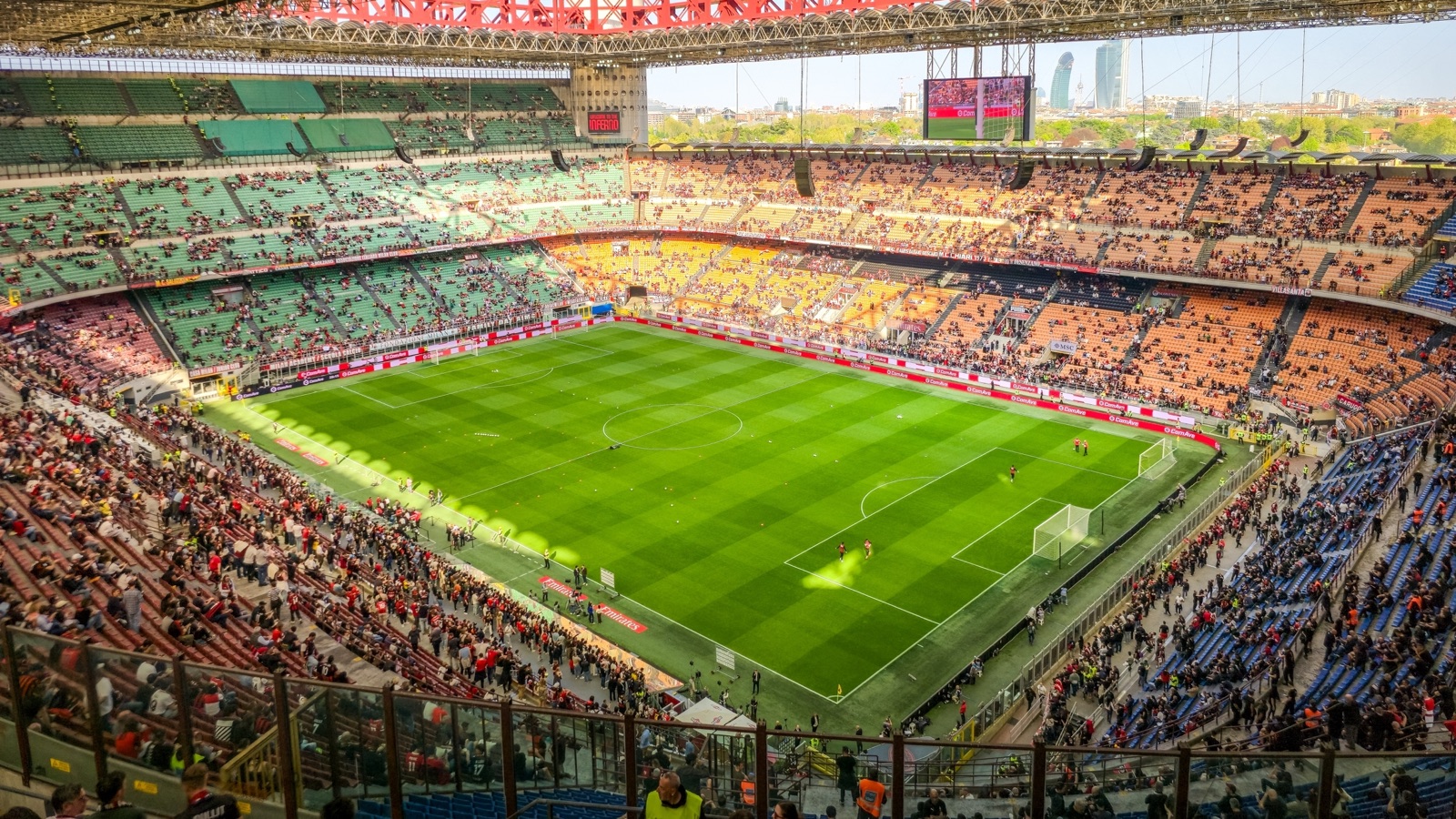
A hundred years after San Siro opened, AC Milan and Inter have revealed the building intended to take its place. Generali Stadium is planned as a 71,500-seat shared home beside the existing Giuseppe Meazza, with construction targeted for 2028 and the first match for the 2031/32 season, subject to approvals. The clubs aren’t simply replacing a venue. They’re asking a new building to inherit a century of derby nights, European finals and cultural history, including the night San Siro became a runway during Italia ’90.
A new symbol for Milano.
— AC Milan (@acmilan) October 29, 2026
A new home for future generations of fans.
Generali Stadium 🏟️@GENERALI pic.twitter.com/c7D0827E7T
Two 11,700-seat ends bring supporters closer to the pitch
The design’s clearest answer is found behind the goals. Foster + Partners and MANICA have proposed two uninterrupted supporter banks, each holding 11,700 people and reaching inclines of up to 37 degrees. They’re pulled toward the pitch and framed by the roof, an attempt to keep each club’s home end visually dominant rather than dispersing its loudest support across several levels.
The rest of the bowl follows the same logic. Two tiers circle the field without a break, while the roof and acoustic plan are intended to concentrate crowd energy around the pitch. The renderings show large banks of seats rising sharply behind each goal. Those choices can improve sightlines and shape how sound moves through the ground. They can’t guarantee that the finished stadium will feel like San Siro.
Concrete X-shaped supports define the exterior and carry a roof that dips and rises around the ends. The architects say the structural rhythm draws from Milan’s engineering tradition and the intricate construction of the Duomo, while faceted entrances and open concourses create views across the city. Whether the exterior reads as distinctly Milanese or as another polished modern bowl will depend less on its launch language than on how the building sits in the city and ages over time.
Inspired by Milano's architectural heritage and designed for the future.
— AC Milan (@acmilan) October 29, 2026
Generali Stadium brings together design, innovation, and sustainability in one of the most ambitious projects ever envisioned for the city.@GENERALI pic.twitter.com/NYAS3eiTMT
Who gets a seat at Generali Stadium?
The proposed capacity is smaller than San Siro’s listed 75,817 seats by roughly 4,300 places. Of the approximately 71,500 places, 59,692 are classified as standard, while 8,088 are hospitality and 3,698 are premium general admission. The categories reveal the commercial logic behind the project, but they don’t settle its most sensitive issue. The clubs haven’t published an ordinary ticket-price plan or explained how current season-ticket holders and organized supporter groups would be placed in the new Curvas.
The transition is designed to avoid a temporary move. Milan and Inter would continue playing at San Siro while the new stadium rises on the adjacent site. Once Generali Stadium opens, most of the Meazza is expected to be demolished, with a portion retained and repurposed. The exact surviving structure still depends on the final approved plans, so the old ground is neither being preserved intact nor erased completely.
What survives of the old San Siro?
San Siro’s architecture is already the product of several eras. It opened on September 19, 1926, Inter began sharing it in 1947/48, and the third tier and roof arrived for the 1990 World Cup. The new plans were unveiled only 40 days after the stadium’s centenary. That timing sharpens the contrast between the reasons clubs seek modern venues and the reasons old ones resist easy replacement. The same tension runs through Italy’s best football stadiums: improved access, revenue and amenities on one side, accumulated memory and local character on the other.
The business case is clear. Owning a modern stadium gives Milan and Inter greater control over hospitality, sponsorship, retail and non-matchday events. The project sits within a 281,000-square-meter redevelopment planned to include public space, greenery, leisure and retail uses. Natural ventilation and photovoltaic energy are also included in the design, though those remain proposed features rather than completed environmental performance.
The presentation showed how difficult the inheritance will be. A small group of organized Inter supporters entered the Castello Sforzesco courtyard before the event and protested against the demolition of the Meazza. Their banner declared that San Siro’s lights would never be extinguished. It was a specific, documented objection, not proof that either fan base has reached a single verdict on the project.
The new stadium is also being positioned as part of Milan’s bid for Euro 2032, but the city hasn’t been confirmed as one of Italy’s five host venues. The construction and opening dates remain targets, and the clubs’ announcement makes the timetable conditional on the necessary approvals.
The architecture can bring the ends closer, steepen the stands and tune the roof for noise. It can’t manufacture the rituals that turned concrete, ramps and red seats into home for two rival clubs. Generali Stadium will be judged by its silhouette and revenue, but its harder test will come when the same supporters who filled San Siro are asked to fill a new place and decide whether it belongs to them.