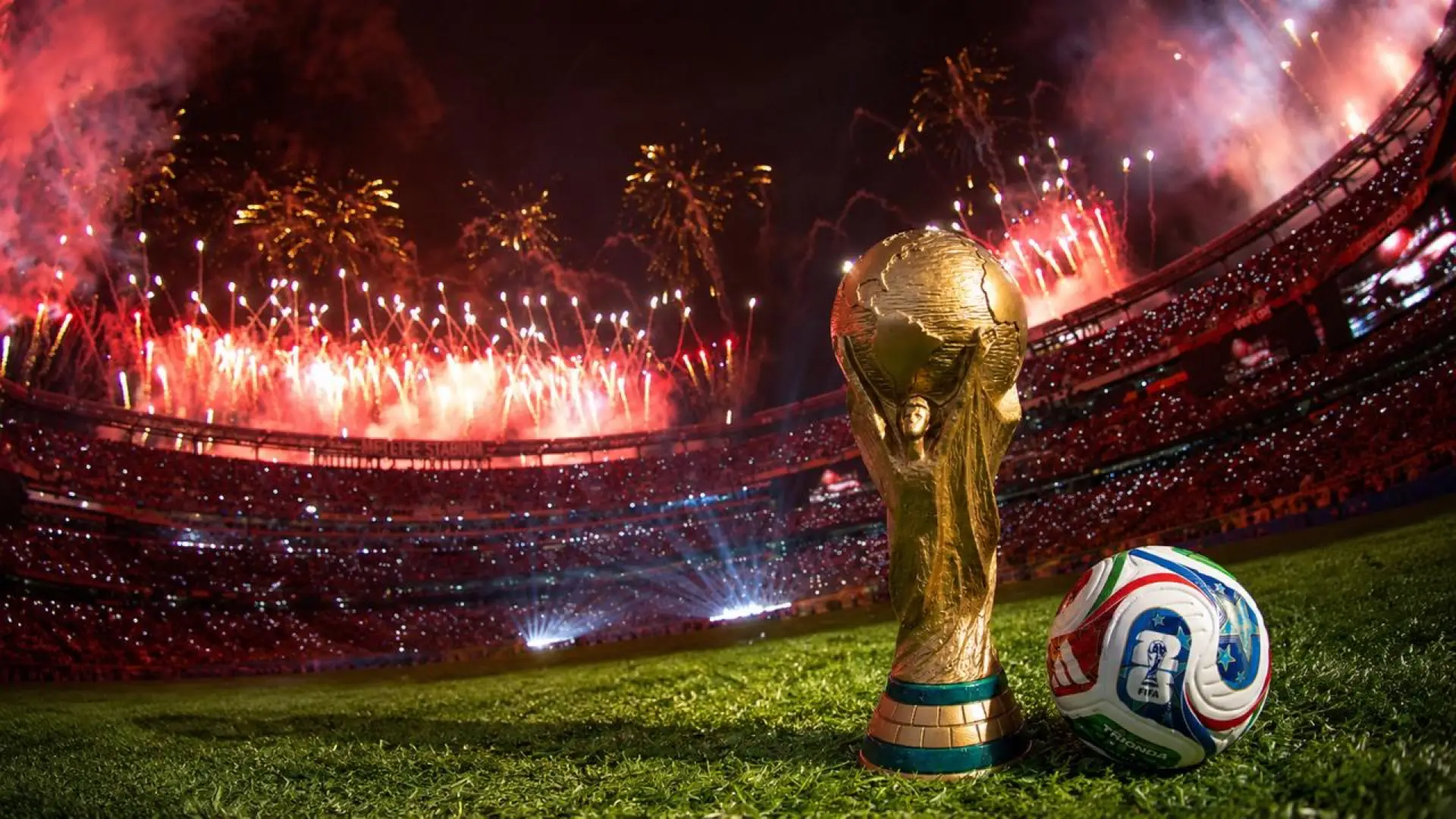
On July 19, the World Cup final between Spain and Argentina will include something no previous final has had. FIFA is putting a concert inside halftime. The World Cup closing ceremony remains part of the pregame program, but Madonna, Shakira, BTS and Justin Bieber will lead an 11-minute performance during the interval. Burna Boy, Gustavo Dudamel, the PS22 Chorus and Coldplay are also part of the show.
The production has been built as more than a concert. Global Citizen is producing it, Coldplay’s Chris Martin curated the lineup, and Topps holds the naming rights. FIFA has also listed ADI Chain, Bank of America, DoorDash, Kayford Holdings, Marriott Bonvoy, Visa and YouTube Music as integrated partners. YouTube Music will carry the full performance after the final.
The structure recalls the Super Bowl, but calling it Americanization only gets part of it right. The artists come from several countries, the education campaign is international, and FIFA built the product with Global Citizen. Its North American character lies in the mechanics: entertainment inserted into the game, a title sponsor attached to the interval, several brand integrations and a performance designed to circulate as a separate piece of digital media.
This wasn’t assembled only for the 2026 hosts. FIFA and Global Citizen announced a four-year partnership in September 2024, then staged a halftime show at the 2025 Club World Cup final in the same New Jersey stadium. The 2026 version moves the experiment from a club tournament to the World Cup final.
FIFA has also divided other parts of this tournament into stand-alone products. Its approach to World Cup ticket sales and the new World Cup championship ring both show how match access, status and memorabilia can be packaged separately. The halftime show creates another marketable unit, this time inside the matchday broadcast.
The format is American, but the control is FIFA’s
The sporting issue is narrower than whether music belongs around the final. World Cups have long included opening and closing ceremonies. The question is whether a live production can fit inside halftime without changing the conditions of the match. Under IFAB’s Law 7, the interval is normally capped at 15 minutes, although the referee can approve a change. FIFA’s public material confirms an 11-minute performance but does not state the total length of the break.
Stage logistics were expected to push halftime beyond the standard 15 minutes, with the total projected at 17. FIFA’s public guidance did not specify that number. An 11-minute show inside a standard 15-minute break leaves limited time for stage setup, stage removal and the teams’ transition back to the field.
The show also supports the FIFA Global Citizen Education Fund, which is seeking $100 million for education and football programs. FIFA said on July 19 that more than $60 million had been raised, with $1 from every World Cup ticket directed to the fund. The social purpose does not replace the commercial structure. Both have been designed into the same 11-minute window.
Americanization describes the format more accurately than the ownership. FIFA has borrowed a North American event model and rebuilt it around a global cast, an education fund, title sponsorship and post-match digital distribution. The final remains a football match, but its halftime is now a separate media property. The test is whether that property remains inside football’s existing limits or begins to set new ones.