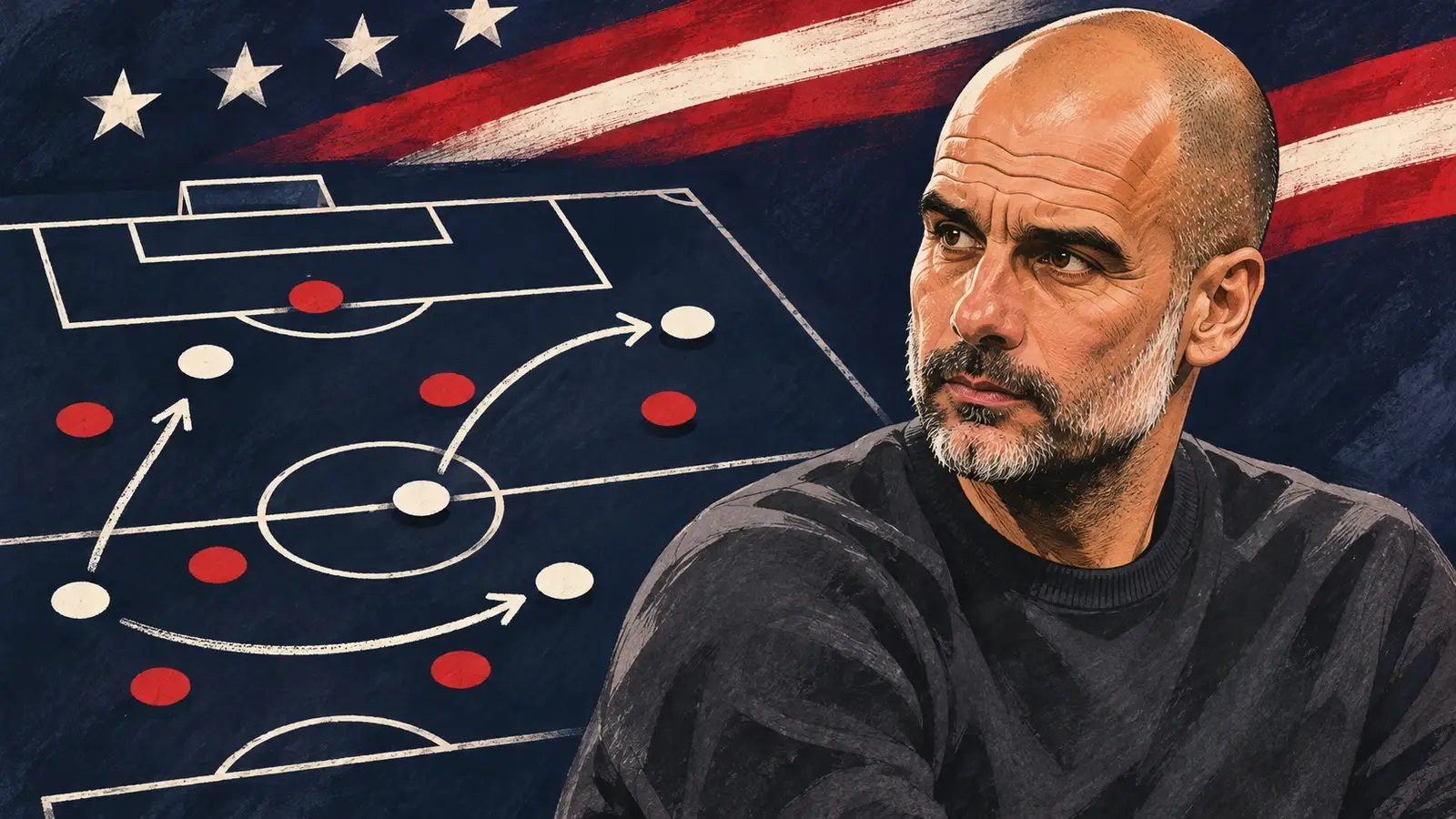
The search for Manchester United’s next manager could leave U.S. Soccer trying to convince Pep Guardiola to come back to work. The Athletic reports that Guardiola would be a leading target if Mauricio Pochettino leaves the USMNT for Old Trafford.
United has approached the federation about hiring Pochettino, whose U.S. contract was extended through 2030 in August. His departure hasn’t been announced. For the federation, losing him would reopen the task of finding someone capable of improving the team across the next World Cup cycle.
“The USA is fascinating,” Guardiola said when Pochettino took the job in 2024, discussing the potential to develop a project over several years. He’s since left Manchester City and stepped away from coaching. The attraction of a national-team assignment now has to compete with the appeal of remaining on a break.
The greatest to ever do it. Thank you, Pep 🩵
— Manchester City (@ManCity) May 24, 2026
Pinch and zoom to catch every detail 🔎✨ pic.twitter.com/gadD2idjSO
Would Guardiola end his break?
Last July, he declined Italy’s national-team approach to continue his break and spend time with family. A month later, Dutch federation director Nigel de Jong said Guardiola had been the Netherlands’ first choice, but wanted a sabbatical.
He has spoken of wanting an international tournament job, while accepting it might never happen. Any American approach would have to establish whether he’s ready to turn that interest into work. His answer would shape the start date, the staff he brings and how much of the next cycle he could spend building the team.
Teaching the USMNT to handle pressure
The clearest football test would come when the Americans are pressed. In their 4–1 World Cup defeat by Belgium, Matt Freese was dispossessed after controlling a long ball outside his penalty area before the third goal. Chris Richards then lost possession under pressure before the fourth. Those moments exposed how expensive a failed attempt to retain possession can become against an opponent ready to attack the turnover.

The player under pressure needs teammates who can offer a useful passing angle and recognize where the opponent has left space. A midfielder receiving with room to turn creates a different situation from one trapped with his back to the attack. Requiring more short passes without improving those options could make the risk worse.
Consider a team that closes the goalkeeper’s route into midfield and pushes its wide players toward both fullbacks. The useful response might be a midfielder dropping into a different space, a forward moving toward the ball or a longer pass beyond the pressure. The coach’s contribution would be to make those choices recognizable and coordinated, so the receiver knows where the next movement should come from.
Guardiola’s own explanation of his work allows for that flexibility. Discussing City’s 2023 Champions League-winning side, he emphasized that roles have to suit the players available. He also pointed to seven years of familiarity with John Stones when explaining the defender’s ability to move into midfield. A national-team coach would have to establish that understanding through far fewer shared sessions.

That would require choices about what to teach first. A small number of reliable movements could be more valuable than a crowded set of positional instructions. The players would need a shared response when the first pass is blocked, clarity about who protects the space behind an attack and a way to recognize when a fast, direct move is preferable to another spell of possession.
The calendar gives him some room to work. From 2026, the late September and early October international window lasts 16 days and allows four matches. March, June and November retain nine-day windows for two games. Fixtures, travel and recovery take up much of those periods, but the longer autumn gathering could help a coach repeat an idea, test it against an opponent and adjust it before everyone returns to their clubs.
Settling in for Saturday.
— U.S. Soccer Men's National Team (@USMNT) November 11, 2026
Let’s get after it! pic.twitter.com/nLpKqpmjxn
Christian Pulisic’s role would be an early measure of whether the structure was helping. Against Genoa, Milan used him behind the striker and later in a wider position. A U.S. system could build around that flexibility, creating routes for him to receive near goal while preserving the option to attack quickly. Bringing him deeper to help progression would need to be balanced against the attacking threat the U.S. loses closer to goal.
Building toward the 2030 World Cup
He would also inherit a group whose progress deserves to survive a coaching change. The U.S. won its World Cup group and a knockout match before losing to Belgium. Building on that run would involve keeping useful relationships between players, identifying the situations that still expose them and deciding how much change they can absorb at once.
The squad itself would change before the next tournament. On July 1, 2030, Pulisic, Weston McKennie and Tyler Adams would each be 31; Antonee Robinson would be 32. A coach appointed now would need to develop alternatives and share responsibility throughout a cycle in which form, injuries and emerging players will alter the strongest team.
Pochettino’s contract extension through 2030 already includes advisory work on youth pathways, coach education and collaboration with professional leagues. A proposal to Guardiola could build on that framework, but its appeal would depend on the authority, staff and resources actually offered.
For example, shared principles across age-group teams could help an emerging player arrive at senior camp with a clearer understanding of what the coach expects. That work would still require cooperation with the clubs developing him every week. A national-team appointment gives a coach influence over the environment; it doesn’t give him control over every training session or a transfer market to repair a missing position.
What U.S. Soccer would need to offer
The federation would also have to fund the appointment. Donor support for Pochettino’s agreement offers a precedent, but Guardiola’s salary, staff and working arrangements would require a separate package. He also remains a City Football Group global ambassador, although the club’s announcement didn’t set out that role’s contractual conditions.
For Guardiola, the challenge would be to discover how much of his coaching travels when the daily work happens elsewhere. He could select a team and shape its habits during camps, then watch those players return to different systems at their clubs. His influence would depend on players retaining those habits between gatherings and recognizing when to use them in a difficult match, even while their everyday coaching asks something different.
U.S. Soccer has a plausible invitation to make: time to build toward 2030, an existing group to improve and a chance to test his methods under unfamiliar constraints. Guardiola would have to choose those constraints willingly. Accepting them would be the first meaningful sign that this improbable appointment could become a workable one.
Get more Stadio United on Google.