
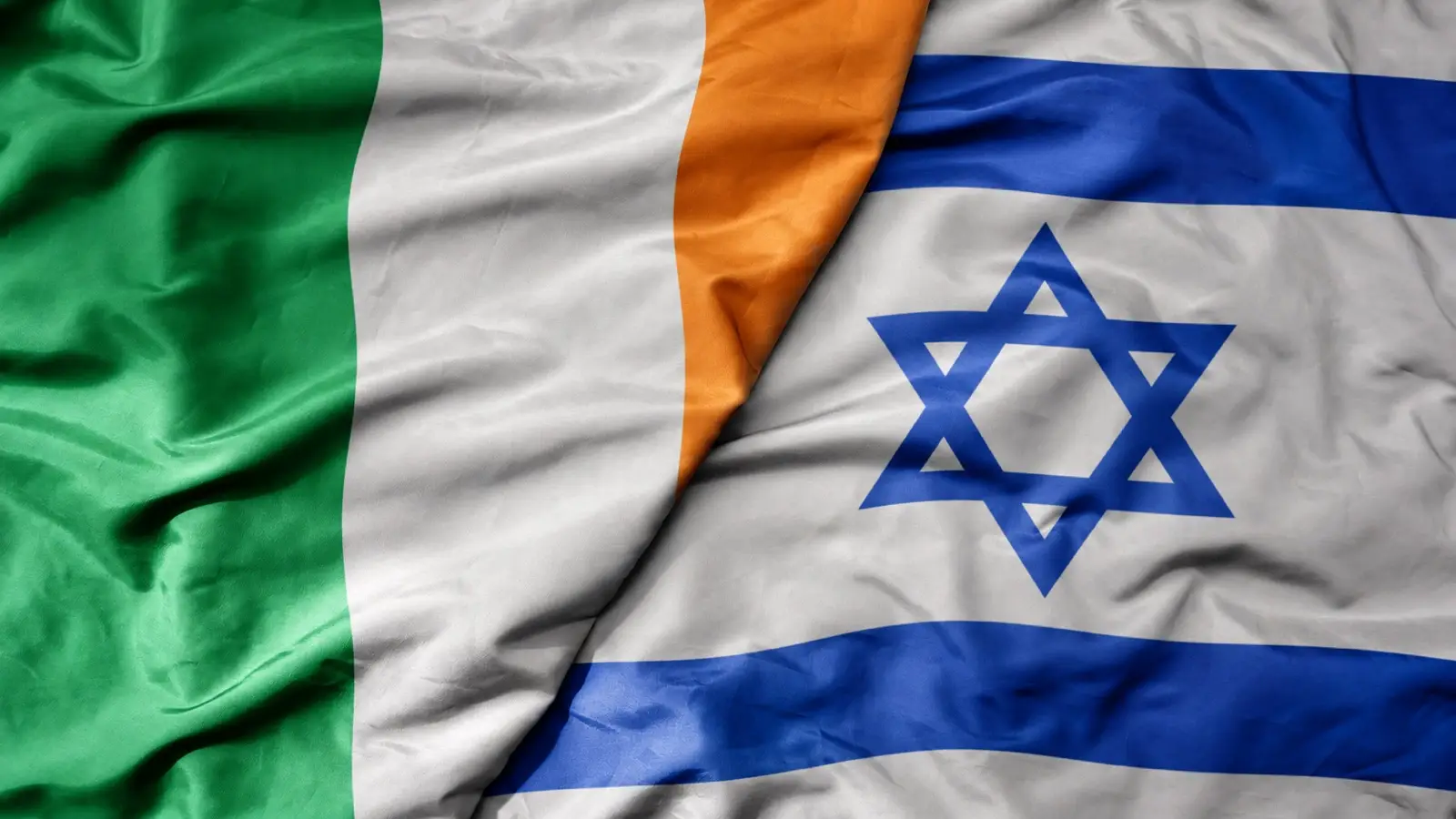
The Republic of Ireland beat Israel 3-0 in Debrecen, but the defining images arrived before kickoff. Ireland’s players wore black armbands, stood with their heads bowed during Israel’s national anthem, skipped the usual team photograph and didn’t take part in the customary handshake or pennant exchange. The FAI said the armbands were worn “in recognition of all the lives lost in the conflict.”
International football wraps each match in a diplomatic script: flags, anthems, handshakes, photographs and captains exchanging symbols of their federations. Ireland fulfilled the competitive fixture while removing several of those gestures. Like other forms of athlete protest during a national anthem, the actions used the ceremony around the game rather than interrupting the game itself.
Once play began, the outcome was settled quickly. Troy Parrott opened the scoring in the 13th minute, Adam Idah added a second two minutes later and Jack Moylan made it 3-0 in the 24th. Moylan removed his black armband, kissed the Ireland crest and held the armband toward the stands after scoring. Parrott’s opener continued the run of decisive Ireland goals that turned Budapest into a World Cup lifeline in 2025.
The confrontation had been developing for months. In November 2025, the FAI General Assembly backed a request for UEFA to suspend the Israel Football Association over alleged breaches of UEFA statutes. Israel remained in the competition. The FAI later said refusing the two Nations League fixtures could cost Ireland six points, damage its UEFA and FIFA rankings, weaken its Euro 2028 position and bring further disciplinary action. The Israel Football Association welcomed Ireland’s decision to play and argued that football and politics should remain separate.
The pressure moved inside the squad on the eve of the match. After several hours of discussion, the FAI said a majority of players supported fulfilling the fixtures. Goalkeeper Gavin Bazunu chose not to participate in either Israel game, making clear that the squad had reached a collective decision without reaching a single shared position.
Two decisions inside the Ireland squad
Bazunu said his choice was based on his belief that “the killing of innocent people is wrong.” He also stressed that his stance wasn’t directed against Israeli people or the Jewish community, but “against the atrocities in the region.” The players who took the field expressed their position through the black armbands and omitted protocols. Bazunu drew his line at participation.
Heimir Hallgrímsson treated those decisions as different responses to the same situation. After the match, the Ireland coach said the players had raised awareness through their actions and specifically included Bazunu in that assessment. He also praised the team for producing a controlled performance after a disrupted preparation.
Israel captain Manor Solomon answered the pre-match gestures and the defeat with a sharper message. “Obviously, they hate us. We don’t like them,” he said in a post-match interview with Israel’s Sport 5. Asked about Ireland’s conduct during the anthem, Solomon added: “We have a country 10 times better than theirs, stronger, an amazing country with amazing people.” He also promised a different performance in the return meeting.
The teams meet again on October 4 at the TSC Arena in Bačka Topola, Serbia, behind closed doors. Ireland’s first match separated the obligation to play from the choice to participate in every ritual surrounding it. Solomon’s response ensures that the disagreement will follow both teams into the return fixture.