The proposal would not sell the trophy or hand sporting control to investors. It would give outside capital a stake in the commercial company behind FIFA’s tournaments, while financing a major increase in development funding.
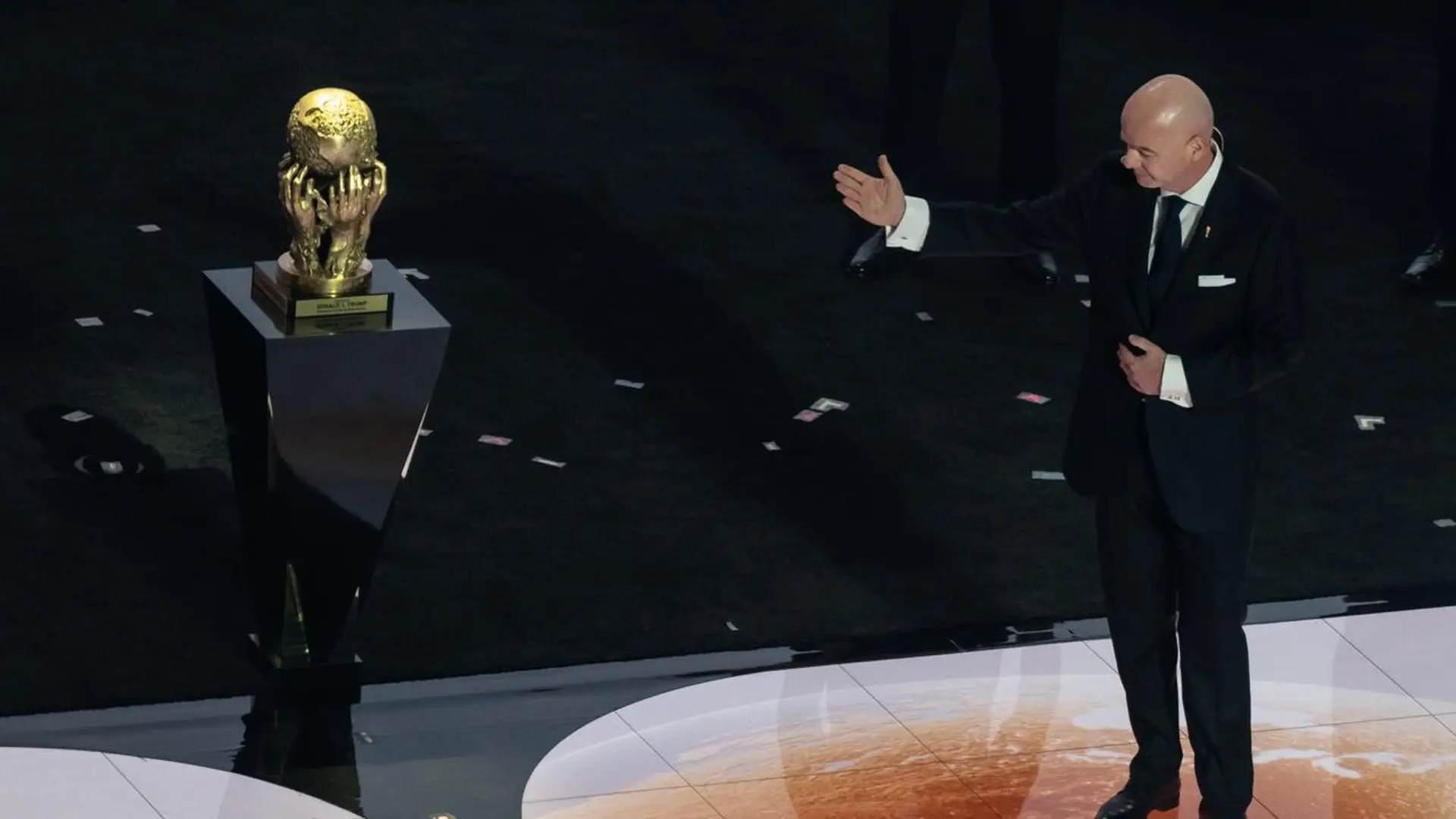
At first glance, the proposal sounds almost impossible. The trophy is not a stock certificate, and the tournament is not a club waiting for a buyer. The actual plan is narrower and, in some ways, more consequential. FIFA wants to create FIFA Forward Enterprise, place its commercial and event operations inside it, then sell minority stakes that would not confer control to outside investors. The trophy, competition rules and formal authority over the match calendar would remain with FIFA.
The assets inside that company are the parts of the tournament that generate revenue: broadcast rights, sponsorship, licensing, ticketing and event delivery. FIFA says the company would begin with an implied value of $20 billion and seek to raise up to $4.2 billion later in 2026. Investors would not be buying the World Cup itself. They would be buying exposure to the business built around FIFA’s most valuable events, including World Cup ticket prices.
FIFA’s defense rests on a clean separation between ownership and control. It says outside investors would have no operational role and that it would keep exclusive authority over competitions, regulations and sporting decisions. An investor does not need to select a host or rewrite a tournament format, however, to care about the result. Returns can grow when media rights become more valuable, premium inventory expands, tickets cost more or a new branded media product is created around the match.
The cash is FIFA’s strongest argument. Under the proposal, each of its 211 member associations could access an optional, one-time $20 million fund for exceptional projects. Regular Forward funding for each association in the 2027–30 cycle would rise from the currently budgeted $8 million to $20 million, then increase to $22 million in 2031–34 and $24 million in 2035–38. The money could support infrastructure, coaching, national teams, women’s football and grassroots competitions. For federations with limited commercial income, that scale could change what is possible.
Who controls the pressure
The numbers also reveal how FIFA is building the proposal. An optional $20 million for all 211 associations totals $4.22 billion, almost exactly the $4.2 billion the new company aims to raise. A majority of those same associations must support the structure, alongside approvals from the FIFA Council. The overlap does not prove a quid pro quo. It does mean the financing and the politics of approval sit inside the same plan.
UEFA’s objection begins there. It argued that football’s soul and governance should not be treated as tradable assets and criticized the lack of transparency around who would gain financially. Its statement ended with a simpler challenge: “It is not FIFA’s to sell.” FIFA’s answer is that investors would be buying into a subsidiary, not FIFA, and that all net benefits would be reinvested in football.
Both positions leave important questions unanswered. As of July 28, FIFA had not published a final stake size, full investor list, return structure, board rights or distribution policy. Thrive Eternal, a long-term investment vehicle launched by Joshua Kushner, is expected to be a lead investor, while JPMorgan is working on the process. Separate reporting has raised the possibility of a future commissioner-style role for Gianni Infantino. FIFA says such a role has never been discussed, and no compensation terms have been made public.
The central concern is not that private investors will walk into FIFA and choose lineups. It is that a company valued on future commercial growth creates a new constituency that benefits when football produces more sellable inventory. FIFA can retain every formal vote and still face pressure to make its tournaments more valuable. That could affect ticketing, scheduling, hosting and event design, although none of those outcomes is written into the proposal.
Nothing is final. FIFA still needs the support of a majority of its 211 associations and the relevant approvals of the FIFA Council. If the plan passes, federations with smaller domestic markets could receive resources on a scale many cannot generate themselves. FIFA would also establish a precedent by allowing outside capital to own an economic piece of the system that sells and delivers the World Cup.
The question is not whether investors will own the trophy. They will not. It is whether ownership of the revenue engine eventually changes the decisions made around the game. FIFA is offering member nations more money now while sharing part of football’s future commercial upside. The vote will help determine not only how development is funded, but who gets paid as the World Cup grows.