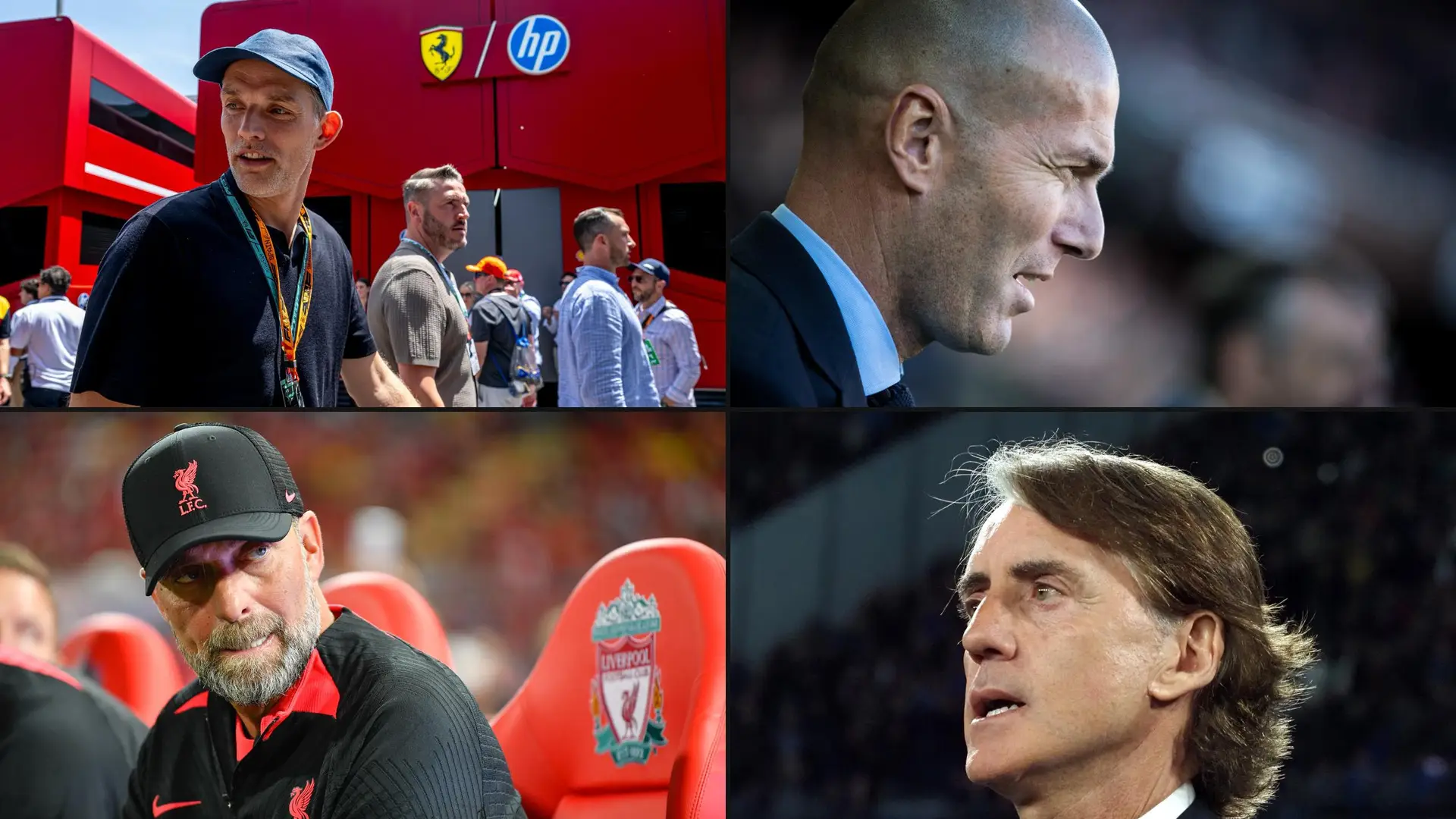
The road toward Euro 2028 now carries an unusual concentration of coaching power. Thomas Tuchel’s England project is established, Zinédine Zidane has finally taken charge of France, Jürgen Klopp is preparing to begin with Germany, and Roberto Mancini is back with Italy.
Their names give the next European Championship a compelling horizon, but the appointments aren’t variations of the same decision. Each coach enters with a different timeline, institutional setting and level of international experience.
The connection instead begins with the environment that built their reputations. Elite club jobs provide daily training, transfer-market influence and full seasons in which to shape a squad. International football removes much of that control. Coaches work in short windows, select rather than buy, and often need tactical clarity before repetition can create it. Reputation can raise expectations, but it doesn’t add a single training day.
Tuchel enters this cycle with the clearest continuity. He signed on October 8, 2024, was announced on October 16 and began as England’s senior men’s head coach on January 1, 2025 under an initial 18-month deal. The FA’s two-year extension, announced February 12, 2026, keeps him through Euro 2028. The World Cup 26 third place team will therefore approach a tournament staged partly at home with an established project, rather than one beginning shortly before the competition.
Klopp’s position is nearly the inverse. The DFB announced him July 24, but he won’t take office until August 15. His four-year contract spans Euro 2028 and the 2030 World Cup, following Julian Nagelsmann’s July 3 resignation after Germany’s World Cup elimination by Paraguay. Germany’s decision to hire Jürgen Klopp also ends his Head of Global Soccer role at Red Bull. Red Bull said the separation would let him work without “shared responsibilities.” He won’t combine the two positions.
The first test arrives before Euro 2028
Zidane’s appointment brings another route into the same constraints. The FFF formally presented him July 28 on a four-year contract through the 2030 World Cup, with the role beginning at the start of August. It’s his first senior international coaching job, and his first scheduled match is away to Türkiye on September 25. After the long wait for France, Zinédine Zidane’s appointment through 2030 places his elite club record inside the shorter, less controllable rhythms of national-team work.
FIGC announced Mancini’s return July 28 after a first spell running from May 2018 to August 2023. FIGC didn’t specify an end date, so it would be premature to treat his presence at Euro 2028 as assured. His return also sits inside a wider structure: Claudio Ranieri is FIGC technical director and president of Club Italia, not Italy’s head coach. Andrea Pirlo was a candidate but later said he was no longer one.
Those differences prevent the group from collapsing into celebrity-coach shorthand. Tuchel is extending an active project toward a tournament England will help host. Zidane is converting elite club experience into his first senior international role. Klopp is entering after a delayed start and a complete institutional break. Mancini is returning with direct experience of the position and with Ranieri holding a broader technical role. Their public profiles may be comparable, but their starting conditions aren’t.
The calendar offers a nearer test than Euro 2028. France hosts Italy at Stade de France on October 2, 2026, before Italy hosts France in Milan on November 12. Those are the only confirmed direct meetings among the four teams on the current calendar. England, Germany, France and Italy could cross paths later in the Nations League knockouts, but only if their results and the bracket permit it. A four-coach showdown can’t be scheduled by reputation.
The first scheduled head-to-head in this coaching shift therefore belongs to Zidane and Mancini, not to a hypothetical Euro 2028 bracket. France’s new coach and Italy’s returning one will need to turn limited preparation time into selections, roles and decisions that hold across two competitive meetings in less than six weeks. Those matches won’t settle which famous appointment will succeed over a full cycle. They will show, much sooner, how authority built in club football translates when training time shrinks and control is rationed.