Start with the squad lists rather than the stars. The Argentina vs. Spain final brings together two national teams that have treated memory as a competitive resource. Argentina carried most of its 2022 champions into another tournament. Spain carried relationships formed years before many of its players reached the senior side. The match tests how a successful team can renew itself without losing the habits that made success possible.
Argentina retained 17 of the 26 players who won in Qatar. In Argentina’s semifinal win over England, the lineup still ran through familiar positions: Emiliano Martínez in goal, Cristian Romero in defense, Enzo Fernández and Alexis Mac Allister in midfield, and Lionel Messi with Julián Álvarez in attack. It wasn’t a replica of the 2022 side, but the central relationships had already survived several tournament cycles.
Continuity hasn’t meant preserving every name. Ángel Di María retired from international soccer after the 2024 Copa América. Lionel Scaloni opened places for Valentín Barco, Nico Paz, Giuliano Simeone and José Manuel López, while Giovani Lo Celso returned after injury kept him out of the 2022 World Cup. Those players entered a group with established routines and a clear internal order. Their task was to add something without asking the team to begin again.
Spain arrived through a different process. Luis de la Fuente entered the Spanish federation’s youth system in 2013, then won the European Under-19 Championship in 2015 and the European Under-21 Championship in 2019 before taking an Olympic team to silver in Tokyo. Unai Simón, Rodri, Mikel Merino, Dani Olmo, Mikel Oyarzabal, Marc Cucurella and Martín Zubimendi all worked with him before he became senior coach. By the time Spain appointed him in 2022, he had already watched much of the future senior squad respond to pressure, selection changes and tournament football.
That history helped Spain return to the World Cup final after its semifinal win over France. The team isn’t simply the product of a recognizable playing style. It is also the result of repeated promotion through one national structure. Players changed age groups and responsibilities, but many of the working relationships remained intact.
Continuity has value only when it can absorb change
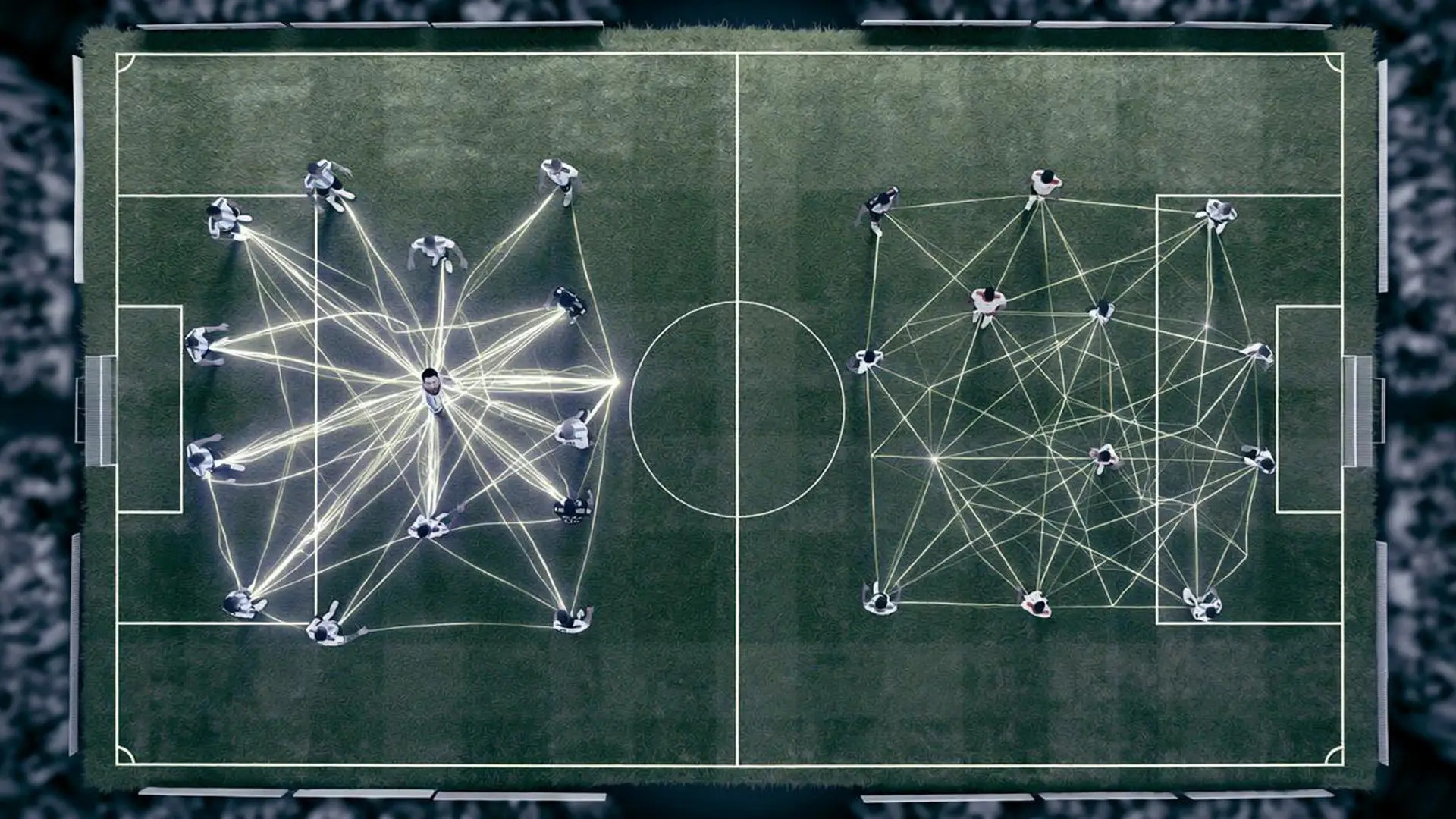
Argentina begins with a proven senior group and brings new players into it. Spain begins with a development route and brings familiar players upward. Argentina keeps the dressing room familiar. Spain keeps the route familiar. Both approaches reduce the amount that must be taught during the short camps and compressed schedules of international football.
The age difference between Messi and Lamine Yamal can obscure the middle of the story. Messi, now 39, remains Argentina’s reference point while Scaloni changes parts of the team around him. Yamal, 19, reached Spain’s senior side unusually early, but he joined a squad connected by years of shared work with its coach. Argentina is managing renewal around established authority. Spain is placing exceptional youth inside established relationships.
The final team sheets sharpened the distinction. De la Fuente kept the same starting lineup that beat France 2-0. Scaloni made three changes from the 2-1 victory over England, bringing back Gonzalo Montiel, Rodrigo De Paul and Nicolás González. Argentina’s continuity gives the coach room to adjust because so many roles are understood. Spain’s continuity allowed the coach to leave a successful selection untouched.
The two projects are less culturally isolated than they first appear. Scaloni attended a 2017 coaching course at the Spanish federation’s academy in Las Rozas, where De la Fuente was among his tutors. Scaloni also spent much of his playing career in Spain. Their teams reached the final through different forms of continuity, but both coaches developed within overlapping football networks.
Argentina is trying to extend a championship era without trapping itself inside 2022. Spain is trying to turn more than a decade of youth development into a second senior world title. The result won’t decide which country understands collective football better. It will decide which team handled inheritance better on the one afternoon when there’s no later match to repair the result.