
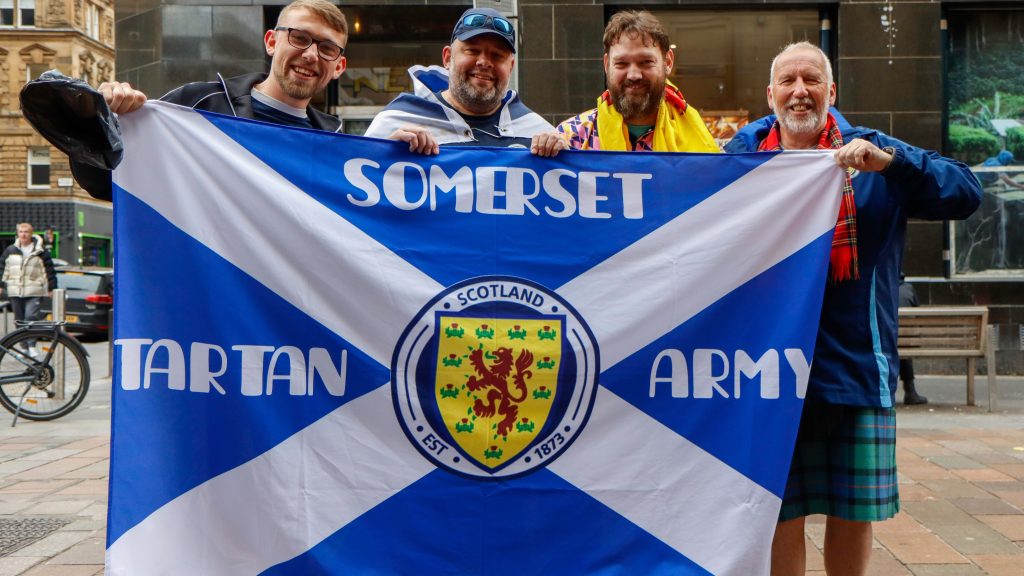
Scotland comes to the 2026 World Cup with a history that predates the tournament. The Scottish Football Association was founded in March 1873, making it the second-oldest national association. It was created after the first official international match, Scotland vs. England, played in Glasgow on November 30, 1872. Scotland’s association also helped found IFAB, the group that oversees the Laws of the Game. In short, Scotland has been part of football’s foundation from the start.
That heritage hasn’t translated into modern World Cup routine. Scotland’s men have appeared at eight World Cup finals and, as a matter of record, have never reached the second round. Guinness World Records frames that stat bluntly: eight World Cup tournaments without qualifying for the second round, across 1954 through 1998. The consequence for 2026 is obvious: just returning to the finals is meaningful, but it also resets a familiar question about what Scotland looks like when the stakes stretch beyond a group stage.
Scotland secured their return with a clear result. They qualified by beating Denmark 4–2 at Hampden Park in November 2025. Kieran Tierney and Kenny McLean scored late goals after Denmark had equalized twice. According to Reuters, Scott McTominay scored first, Denmark tied it with a penalty, and Scotland sealed the win in stoppage time. This gave them automatic qualification for the finals for the first time since 1998.
The draw placed Scotland in a challenging group. Group C features Brazil, Morocco, and Haiti, with the draw held at the Kennedy Center in Washington, D.C. Brazil has a record five World Cup titles. Morocco reached the semifinals in 2022. Haiti is back at the World Cup for the first time since 1974. This group already has a favorite, a recent surprise, and a team for whom qualifying is a big story.
One advantage for fans is that Scotland’s group schedule is clear and easy to follow. They play two matches in the Boston area and one in South Florida. Scotland faces Haiti at Boston Stadium in Foxborough, Massachusetts on June 13 at 9 p.m. Eastern. The second match, against Morocco, is also at Boston Stadium on June 19 at 6 p.m. Eastern. The final group game is against Brazil at Miami Stadium in Miami Gardens, Florida on June 24 at 6 p.m. Eastern. ESPN lists this venue as Hard Rock Stadium. For UK viewers, the Scottish FA and Sky Sports convert these times to late-night hours, with the opener against Haiti starting at 2 a.m. UK time.
The practical ways to follow Scotland in 2026
To follow Scotland, start with the players. The 2026 team is built around a core group that has played together through recent qualifiers. The Scottish FA’s current men’s “A” squad list shows the main names you’ll see in match previews and lineups. Andy Robertson and Kieran Tierney lead the defense. In midfield, Scott McTominay, John McGinn, Billy Gilmour, and Ryan Christie are key to moving the ball from defense to attack. Up front, Che Adams, Lyndon Dykes, and Lawrence Shankland are the main options. This matters because Scotland’s group opponents will require both strong defense and direct play. To keep things simple, watch the team sheet and substitutions. Scotland’s games often hinge on what happens in midfield when plans change during the match.
The cleanest way to stay current is to prioritize official channels first, then use broadcasters for video and highlights. The Scottish FA’s squad page links out to the national team’s social accounts on X, Instagram, and YouTube, which is where lineup graphics, kickoff reminders, and post-match media tend to appear in predictable formats. For viewing, the UK picture is unusually straightforward: ITV and the BBC have publicly outlined how they will split tournament matches, with ITV matches airing across ITV1, ITV4, ITVX, and STV platforms, alongside BBC coverage on its own services. In the United States, a long-standing rights extension keeps World Cup coverage on Fox (English-language) and Telemundo (Spanish-language) through 2026, which is the practical answer for anyone trying to plan where they’ll watch without relying on last-minute channel discovery.
Getting tickets to see Scotland play is a detailed process. Scotland Supporters Club members must apply through FIFA’s portal using codes from the SSC, and the application window is not first-come, first-served. Applications for Scotland’s allocation are open until Tuesday, January 13. If there are more applications than tickets, a ballot is held using the loyalty points system, starting with those who have the most points. Payment is not taken when you apply. FIFA will take payment in February, between Monday, February 9 and Sunday, February 22, 2026, and you enter your card details when you apply. Supporters who are not SSC members can apply through FIFA’s Random Selection Draw. SSC members can also enter the FIFA draw, but should know that successful applications may not be declined under FIFA’s rules.
To understand Scotland’s matchday culture, look at what is documented: the support structure and the causes fans support. The Tartan Army Sunshine Appeal is a registered Scottish charity that donates to children’s charities in the countries where Scotland plays. Since 2003, it has made 108 donations worldwide. According to Scotland’s charity regulator, the group aims to relieve poverty, advance education, and promote children’s welfare in the countries visited for matches. This is important at the World Cup because it gives Scotland’s traveling fans a visible, organized project, and it offers a way for fans at home to get involved without being at the stadium.
For public viewing, Scotland fans will find two different settings at the 2026 World Cup: group matches in the Boston area and then in Miami. Miami’s host committee says the FIFA Fan Festival will be at Bayfront Park from June 13 to July 5, with more details to come. In Boston, local reports say the host committee has not yet named a fan festival site, so plans for a central viewing spot are still uncertain. If you prefer to watch in a local spot rather than at an official event, The Haven in Jamaica Plain is a good option. It calls itself “Scottish Food + Drink Since 2010” and promotes live sports, making it a likely place to watch Scotland games without needing a World Cup-branded event.
Rivalries are a key part of Scotland’s football story, and the biggest one is with England. Scotland vs. England is where international football began, with both the FIFA Museum and the National Football Museum marking the first official international match on November 30, 1872, in Glasgow. The Scottish FA’s history project links the association’s founding to this early period, as Scottish clubs worked to formalize the sport. Even if England isn’t in Scotland’s group, this rivalry still matters. It influences every tournament Scotland plays and shapes the story when knockout rounds could bring the teams together.
To follow Scotland closely in 2026, focus on the details. Learn the group schedule and time zones, since the first two matches are in Foxborough and the third is in Miami Gardens. Know the key players, as the team sheet shows what Scotland aims to do. Understand the ticket process, because for fans, January and February matter as much as June. For a richer experience, rely on what you can confirm: official updates, public events, and the supporter groups that travel with Scotland to every match, including the World Cup.