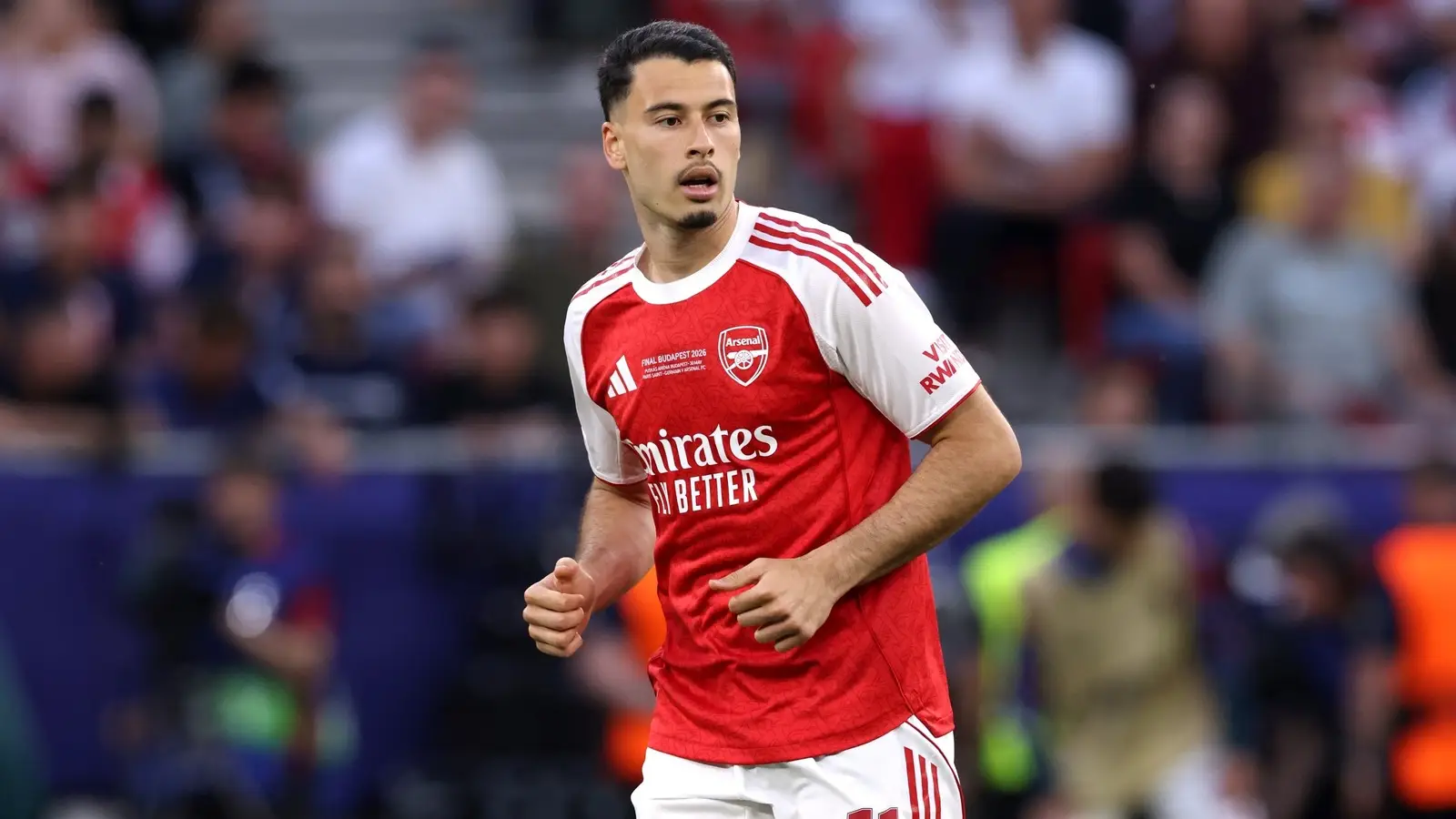
Gabriel Martinelli has left Arsenal as a champion and, at a reported $81 million, the most valuable sale in club history. Less than four months after helping deliver Arsenal’s 2025-26 league title, the 25-year-old completed a permanent move to Al-Hilal, with Arsenal also reportedly retaining an unspecified sell-on clause.
Arsenal confirmed the transfer, while Al-Hilal announced a four-year contract. Neither side disclosed the price. At the reported figure, Martinelli clears the package worth up to about $54 million that sent Alex Oxlade-Chamberlain to Liverpool in 2017. Arsenal had paid roughly $8 million to sign Martinelli from Ituano seven years earlier.
That return explains only part of the decision. Martinelli leaves after 278 appearances and 62 goals, with Premier League, FA Cup and Community Shield medals. His wider league record includes 41 goals and 24 assists in 191 appearances. Yet his role had narrowed by the end. He played 30 league matches during Arsenal’s title season but started only 11, producing one goal and four assists across 1,073 minutes.
Europe complicated any simple story of decline. Martinelli scored six times during the Champions League league phase. No Arsenal player had previously found the net in five straight appearances in the competition proper. He remained dangerous when matches opened and Arsenal could release him into space, the situation that gives his acceleration and direct running their greatest force.
Arsenal therefore faced a timing problem rather than a verdict on whether Martinelli could still contribute. He was 25, entering the final guaranteed season of a contract that reportedly included a club option for another year, and no longer assured of starting every week. Keeping him would have protected attacking depth. Selling him at a price $27 million above the previous club record protected the value of a player whose domestic role was moving in the opposite direction.
What Arsenal must replace after Gabriel Martinelli
Christos Tzolis is the clearest successor on the left. He started Arsenal’s first two league victories and was involved in the first two goals of Arsenal’s opening win over Coventry City. Tzolis pressed to help create the turnover before the opener and supplied the cross that led to the second. Those are encouraging signs of fit, but he isn’t an exact copy. Martinelli’s most disruptive quality was his willingness to sprint beyond the last defender repeatedly, even when the pass never arrived.
Eberechi Eze and Noni Madueke can also move into that channel, although each is needed elsewhere. Eze gives Arsenal an interior creator who can combine between the lines. Madueke can isolate a fullback, but he is also Bukayo Saka’s senior cover on the right. The squad began the campaign with one of the Premier League’s deepest attacking groups, then lost Martinelli, Leandro Trossard and Gabriel Jesus while sending Ethan Nwaneri on loan. The options remain flexible. The number of natural wide attackers has fallen.
Al-Hilal offered Martinelli a new setting and a four-year commitment. In his first club interview, he said Al-Hilal’s Club World Cup run, including its victory over Manchester City, helped convince him. The Saudi club introduced him with a Matrix-inspired video that pulled the transfer away from familiar scarf-and-shirt imagery.
Martinelli made his debut against Al-Shabab, playing the final 22 minutes of a 2-0 victory. His departure had already changed Arsenal’s books. Within a day, it had begun his sporting life elsewhere.
For Arsenal, the transfer can be excellent business without being a complete football solution. The club sold a player at peak market leverage after his league role had contracted, and the reported sell-on clause leaves room for another return. The fee has already rewritten Arsenal’s sales record. Tzolis, Eze and Madueke now have to show that the left side can function just as well without the repeated runs into space that Martinelli supplied most naturally.