Football has always understood costume before it called it style. The shirt, the socks, the boots, the hair, the tape on the wrist, the collar pulled up or left alone. None of it wins a match by itself, but all of it changes how a player is remembered. Some looks stay attached to the football because they make the player feel fully formed, as if the season arrived with its own visual language.
The beard sits in that space. It’s not equipment, but it can alter a footballer’s entire reading. A clean face can suggest youth, speed, and lightness. A beard can add age, gravity, menace, elegance, or weather. It can make a kit feel less like sportswear and more like costume design.
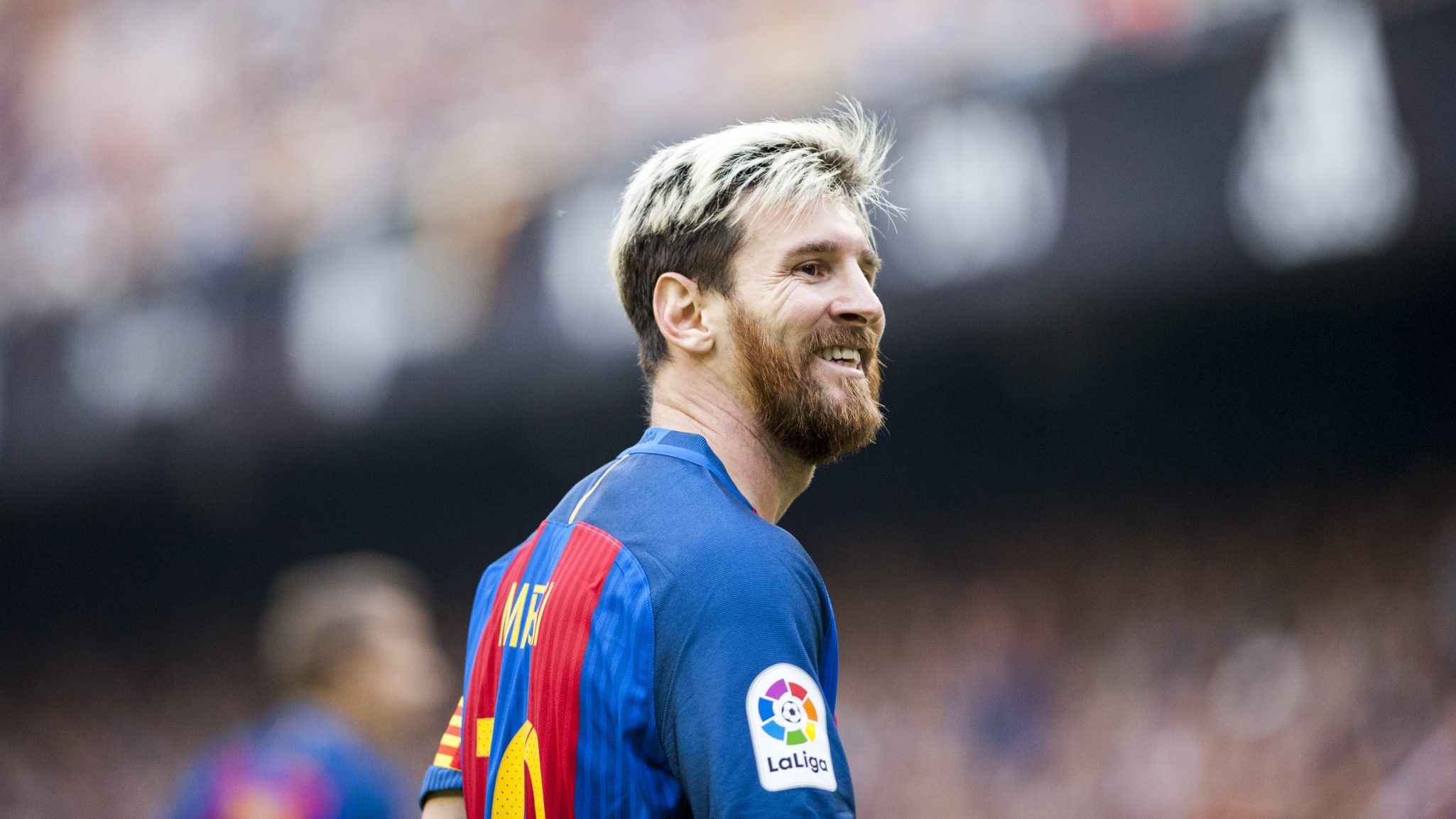
Messi’s 2016/17 Barcelona beard is one of the clearest examples. He was still Barcelona’s No. 10, still operating in that familiar blaugrana field of red and blue, but the face had changed. The boy-genius image had receded. In its place was something heavier and sharper. The magician notched 37 league goals in 34 matches that season, a campaign that earned him the European Golden Shoe, but the visual memory differs from the numbers. The red beard made the football feel older, more burdened, more private.
That season also gave the image another layer at the Bernabéu, where Messi’s late winner against Real Madrid ended with the shirt held out toward the crowd. The beard mattered there because it changed the frame. It wasn’t just the Barcelona shirt. It was the shirt, the face, the pause, the stare, the whole figure fixed in one of the most replayed images of the rivalry.
Karim Benzema’s late Real Madrid years worked in a different register. His beard didn’t soften the white kit. It hardened it. In the 2021/22 Champions League run, the bandaged hand, close-trimmed beard and Madrid shirt created an image that felt almost noir. UEFA lists him at 15 goals in that Champions League campaign, including 10 in the knockout rounds, and Real Madrid credits him with 354 goals in 648 games for the club. The football was decisive, but the look gave the run its own silhouette.
When the face becomes the era
Andrea Pirlo belongs to the more elegant branch of this idea. The beard did not make him look harder. It made him look further removed from hurry. In Italy blue or Juventus black and white, Pirlo’s beard worked because it matched the rhythm of his game. He looked composed before the pass arrived. UEFA’s profile of Pirlo notes that many thought his best days were behind him when he joined Juventus in 2011, only for him to win four Scudetti and reach the 2015 Champions League final. That late-career version is central to why Andrea Pirlo’s aura felt so different.
Sócrates is the older, stranger, more literary ancestor of the same concept. Brazil’s yellow shirt already carries its own mythology, but on Sócrates it became something more vertical and philosophical: beard, headband, tall frame, slow authority. He was a medical doctor, Brazil’s captain at the 1982 World Cup, and one of the most visually distinctive midfielders the game has produced. His beard wasn’t decoration. It made the football feel intellectual without making it cold.
Then there are the players whose beards sharpened the body into a symbol. Virgil van Dijk’s trim beard, tied hair and Liverpool red created a defender who looked engineered. Mohamed Salah’s beard and curls made his Liverpool silhouette instantly readable in motion. Olivier Giroud’s grooming turned France blue, Arsenal red, Chelsea blue and Milan red-black into something unusually tailored for a center forward. Arturo Vidal’s beard, mohawk and tattoos made every kit feel like a warning label.
The best beard eras don’t work because the beard is impressive by itself. They work because everything connects. Shirt color, body type, haircut, role, peak season, historical moment. The beard becomes a visual shortcut for how the player felt at the time. Messi in 2016/17 looked like genius with shadows. Benzema in 2021/22 looked like authority sharpened by delay. Pirlo looked like calm had learned how to pass. Sócrates looked like football could think out loud.
That is why the phrase works: the beard became the kit. Not literally, but visually. It completed the character. It gave the shirt a face and the era a texture. A footballer can be remembered for goals, assists and trophies, but sometimes the image carries its own record. One look, one season, one version of a player, and the whole thing becomes impossible to separate.
For Benzema, that image now sits inside the longer story of Real Madrid’s Champions League titles. For Messi, it belongs to the long Barcelona arc before the later Argentina coronation. For Pirlo and Sócrates, it belongs to something quieter: the rare footballer whose face seemed to explain the way he played.