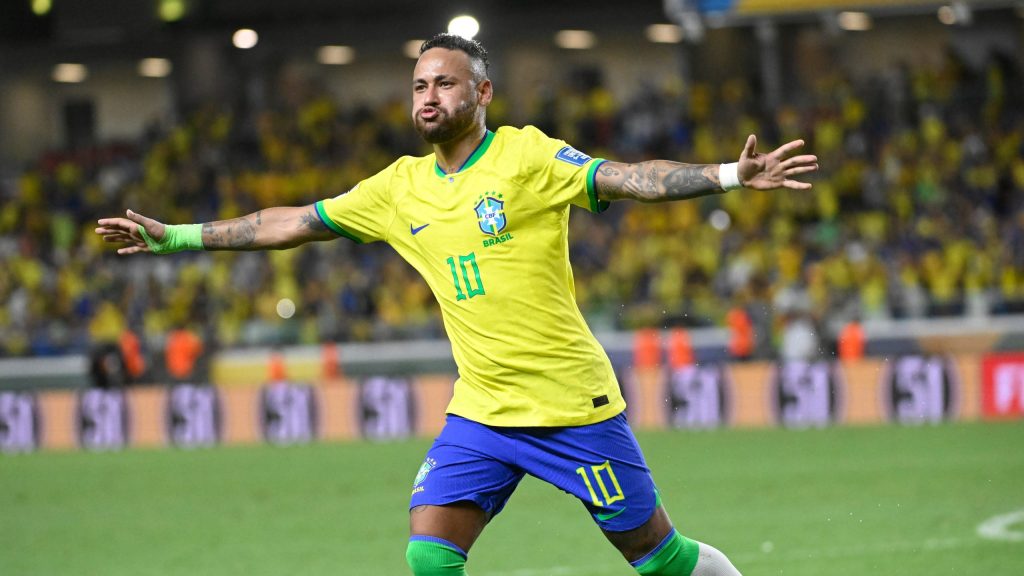
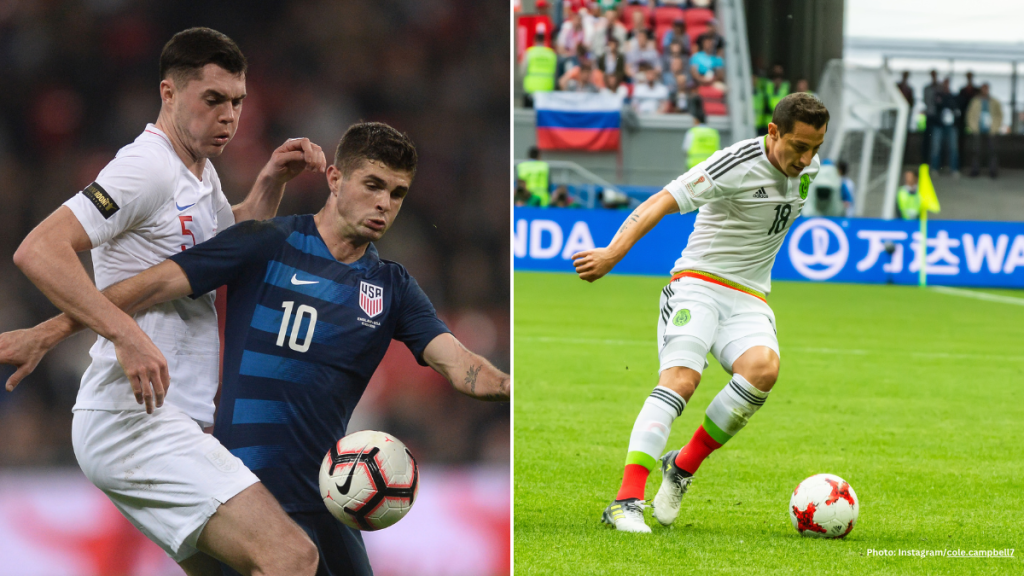
USA and Mexico meet again on October 3, 2026, giving us a fresh reason to revisit our all-time USA-Mexico combined XI.
A new chapter in the rivalry also brings an old argument back to the table: which players deserve a place when both nations share one team? From Jorge Campos to Christian Pulisic, these are our choices.
How we chose our all-time USA-Mexico combined XI
International impact comes first: sustained performance, major tournaments and influence on a national team. Club careers help separate close calls, while positional fit shapes the final selection. Games between the two countries matter, but this is a career XI rather than a ranking of rivalry performances alone.
We use a flexible 4-2-3-1: Reyna and Guardado control midfield, Donovan plays behind Borgetti, and Blanco and Pulisic can move inside from the flanks. It is an attacking team with some deliberate compromises. The six Mexico and five USA selections reflect our choices, with no national quota.
Goalkeeper: Jorge Campos (Mexico)
Campos gets the nod for his blend of shot-stopping, speed off his line and comfort with the ball. The brilliant shirts made him instantly recognizable; his daring made him far more than a style icon.
He played at the 1994 and 1998 World Cups and was an unused squad member in 2002. Tim Howard, Brad Friedel and Guillermo Ochoa all have strong cases. Our preference is for Campos’s ability to turn goalkeeping into the first phase of an attack.
Left Back: Carlos Bocanegra (USA)
Bocanegra brings defensive judgment, aerial strength and leadership to a team full of creators. He earned 110 USA caps and could work at either center back or left back. Here, he starts on the left and stays more conservative when the attack opens up.
That is a tactical choice. DaMarcus Beasley would offer more natural width, but Bocanegra gives this adventurous side another defender who can protect the box.
Center Back: Rafa Márquez (Mexico)
Márquez is the defender we build around. He could step into midfield, break a line with one pass and keep possession under pressure. His résumé includes appearances at five World Cups and two Champions League titles with Barcelona.
There is an added connection to this fixture: Márquez now leads Mexico as head coach after succeeding Javier Aguirre following the 2026 World Cup. In our XI, his task is simpler: organize the defense and start the attacks.
Center Back: Claudio Suárez (Mexico)
Alongside Márquez, Suárez supplies the steady defending that gives others freedom. El Emperador was a fixture across generations of Mexico teams, reading danger early and bringing order to the back line.
His place rests on that sustained international influence. Márquez provides the expansive passing; Suárez gives him a partner whose first instinct is to keep the defense secure.
Right Back: Steve Cherundolo (USA)
Cherundolo earns his place through positioning, sound decisions and dependable support on the right. His long Hannover career reinforced the qualities that made him such a trusted USA defender.
He made three World Cup squads, but played in two tournaments: 2006 and 2010. Injury kept him off the field in 2002. With Pulisic ahead of him, we value a fullback who knows when to overlap and when to hold his ground.
Central Midfielder: Claudio Reyna (USA)
Reyna gives the team a calm first pass and a way through pressure. He earned 112 USA caps and captained the side at the 2002 and 2006 World Cups. His best work often made the next player’s job easier.
We place him in a midfield pair rather than label him a specialist defensive midfielder. Alongside Guardado, he can set the rhythm and feed Donovan between the lines.
Central Midfielder: Andrés Guardado (Mexico)
Guardado’s case is built on adaptability, technique and years of responsibility for El Tri. He evolved from an energetic wide player into a midfielder who could manage possession and guide those around him.
He appeared at five World Cups, from 2006 through 2022, and received his international farewell against the USA in October 2024. That national-team career is complete; his passing and work rate remain central to this selection.
Attacking Midfielder: Landon Donovan (USA)
Donovan combines end product with the ability to make a team play faster. U.S. Soccer records 57 goals and 58 assists in 157 appearances. He could create, finish or carry a counterattack himself.
His goal against Mexico in the 2002 World Cup knockout stage gives this rivalry an enduring image. We put him centrally so he can find Borgetti early or release runners on either side.
Left Attacking Midfielder: Cuauhtémoc Blanco (Mexico)
Blanco starts from the left with permission to drift into the middle. Calling him a touchline winger would miss the point: we want his vision, disguise and ability to find a pass that changes the game.
His 1999 Confederations Cup makes the case. Blanco scored six times, including the golden goal against the USA in the semifinal and Mexico’s fourth in the final against Brazil. His creative legacy also runs through the story of Mexico’s No. 10 shirt.
Right Wing: Christian Pulisic (USA)
Pulisic earns his place through direct running and decisive performances. His extra-time penalty in the 2021 Nations League final helped beat Mexico. Two years later, he scored twice in the 3-0 semifinal win over the same opponent.
Although he often attacks from the left, he starts on the right here and can interchange with Blanco and Donovan. We select him for what he has already delivered, without projecting the rest of his career.
Forward: Jared Borgetti (Mexico)
Borgetti is our specialist penalty-area striker. He scored 46 goals in 89 Mexico appearances, with movement and heading that could turn a difficult cross into a clear chance.
His twisting header against Italy at the 2002 World Cup captures that skill. In this team, Donovan, Blanco and Pulisic supply the invention; Borgetti gives their service a target.
The toughest omissions
Clint Dempsey is the hardest USA omission. His 57 international goals demand consideration, and swapping him for Borgetti would create a more fluid attack. We retain Borgetti for his aerial presence and select Donovan for the central creative role.
Hugo Sánchez would have an even stronger claim if club achievement led the criteria. Javier “Chicharito” Hernández offers an outstanding alternative through his movement and finishing for Mexico. Choosing Borgetti is a preference for this team’s shape, rather than a dismissal of either career.
Howard, Friedel and Ochoa make goalkeeper another genuine debate. Beasley also pushes Bocanegra hard at left back. An all-time USA-Mexico combined XI should make its tradeoffs clear: ours favors invention behind a classic center forward, with experienced defenders providing the balance.