
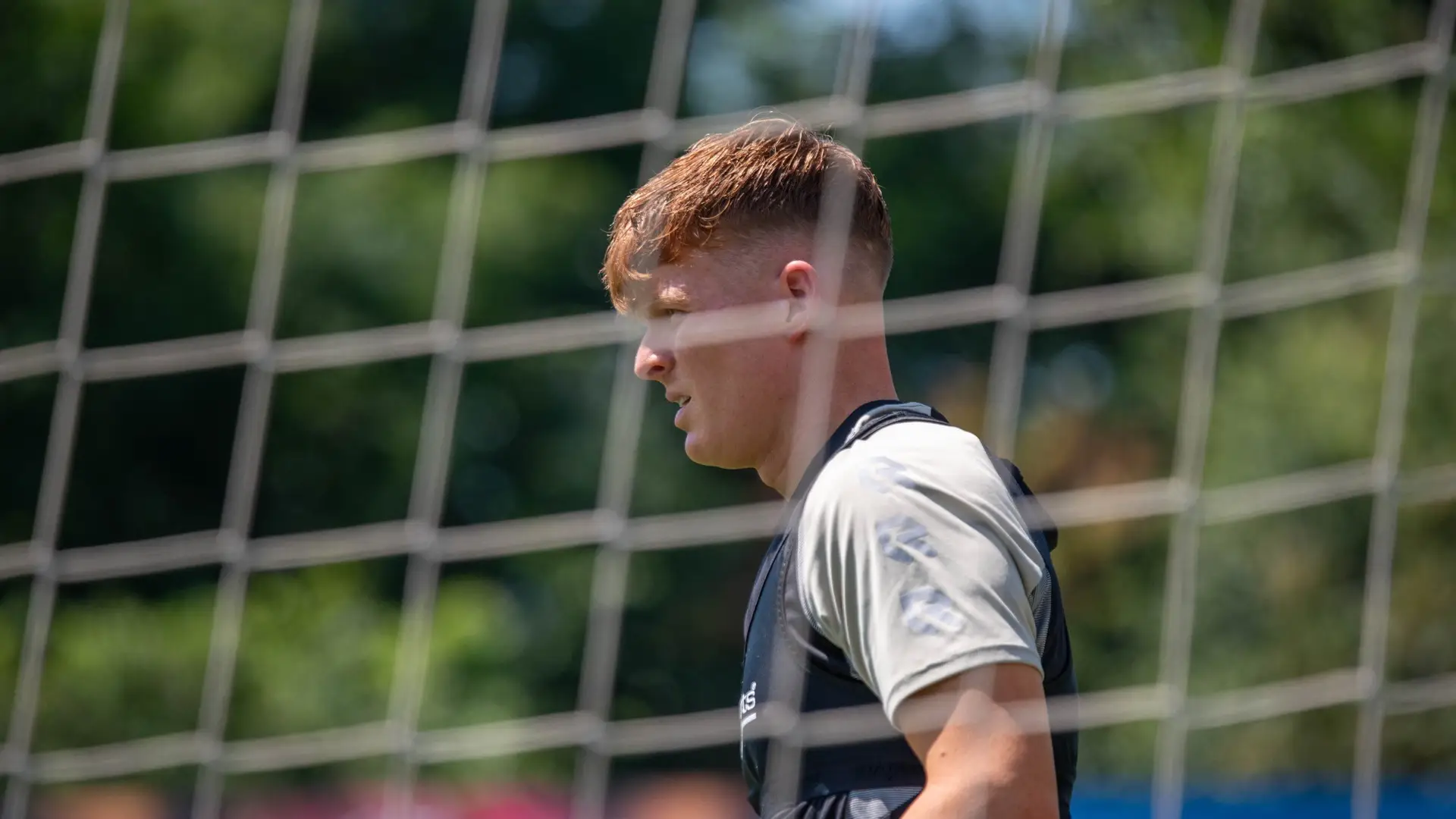
Telstar lost a player, fell two goals behind and still left with a point because its goalkeeper supplied every goal it needed. Ronald Koeman Jr. converted two penalties in a 2-2 draw with Cambuur, becoming the first goalkeeper to score twice in a single Eredivisie match.
The 31-year-old had to combine protecting his goal against a team with an extra player with taking the kicks that could repair the scoreline. His first penalty brought Telstar back into contention. His second arrived in the 11th minute of stoppage time, after an earlier penalty award had been overturned before he could take it.
This wasn’t a new role improvised while Telstar chased the game. Koeman had scored a late penalty against Volendam in May that helped secure the club’s Eredivisie survival. Before that kick, he’d checked with the bench and received its backing. After the Cambuur draw, he explained that taking penalties was normal for him and his teammates.
Koeman, the son of former Netherlands and Barcelona player Ronald Koeman, played outfield as a youngster before building his career in goal.
Why Telstar trusted its goalkeeper with the comeback
The disadvantage began in the 22nd minute, when Nökkvi Thorisson was sent off for a challenge on Billy van Duijl. Telstar reached halftime at 0-0, but Cambuur opened a two-goal lead by the hour. Rafik El Arguioui opened the scoring in the 54th minute before Nicolas Binder made it 2-0 in the 60th.
Van Duijl then caught Patrick Brouwer in the head while trying to clear the ball, conceding the penalty that changed Telstar’s afternoon. Koeman converted in the 63rd minute. Telstar was still chasing the game, but its deficit was down to one with almost half an hour of regulation time remaining.
There’s no rule reserving penalties for outfield players. The choice can therefore come down to the same questions that shape any team’s approach to penalty taking: execution, confidence and the contest with the opposing goalkeeper. Koeman’s position doesn’t prevent Telstar from trusting his shot.
It does create a separate risk. During continuing play, a saved kick can leave the attacking goalkeeper far from his own goal while the opposition has possession. Telstar was already a player short. For the first penalty, choosing Koeman meant accepting that exposure in pursuit of a way back into the match.
Late on, he contributed to the attack again, moving well beyond halfway to take a free kick. The sequence produced a corner and then a penalty award for holding. Koeman prepared to take it, only for VAR to intervene.
The holding had happened before the corner was taken. A corner doesn’t put the ball into play until it’s kicked and clearly moves, so the restart remained a corner rather than becoming a penalty. Koeman hadn’t missed, and he hadn’t had a goal disallowed. The opportunity disappeared before the kick.
A subsequent handball finally gave him another penalty. He scored at 100 minutes and 16 seconds, a goal recorded as 90+11 that completed the comeback. It was also the latest goal in the Eredivisie’s Opta timing records, which begin with the 2010-11 season.
The brace took Koeman to three career Eredivisie goals. His current-season attacking figures now read two shots, two on target and two goals. Nico van Zoghel’s goalkeeper career record of seven remains ahead of him; scoring twice in one match is the distinction Koeman has claimed for himself.
Neither penalty came with the result settled. Koeman wasn’t taking a ceremonial kick or adding a goal to a comfortable win. Twice, Telstar was trailing and trusted its goalkeeper to change the score.