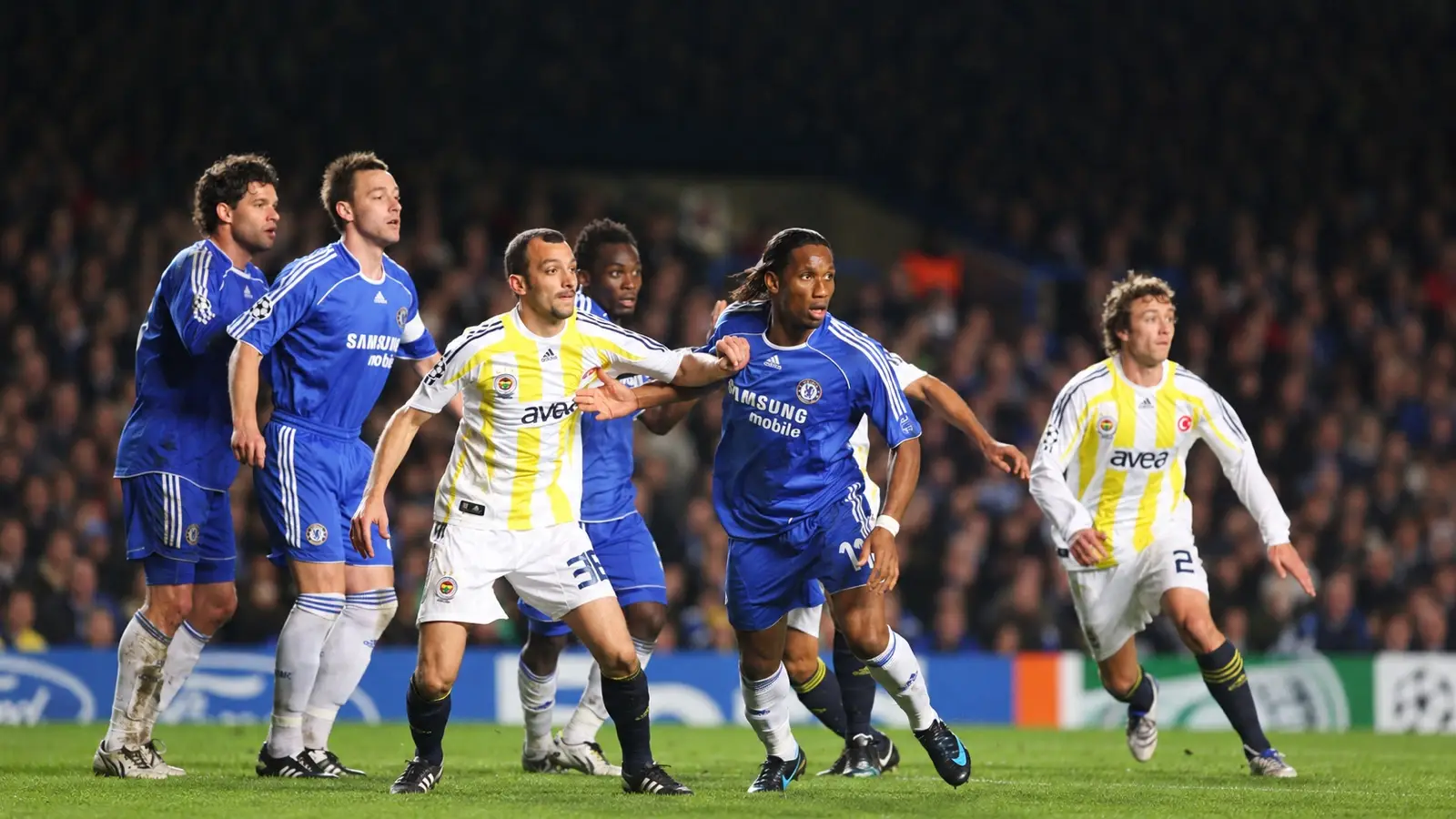
Chelsea were trailing in the 88th minute of the 2012 Champions League final when Didier Drogba headed them level. Later, he converted the shootout penalty that won the trophy. Few nights explain “clutch” more clearly.
One night, though, isn’t a career. From Messi’s greatest Argentina moments to Real Madrid’s earliest European Cup triumphs, the strongest cases involve players who kept changing decisive games.
This ranking of men’s football weighs the stakes, the individual contribution and repeated delivery. An equalizer that prevents elimination carries different weight from a fourth goal in a comfortable win. Creating the breakthrough counts alongside scoring it.
The order is an editorial judgment, not a scientific measure of composure. Trophy collections alone don’t settle it, and a celebrated performance doesn’t erase a costly failure.
10. Andrés Iniesta
Iniesta’s 116th-minute winner against the Netherlands settled the 2010 World Cup final. His stoppage-time equalizer at Chelsea a year earlier had sent Barcelona into the Champions League final on away goals. In the 2015 European final, he supplied Ivan Rakitić’s opener and earned man-of-the-match recognition. His case combines the urgent intervention with the pass that makes a teammate the scorer. He didn’t need to be a forward to decide the biggest games.
9. Diego Maradona
For a single World Cup, Maradona’s 1986 performance could lead this list. Beyond the infamous handball against England came his extraordinary solo goal, both goals against Belgium in the semifinal and the pass for Jorge Burruchaga’s winner in the final. He could score through a defense or release someone else behind it. Ninth reflects a preference for repeated trophy-deciding performances across different campaigns, rather than ranking that extraordinary tournament below anyone else’s peak.
8. Ángel Di María
Di María scored the only goal against Brazil in the 2021 Copa América final. Against France in the 2022 World Cup final, he won the penalty for Argentina’s opener and scored their second. His influence wasn’t confined to Argentina: in the 2014 Champions League final, his saved shot produced the rebound Gareth Bale headed in for a 2-1 lead, and he was named man of the match. Three different finals demanded different contributions, and he supplied them without always being his team’s main scorer.
7. Didier Drogba
The defining feature of Drogba’s remarkable Chelsea career was how often his goals arrived in finals. Through 2012, he’d scored nine across nine appearances in League Cup, FA Cup and Champions League finals. His 2008 European final ended with a red card, so the record wasn’t unblemished. Munich four years later supplied the equalizer and decisive shootout kick. It was the most dramatic example of a much longer record.
6. Zinedine Zidane
Zidane scored two headers against Brazil in the 1998 World Cup final and the winning volley against Bayer Leverkusen in the 2002 Champions League final. For a midfielder, that’s an extraordinary pair of trophy-deciding contributions. His 2006 World Cup final also belongs in the assessment: he scored a penalty, then was sent off for headbutting Marco Materazzi. The goals earn him a high place; the dismissal keeps the account honest.
5. Alfredo Di Stéfano
Di Stéfano scored in each of Real Madrid’s first five European Cup final victories, from 1956 through 1960. He finished that sequence with a hat trick in the 7-3 win over Eintracht Frankfurt. Different eras make raw scoring totals difficult to compare, but five consecutive finals with a goal is a direct answer to the question of repeat delivery. He wasn’t simply collecting medals alongside a great team. He kept contributing to the scoreline that awarded them.
4. Pelé
At 17, Pelé scored the winner in the 1958 World Cup quarterfinal, a semifinal hat trick and two goals in the final. Twelve years later, he scored Brazil’s opener in another World Cup final and supplied the pass for Brazil’s fourth, scored by Carlos Alberto against Italy. The latter was a finishing touch, not a rescue, but the range is compelling: teenage knockout scorer, then experienced creator and finisher on the same stage. His case doesn’t depend on counting three medals.
3. Gerd Müller
Müller scored twice in the 1972 European Championship final, then delivered the winner against the Netherlands in the 1974 World Cup final. Between those international triumphs came two goals in Bayern Munich’s 1974 European Cup final replay against Atlético Madrid. National team or club, continental title or world title, the decisive matches repeatedly contained his goals. Third rewards that concentration of contributions across the major trophies, rather than how spectacular they looked.
2. Lionel Messi
Messi scored in Barcelona’s 2009 and 2011 Champions League final wins over Manchester United, restoring the lead at Wembley in the latter. In 2022, he scored in every stage of the World Cup, including twice in the final against France. He then converted Argentina’s first kick in the shootout. Qatar gave his big-game record a World Cup triumph to sit alongside those European finals. That delivery for club and country makes him a credible choice for first; Ronaldo’s repeated European knockout scoring earns the narrow preference here.
1. Cristiano Ronaldo
Ronaldo’s 67 Champions League knockout goals give him the edge. In 2016, his hat trick against Wolfsburg overturned a 2-0 first-leg deficit. A year later, he scored ten times in the knockout rounds, including twice against Juventus in the final. The total carries weight because of the matches behind it: rescuing a tie, sustaining a run, finishing the job. Messi has the stronger World Cup argument. Ronaldo takes first for the scale and repetition of his European knockout scoring.