
Italy’s men’s national team heads into 2026 in a spot few expected ten years ago. The Azzurri still need to qualify for the World Cup. They finished second in UEFA Group I, behind Norway, so they have to go through the playoffs to reach the finals.
This situation is where following Italy begins. The focus isn’t only on group-stage tactics or travel plans. It’s about a top team trying to use a second chance to make it to North America.
Italy’s history is clear. They have won the men’s World Cup four times, with their last title in 2006 still shaping how people talk about the team. Missing the last two World Cups has made qualifying a big part of their story.
The team’s look is easy to recognize. Italy are called “Gli Azzurri” because of their blue shirts, a tradition dating back to the early 1900s and connected to the country’s royal past. Even casual fans know: if the shirts are blue, it’s Italy.
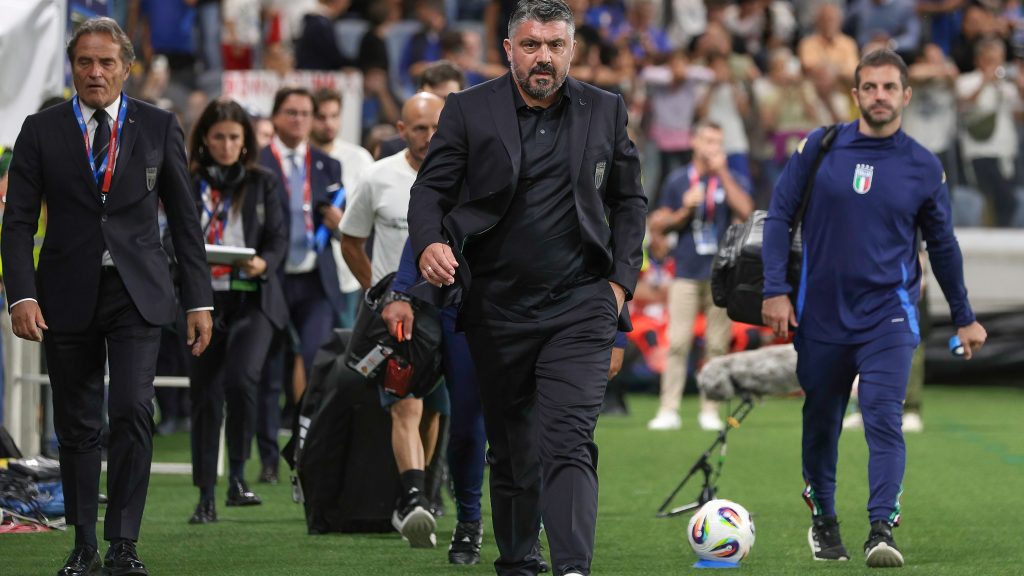
This cycle has a clear coaching change. Gennaro Gattuso became head coach in June 2025 after Luciano Spalletti left. Since then, Italy’s qualifying results have put them in a familiar spot for modern Italian football: a tense finish where every detail matters.
If Italy make it through the playoffs, we already have an outline of their World Cup path. The 2026 match calendar lists the “UEFA Playoff Path A winner” in Group B, which could mean starting in Toronto, then playing in the Los Angeles area, and finishing in Seattle.
What the tournament path looks like if Italy qualifies
To follow Italy, start by understanding their two possible paths. Until the playoffs end, Italy is watching two schedules. One is the playoff games that decide if they qualify. The other is the World Cup calendar, where their possible group matches are already listed as “Path A winner.”
This label is important because it turns qualifying into real travel and viewing plans. If Italy wins “Path A,” their first group match is June 12, 2026, in Toronto at BMO Field against Canada. The second is June 18, 2026, in Inglewood, California at SoFi Stadium, listed as Switzerland versus the playoff-path winner. The third is June 24, 2026, in Seattle at Lumen Field, with the playoff-path winner facing Qatar.
Even if you are not attending, these set dates help you follow the team closely. They show the time zones, travel needs, and the flow of the tournament. Traveling from Toronto to Southern California is a long trip, and going from there to Seattle is also a big move. For the team, these trips affect recovery, training, and media schedules.
Next, it helps to know which players play the most in important games. In this qualifying cycle, goalkeeper Gianluigi Donnarumma has always been in the lineup. Defenders Alessandro Bastoni, Federico Dimarco, and Giovanni Di Lorenzo have played in key matches. In midfield, Nicolò Barella and Sandro Tonali are regulars. This group forms a core you can follow from game to game without memorizing the whole squad.
In attack, Italy’s recent lineups are more varied than the old idea of having just one main striker. Mateo Retegui has started as striker in qualifiers, with Moise Kean also playing up front. Francesco Pio Esposito has made an impact too, scoring in important matches. These names matter because they show who the team relies on in real competition, not just in friendlies.
After that, following Italy is simple and fact-based. The best way to stay updated on lineups, kickoff times, and locations is through official channels and match listings. The federation’s updates are also where you’ll find news about things like Casa Azzurri, the traveling headquarters the FIGC has used at big tournaments since 1998.
Casa Azzurri is important because it is a real place, not just a name. It serves as a headquarters for the team at tournaments and can include activities for guests and sometimes fans. If the FIGC sets up Casa Azzurri in 2026, it will be a clear way to find official events, sponsor activities, and media access, especially with the World Cup spread across three countries.
Italy’s matchday traditions are very consistent, so you don’t need to imagine the atmosphere. The kit, the nickname, and the anthem are always present. There’s also a modern chant: the “Seven Nation Army” riff became linked to Italy’s team around the 2006 World Cup and is still used as an unofficial theme.
If you want to watch like a local in North America, the best advice is to look for official events. In 2026, FIFA and local organizers will offer public programs in each host city. These are usually the safest and most reliable places to watch matches, instead of relying on bar lists that might change. If Italy is in Group B, cities like Toronto, Los Angeles, and Seattle are big enough that official screenings and fan events are likely, but it’s best to treat this as a planning tip, not a guarantee of specific venues.
Rivalries help explain Italy’s emotional stakes. Italy and France have faced each other in big moments, like the UEFA Euro 2000 final and the 2006 World Cup final. That history means any future Italy-France match would be seen as more than just a group game. Italy’s long rivalry with Germany is also a major European matchup with a lot of history.
If Italy qualifies, the best way to follow them is to think of the tournament as having two parts. One is the set schedule of where they would play in Group B and the travel involved. The other is how the team changes under their new coach, who was hired to get them back to the finals. Following Italy means watching the matches, seeing which players Gattuso relies on, where the team is based if they qualify, and how a four-time champion handles the pressure to make it back to the World Cup stage.